Tag Archives: LinkedIn

15 photos that will sink your LinkedIn profile

By now it’s a given that you have a photo on your LinkedIn profile. Without one, you’re as good as an outcast. However, the photos I’ve been seeing lately raise the question, “What are people trying to convey with their photof?” Are they hitting the mark?

angry-woman

What do I mean by this? Take the photo of the woman above. This is not hitting the mark unless she’s trying to appear otherworldly. Her photo does nothing but make me wish I never come in contact with her.

On the other hand, there are photos that are well done and prompt me to click “Like” or, in a few cases, write a comment complimenting the person’s photo for its quality. For example, a photo I show in my LinkedIn workshop prortays professionalism because it is a quality photo and the subject appears friendly, welcoming, and intelligent.

Now before you call me a photo snob, consider how important your photo is and why you shouldn’t slap just any one on your profile.

Photos are important. Our photo makes us memorable and trustworthy. Some, including me, won’t open a profile unless the person is known. According to some, profiles that have a photo are 14 times more likely to be opened than those that don’t.

Photos are part of your branding. The first thing people see on your profile is your photo, so make it count. They can say something positive about your personality; for example, you are caring, serious, creative, authoritative, outgoing and friendly, and so on. I demonstrate photos in my Advanced LinkedIn workshop. One of them is of a New York City photograper. Click here to see how he effective brands himself.

Quality is also important. My close connection, and published photographer, David Machowski says this about a quality photo: “A good headshot is a photograph of one’s face that is first and foremost flattering.  That fact is open to interpretation; but here is where many make the mistake of having their shot with too much detail, too far away, too close, out of focus, eyes not sharp and in focus, too much depth of field (ideally the eyes should be the sharpest point of the photograph).” He could go on forever.

The type of photo you choose is your choice. No one insists that you dress in your best suit and tie, or for you women a suit with a brilliant blouse and conservative jewelry; although that would be nice. You may want to go the route of business casual.   A black and white photo can look very creative or…hide pink hair. 

Photos that are inappropriate? This is really the gist of the issue I have with the onslaught of photos appearing on my LinkedIn homepage. Many of the photos are taken in haste, without forethought and planning, and negatively impact the subject. Some are just plain inappropriate, such as:

  1. The plain ole poor quality, like a blurry photo that appears to be taken with a Polaroid.
  2. The under water effect–this person looks like she’s literally under water.
  3. The selfie taken with a cell phone gives the amusement park mirror effect.
  4. The action shot of someone in his office, playing touch football, or climbing rocks, etc.
  5. The false representation photo of a person 10 years earlier should be a crime.
  6. The half smile or downright frown photo. Hey, people are drawn to happy people.
  7. The purple face or red-eye photo. I’ve seen this and thought there’s no way a person’s face can be purple like this.
  8. The “I’m taken off guard” photo with cinder block background. This does wonders…for a prison shot.
  9. The dating scene photo is one of my favorites. Not. Beautiful women and handsome men are great for dating sites, not LinkedIn.
  10. The “Look, I’m working” photo with the office wall in the background looks like the person is trying too hard.
  11. The bad-ass look, shades and all. This I’ve seen and wondered if the guy was in a gang.
  12. The family portrait. Whose profile is it anyways, yours or your wife and children?
  13. The photo with the person riding his Harley.
  14. The photo of an orangutan. Let’s be serious.
  15. The company logo. There’s a LinkedIn company page for that.

Additional photos suggested by LinkedIn members.

  1. From Rich Grant. The cropped photo. “What’s that random hand on your shoulder?”

I realize LinkedIn is trying to stress the importance of having a photo on your profile, but the annoying photo show is not accomplishing its intention. Or perhaps the people who are declaring their new photo are the ones who are not hitting the mark. Before you post your new photo, make sure it represents you as a professional networker, not a Facebook friend.

Photo, Flickr, Irene Ferrari

LinkedIn status update etiquette. How often should you update?

man-walking-with-phone

I posted a status update asking LinkedIn members how often they update. Asking a question, after all, is one of the many updates you should post. The response wasn’t as great as I would have like, much like when I ask my 14 year-old son how his day went.

I did, however, receive answers like “once a day,” “four times a week,” etc. But I didn’t get the answer I wanted to hear: “four times a day.” Do I hear a pin drop? I can hear some of you thinking, “That’s crazy, dude.” And, “Get a life.” Perhaps, “I’d hide* that guy.” And I’m sure I have been hidden.

Some of my workshop attendees tell me that posting even once a week is too difficult. They also say that they don’t know what to post. (I refer them to Hannah Morgan’s great infographic of what you can update. Yes, one of them was posting a question.)

I’ve read from some LinkedIn pundits that once a day is the limit. How did they come up with that arbitrary number? Why not two updates a day, one in the morning, one in the afternoon for a total of 14 updates a week? Wouldn’t that make more sense?

I posted an article awhile back called 11 reasons why I share LinkedIn updates so often in response to an article called 6 Bad LinkedIn Habits That Must Be Broken, in which the author writes with conviction that one must update only once a day. He states:

“People don’t check LinkedIn nearly as often as Facebook or most other Social Networks for that matter. So I recommend that statuses are updated no more than once or twice a day. This is more for your benefit than for your network. Oversimplify here and focus on sharing much less frequently, while trying to find highly interesting content that will benefit your connections.”

In my counter article I explain that I update for nine reasons, two of which are to make LinkedIn a better place. I know that sounds conceited but I figure I manage to accomplish this 20% of the time. And the other times because I really enjoy it.

In my opinion, you should update as much as you like as long as you’re adding value for you connections. What defines value? Quite literally it means, according to Webster’s II dictionary, “A standard or principle regarded as desirable or worthwhile.”

Educational articles you share add value and can earn you the illustrious title of “curator.” In a long post on LinkedIn, I list 14 of my connections who do a great job of educating their networks, as well as write great articles themselves. Great industry advice adds value. And asking illuminating questions or even making intelligent statements also add value.

Another reason why you should update as much as you like is if you’re not annoying your connections. One barometer I use to determine if I’m annoying my connections is when they see me in public. If they say, “I see you a lot on LinkedIn. Good stuff,” that’s a good sign. But if they say nothing after telling me they see me a lot on LinkedIn, I figure that’s a bad sign.

Recently I hid one of my connections because her face appeared at least ten times in a row on my timeline; she was really annoying me. Worse of all was that the information she was sharing was inconsistent with her industry; it was all over the map. I imagined her clicking on every post or inspirational quote/photo that popped up. In this case, more is definitely not better.

Finally, if you are treating LinkedIn like Twitter, where there are little or no reasons why you’re updating, it’s time to take stock of why. If there’s no strategy, it would probably be best to develop some strategy behind your updating activity, or chill for awhile.

Do you remember when you LinkedIn’s status updates and Twitter’s tweets were synced to each platform? LinkedIn did away with Tweets migrating to its platform; people were tired of reading about what Twitterers were doing on the beach or eating for breakfast. We still get tweet-like updates on LinkedIn.

I can’t say for sure how often I update a day, but I haven’t been told to my face that I over due it. In fact, I receive compliments for what I share. When I’m told more than once that people are sick of seeing my face on LinkedIn, I will curve my action. By how much I can’t say. I’m just having too much fun.

*To hide someone, just hover to the far right of his/her name and a dropdown will appear with the Hide option.

Please share if you enjoyed this post!

Photo: Flickr, Tom Waterhouse

A little advice for my angry LinkedIn connection

When I was a youth, I had a friend who was angry all the time. Johnny was his name. He had a younger brother, Billy, who was a better athlete than him and more affable. Johnny was jealous of his younger brother.

angry man

When we played pick up football, Johnny was the slower and less nimble of the group. Billy and I were the better football players. This, I suppose, made Johnny even more angry.

At times Johnny would lash out at me for no apparent reason. I would disagree with him and BAM he would hit me. One time I ducked his punch and smacked him in the face. And then I ran like hell. I was a lover, not a fighter.

The other kids in the neighborhood couldn’t understand why Johnny was so angry; why he lashed out at me.

At the time I didn’t understand his anger. And then one day my father told me that some people are just plain angry, and there’s only one thing you can do about it; distance yourself from them.

So that’s what I did.

My angry LinkedIn connection, I see some of your posts on LinkedIn, and I think that you are angry. Angry all the time, like Johnny. And I think there’s no reason for you to show your anger, especially when others are watching you.

I recently read a post on LinkedIn that made a helluva lot of sense to me. It is called, “An open letter to Obama haters on LinkedIn.” The author of this post is Sherry Nouraini, PhD.

I took away from the article that employers/possible business partners are looking at what you write and think to themselves that angry verbiage is a sign of a problem maker, not a problem solver. Johnny was a problem maker.

What broke the proverbial camel’s back was the relentlessness smear campaign against LinkedIn. You made it your goal to bring LI to its knees by using long posts to do this. But what you wrote before was also full of anger.

I must profess that I have written out of anger, but not with as much vehemence as you do. I have, at times, criticized LinkedIn (I still can’t let go of losing unlimited searches). But how I criticize LinkedIn is nothing like the smear campaign you’ve started.

It’s not only your attack on LinkedIn that rubs me wrong, it’s also expressing your opinions on politics and religion that are inappropriate. First of all, I don’t care who you support in the upcoming primaries. Second, there’s no room for politics on LinkedIn.

Simply liking an article or photo that is politically minded is further evidence of your anger and negative attitude. To like something politically or religiously minded implies that you agree with its message, that you might also write it.

Have you not read that people don’t think LinkedIn is the forum for politics and religion? (Hint: Facebook is a better forum for expressing one’s political and religious views. I’m quite enjoying my new foray on Facebook.)

If you read the aforementioned article, the author talks about how bashing politicians or any other public figures is noticed by potential employers who are looking for people to solve their problems, not to create problems.

Your confrontational attitude will cause employers to think the latter of you; that you will cause problems.

You are currently unemployed, yet you continue to criticize how employers fail in the hiring process. I get it; employers don’t always make the best decisions–68% of them admit to making a bad hire at least once–but what good does it do you to criticize their practices.

Again, I admit to throwing mud at some recruiters, but not every single time I get the opportunity. If I did this, many of my connections would disown me.

Have you thought that it may be you who is at fault for not getting hired? Keep in mind that employers troll LinkedIn to find talent and if they see the way you bash them, you’re seen as an excuse maker and a complainer; both of which employers try to avoid.

It’s not only what you write that makes you come across as angry; it’s your photo. Your photo looks like a mug shot. You look angry enough to kill someone.

Johnny always looked angry, too. Your photo is your first impression. Do you want to turn away employers before they even read your profile?

What I find ironic is that you have the word “Professional” in your headline. You don’t come across as professional, not by my standards.

And in your Summary you talk about demonstrating a willingness to help others achieve their goals. I don’t buy any of it when I read your updates or spiteful long posts.

I’m sorry, connection, your anger is obvious, and I fear it is hurting your chances of getting a job. When you land your next job, I’m afraid that what you wrote on LinkedIn prior will come back to bite you in the ass.

I can only assume that 1) you don’t care if people are turned off by your angry verbiage, or 2) you don’t know you come across as angry. If it’s the former, I hope you read this and right the ship. If it’s the latter, I fear, like Johnny, there’s no hope for you.

Photo: Flickr, Oliver Nispel

8 LinkedIn types that are hurting their brand

angry-woman

Some people just don’t get how to use LinkedIn. As a result, they’re hurting their brand and it comes back to bite them in the ass in their community and their job search.

Your behavior is being observed by potentional hiring managers, recruiters, HR, and other people who can help you with your job search, namely network partners.

Therefore, it’s vital that you don’t come across as a certain LinkedIn type. Here are eight LinkedIn types you don’t want to become.

1. The Party Crashers. These LinkedIn members are everywhere and, in some cases, showing up 10 times in a row on your home page. They’re like people who are at every party. They’re also out to grab the glory, which is evident in their obnoxious activity.

Their goal is to appear as much as possible on their connections’ homepage, which annoys their connections to no end. They break the general rule of not sharing more than four updates a day.

2. The Hiders. I’m referring to people who don’t want to reveal their identity, so they post an image in place of their photo. These members do this for two reasons. First, it allows them to reach All Star status and increases their chances of being found.

Second, they don’t want their identity known, perhaps because of age, or they’re paranoid. This last reason only serves to make them appear untrustworthy.

It also defies the purpose of networking, which is to be recognizable and memorable. One’s brand is about them, not their company or hobby.

Read: 10 reasons why your LinkedIn photo is important to me.

3. The Ambiguous. Their comments or status updates don’t make sense. They think they write like Shakespeare or Ice Tea, but really what they write makes me wonder if they are on hallucinogens.

I have a connection like this, and so many times have I been tempted to ask him what the hell he’s talking about. I know he’s smart; that’s not the question. The question is if he is from our planet.

4. The Fly On the Wall. This LinkedIn member is one I wrote about in a post, Don’t disappear from LinkedIn, my valued connection, which talks about how some people join LinkedIn and then…disappear. In this post I talk about how a neighborhood friend started on LinkedIn with a great profile, and suddenly disappeared.

When I asked him where he’s been, he said he’s still on LinkedIn everyday but doesn’t care to contribute his thoughts or ideas. He reads a lot of articles and updates. That’s about it. To build a powerful brand, one has to be heard.

5. The Aloof. They don’t connect with anyone. They may have the best LinkedIn profile on earth, yet they only have 80 connections. They feel they must personally know every person with whom they’re connected.

Meeting unknown, yet valuable, connections is beyond their comprehension. When visitors, such as recruiters, see their dismal number of connections; they see these LinkedIn members as untrusting—a definitely blow to one’s brand.

6. The Negative Nelly. Little do these people know their words, which come across as angry and insulting, hurt their brand. Visitors’ antennae are alerted when they see the Negative Nellies complain about how unfair employers or disinterested potential business partners are.

Their words harm their image, but they don’t care. LinkedIn is their sounding board. They believe, based on their status, they have the right to offend other LinkedIn members. Of all the offenders, they fail in the emotional intelligence department.

7. The LinkedIn Hater. Look, I’ve been guilty of this myself. I’ve complained about certain inane changes LinkedIn has made—like take away our unlimited searches. I wonder if this hurts my brand. But these people bash LinkedIn like no one’s business.

They threaten to leave LinkedIn, stay away for awhile, only to return to continue to bash LinkedIn. I am far from a champion of LinkedIn, but I realize it for its remarkable power to provide job seekers the ability to network their way to a job.

8. The Bait and Switch. Perhaps the worst of them all is the LinkedIn member who connects with you and immediately hits you up for a sale. No foreplay, small talk, niceties, no nothing.

I recall a woman who set up a Skype session with the pretense of collaborating on career coaching, only to try to have me join her Tupperware business. To me her brand took a huge hit, as she appeared to me a liar. As well, she wasted my valuable time.

Read Three reasons why the Bait and Switch is downright evil.


If you are guilty of some of the above behaviors, it’s time to stop. We are a community, and as such we need to be cognizant of those in our network. To violate any of these faux pas will certainly hurt your online brand.

Do you want to come across as a Party Crasher, or maybe worse  yet a Hider. To Bait and Switch can drive someone away for good, maybe make them disconnect from you. The Negative Nelly can ruin the mood. The Onlooker is insecure in their ability to contribute to discussions.

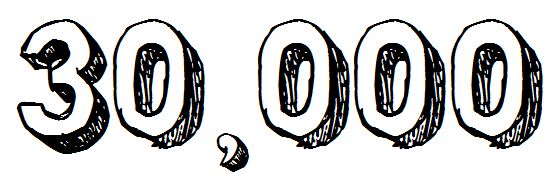
30,000 LinkedIn connections. Really?!

30,000

I’ve read a number of posts from people who are complaining that some of their 30,000 connections are being reduced to followers. They apologize to their “valued” connections for the injustice LinkedIn has committed.

(LinkedIn has made some bonehead moves in the past, such as stripping us of unlimited searches, but this is not one of them.)

I know I’m going to anger a lot of my connections, but the way I see it, people with 30,000 connections are collectors who don’t understand the purpose of networking. They’re collecting connections like Imelda Marco collected shoes, but by tenfold.

But these connections represent opportunity, you argue. Bullsh#t, I say. Besides the thousands of fake profiles you have accumulated, 90% of your connections will never follow up in a meaningful way.

Some of you say you communicate with them on a daily basis. This is true but only because you share updates, which potentially all 30,000 connections can see. Not likely.

Be honest with yourself, how many of the 30,000 connections have you even communicated with after receiving their default invites? Eight percent if you’re lucky. Or 2,400 if you’re counting. You L.I.O.N.S out there, I’m speaking to you.

Lion

My number of connections is more than 2,500, and I have to honestly say I don’t recognize many of them. Which makes me wonder if I have done the right thing by connecting with them. Probably not.

According to Robin Dunbar, a anthropologist and physiologist, we can truly know know 150 people; I’m a living testament of this assertion. (Read The New Yorker article, The Limit of Friendship.)

So when people tell me they know all of their first degree connections, even if it’s 2,400, again I say bullsh#t. This is not to say you need to confine your network to people you can name; at least they should be meaningful.

Collecting LinkedIn connections is like going to a networking event and collecting 100 personal business cards; just grabbing them out of people’s hands. Will you follow up with 100 people? You might as well find the nearest waste basket immediately after the event and dump those cards into it.

If you are saying, “LinkedIn’s purge is arbitrary. Like, they’re taking away valuable connections and turning them into followers instead.” My response to that is if you miss them (as in you know them) then simply reconnect…after you’ve eliminated some of the chaff among your 30,000 connections.

Throw out your connection trash. None of my connections are trash, you argue. Have you, as a true networker, hand-selected these connections? I didn’t think so.

That teenager from Huston, TX, who you blindly accepted, won’t be of any assistance. But all’s good, right.? She got you closer to 30,000 connections.

Once, my son told me he had 500 Facebook friends. I asked him if he knew them. Sure, he told me. Bullsh#t, I told him.

It is time that you open networkers focus on the purpose of networking (this is actually what we’re supposed to be doing) which is to connect with people of like interests who can be of mutual assistance.

Photo: Flickr, d00133519x


11 job-search blunders I find hard to believe

o-SCALE-facebook

Some things I find hard to believe; like I stepped on my scale this morning expecting to be two pounds heavier due to weekend of overeating, but I was actually two pounds lighter.

Or I deliver the best workshop of my life and receive less than stellar evaluations. What about my wife still talking to me after I haven’t installed a new screen door on our house three weeks after she’d asked me to?

Other things I find hard to believe are things that job seekers do in their job search. For example:

  1. After getting laid off, they think it’s a great time for a three-month summer vacation. Take a week off and then start your job search is my advice. Some downtime is healthy, but the longer you’re out, the harder it will be to get a job.
  2. They tell me they have no accomplishments to list on their résumé, so they have a résumé that looks like a grocery list of duty statements. One job seeker told me that in five years of working at a company he hadn’t achieved anything great. Come on, try, guy.
  3. They send the same résumé to employers thinking targeted cover letters will address how they meet the requirements of a job. One customer admitted he sends out the same résumé but makes sure to tailor the cover letter to meet the employers’ needs. Half way there.
  4. Related to #3: They don’t send cover letters with their résumés. Come on, it only takes an hour at most to write a cover letter that elaborates more on your qualifications and accomplishments. Unless specifically told not to send a cover letter, send one.
  5. They think it’s acceptable to dress like they’re going to the gym while they’re in public. You’re always in the hunt and you never know when someone who has the authority to hire you—or knows someone who has the authority to hire you—will bump into you in the grocery store.
  6. Speaking of networking…they think going to networking events are the only places networking is allowed. Newsflash, networking is ongoing and happens wherever, whenever someone is willing to listen. Next time you’re getting your hair styled or cut, put a bug in the ear of your hairstylist.
  7. They start a LinkedIn profile and just leave it there like a wilting plant. Do you think doing this will create a positive impression on recruiters and employers? No, it will do more harm than good. Having a profile is one part of the equation; being active is another part. Be active on LinkedIn.
  8. They spend the majority of their time on the computer, posting résumés to Monster, SimplyHired, the Ladders, etc. Richard Bolles, What Color is Your Parachute, says your chance of success is between 5%-10% when using this method alone. To me this is not a great use of job seeking time.
  9. They spend mere minutes researching companies and the jobs for which they apply before an interview. Really now, don’t you owe employers the respect of being able to articulate why you want to work at their company and do the job they’re advertising? Do your research.
  10. They expect recruiters to work for them. Who pays the recruiters’ bills? Recruiters work for employers, and any optimism you hear in their voice is to give you confidence when vying for the position, not to indicate you have the job. They’re busy people who don’t always have time to answer your phone calls or e-mails, so don’t feel slighted.
  11. They don’t send a thank you note to employers after an interview. I know, people say it’s a waste of time; but don’t go about your job search in a half-ass way. Thank you notes are an extension of the interview and could make you or…break you.

If you’re committing all of these blunders, or even some of them, consider correcting these aspects of your job search. I’m curious to know of any blunders that come to your mind. Let’s add them to the list.

Meeting 5 objections to joining LinkedIn

I’ve been invited to speak at a networking event about LinkedIn, where many of the participants are nonbelievers of this great online networking application. My initial reaction when I was asked to speak to the naysayers is to tell them that LinkedIn isn’t for everyone, but that would be the easy way out.

Excuse

Given that approximately 94% of recruiters/hiring managers use LinkedIn to find talent, a job seeker would be nuts not to be on LinkedIn and using it aggressively to look for employment. And this is what I need to convey to a room of people, some of whom will be shaking their heads.

While it is true that some of the attendees maybe beyond help, below are some excuses I plan to meet head on.

I don’t have time to create a profile

This is a common complaint; however, the prospect of creating a profile should not break their will. Copy and paste their résumé to their profile and go from there.

What do I mean, “take it from there”? Remember that the LinkedIn profile is not your resume. Whereas your resume lacks any mention of a subject (you), the profile should include personal pronouns, making it more personal.

Take your LinkedIn summary, for instance, it tells people a story about you and is generally longer than the resume summary. Talk about your passion for what you do (the why), explain who you serve (the who), and finally explain what you do and who well you do it (the what).

The experience section can be very similar to your resume. However, you can even personalize this section. Here’s an example of what I meant:

 I extended my training expertise by volunteering to train 5 office staff on our new database software. All members of the team were more productive as a result of my patient training style, increasing the team’s output by 75%.

I won’t have time to Update once a week

Quite honestly, posting an update once a week is not that hard to do. It’s as simple as commenting on a topic, attaching an article, posting a great quote, letting people know what they’re up to, etc.

That would be the bare minimum. If you want to take it to the next level, think about your activity as more. Engage with your connections by communicating with them. Write meaningful comments to what they share, instead of just liking it.

For now, do what you can in terms of sharing information. Just make sure the content your share benefits your connections.

There’s no way I can get 50 connections

Hogwash. LinkedIn allows users to download contacts from their e-mail account from the very beginning of registering for membership.

One just has to select the members they want to invite and soon acceptances and invites will come their way. Someone has to initiate contact; it might as well be them.

Note: I do not advise this way to make connections; instead go to their profiles, read them carefully, and send a personalized invite after selecting “Connect.”

I’m too young or too old

This is my favorite excuse to squash like a fly. When you’re young is the best time to start on LinkedIn. LinkedIn will most likely not offer you immediate gratification, but your initial investment will lead to a  lifelong pursuit of networking.

As far as you older attendees, I didn’t start using LinkedIn until I was in my mid-forties, and in a short period of time I’ve become well versed in the online application. Today’s forties is yesterday’s thirties.

So, don’t give me this excuse. I will say that if you’re starting from the ground floor, building a quality network and accumulating endorsements for your connections will be more challenging. But you can do it.

I don’t think people in my industry use LinkedIn

This is a valued point. Some industries don’t use LinkedIn to network as much as others. This is a tough mindset to break, albeit a faulty one. Think about occupations within your industry. For example, managers, accountants, project managers, and others are required for all industries.

Out of curiosity, I did a search for the most common and least common industries represented on LinkedIn. This list can be found on an article written in 2016.

The Top 10 Industries On LinkedIn

  1. Information Technology and Services
  2. Marketing and Advertising
  3. Human Resources
  4. Computer Software
  5. Financial Services
  6. Staffing and Recruiting
  7. Internet
  8. Management Consulting
  9. Telecommunications
  10. Retail

The Bottom 10 Industries On LinkedIn

  1. Dairy
  2. Nanotechnology
  3. Shipbuilding
  4. Judiciary
  5. Alternative Dispute Resolution
  6. Animation
  7. Legislative Office
  8. Fishery
  9. Railroad Manufacture
  10. Ranching

There are some excuses that will be are hard to counter, and I wrote a post on this. These are excuses I cannot counter:

1) I’m just curious; someone told me I’m guaranteed to get a job using LinkedIn.
2) I’m computer illiterate.
3) I’m afraid of putting information about myself on the Internet.

No one can offer the solution to every excuse, but the five listed above will be a breeze to counter. If you have another excuse, or two, let me know. I’ll add it to the list.

As always, if you enjoyed this post, please share it.

Brand yourself in these 6 major LinkedIn sections

Mature Worker2

This article originally appeared in recruiter.com

Many articles talk about how important it is to create and maintain a strong personal brand. Doing this requires consistency across your written, verbal, and online communications.

In an Entrepreneur.com article, author Thomas Smale stresses the importance of having an online presence: “Do you have social media profiles? If so, are they fully fleshed out with all of your information? Do they present you in the best light possible, and make you look professional? Are you using high-quality professional photography? Are you interacting with others and sharing their content?”

As a professional, your LinkedIn profile is a critical component of your online personal brand. Let’s look at the major sections of your LinkedIn profile and how they can contribute to your brand.

Snapshot Area

I call this section the snapshot because that’s exactly what it is: a snapshot of who you are. The snapshot section of your LinkedIn profile includes your photo and your headline. Failure to impress viewers in these areas will hurt your branding.

A photo that is unprofessional is an immediate turnoff. Perhaps more damaging is a non-photo. It’s believed that a profile with a photo is 14 times more likely to be read than one without a photo.

Headlines that say things like “Seeking Employment” or “Project Manager at Company X” are ineffective, as they fail to show value.

Rather, your headline should be something like this: “Project Manager at Company X | Financial Planning and Analysis | Auditing | Saving Organizations Millions.” This headline shows your value and brands you. It also adds to your keyword count.

Furthermore, the Headline is ideal real estate for keywords. Next to one’s name, it is believed that keywords are weighed heavily here.

Summary

Support your brand with a powerful summary. This is where you tell your story, which can include the passion you have for your occupation, a statement about your expertise, or some talk about how you’re changing your career.

LaptopYou’ll want to use close to the 2,000 characters allowed in the summary in order to include the keywords you profile needs to boost your visibility. But your summary must also be compelling. It should mention accomplishments that will capture the reader’s attention.

You should write your summary in either first or third person point of view. Don’t simply repurpose the summary from your resume for this section. For a little guidance on what your summary should read, read “Put a Human Voice in Your Summary” by Liz Ryan of Human Workplace.

Experience

I’m often asked by job seekers how they should address the experience section of their profile. I tell them they have two options: They can either write a section that resembles the work history found on their resume, or they can use their experience section to highlight only their most important accomplishments.

I favor the latter approach, but some think their profile might be the only document an employer sees, so they believe showing all is the way to go. What’s most important in either case is listing accomplishments with quantified results.

Good: Increased productivity by implementing a customer relations management (CRM) system.

Better: Initiated and implemented – before deadline – a customer relations management (CRM) system that increased productivity by 58 percent.

It’s a good idea to use bullets to highlight your accomplishments. One of my LinkedIn connections, Donna Serdula, has created a handy list of bullets and symbols you can copy and paste for use on your own profile.

Back to keywords. Your titles are another place on your profile that are weighed heavily, so instead of Project Manager at GE, something like, Project Manager at GE | Process Improvement | Business Development | Brand Marketing. 

Education

Many people neglect this section, choosing to simply list the institution they attended, the degree they received, and their date of graduation. This might be the norm for resumes, but LinkedIn give you the opportunity to further support your brand by telling the story of your education.

Take, for example, the hypothetical job seeker Mary, who completed her

Take Mary who completed her bachelor’s degree while working full-time – a major accomplishment in itself. If she wants to show off her work ethic and time management skills, she might write a description like this:

University of Massachusetts, Lowell
Mechanical Engineering, Magna Cum Laude

EmailWhile working full time at Company A, I attended accelerated classes at night for six years (two years less than typically expected). I also participated as an instructor in an online tutoring program, helping first-year students with their engineering classes. I found this to be extremely rewarding.

Skills

A healthy skills section consisting of 30-50 skills is another way to strengthen your branding. The skills you decide to list should demonstrate your expertise. Do not list skills you are simply familiar with.

To further enhance your branding, the skills may be endorsed by your first-degree LinkedIn connections. If you’re unsure as to which skills to endorse, I have a previous article of mine that can help you.

Recommendations

This is a section I talk about in my LinkedIn workshops, and I always stress how valuable it is to receive recommendations from and write them for others.

By receiving recommendations, you show the value you bring to employers. Meanwhile, writing recommendations shows your authority and what you value in workers.


These are just some sections on your LinkedIn profile that contribute to supporting your strong personal brand. Next read, How to brand yourself when connecting on LinkedIn.


4 ways your LinkedIn photo is an impostor


How my guilt over being an impostor forced me to change my photo.

Will the real John Smith stand up? You’ve probably seen it before. You see someone’s photo on LinkedIn, you meet him in public, and notice that he barely resembles his photo. A bit older. Somewhat heavier. He’s an impostor.

Portrait, young business man

We’ve all been there. People look significantly different than they’re portrayed on their LinkedIn profile, almost to the point where we don’t recognize them in a crowd of people (one reason to have a photo is to be recognizable). You feel like you’ve been duped…hoodwinked.

An Impostor I met

I tell a story to my LinkedIn workshop attendees about a time when I met the real John Smith (not his real name). Weeks before meeting him I saw his photo on LinkedIn. I thought that the man portrayed on LinkedIn was young and muscular, but when I saw him in person he was older and thin.

Whether out of spite or because it just popped out of my mind, I said, “John, you don’t look anything like your LinkedIn profile.” Shortly after, I noticed that his photo changed to one that was more recent.

The Impostor I am

I experienced the other end of the Impostor Syndrome when I was leading an Advanced LinkedIn workshop. I showed them my profile pointing out that I have a photo, and one attendee told me I look older in person than I do in the photo. Ouch.

I passed off being an Impostor by telling the group I hadn’t had the time, nor resources to get a professional photo taken. It still stung when I was told I look younger in my photo. Maybe it’s because my current photo is at least four years old.

What makes one an Impostor?

Four possible thoughts cross my mind when I encounter an Impostor.

  • He is vain. This is the worst kind in my mind. Pride is listed as one of the 7 deadly sins. Vanity is a form of pride. As my father said, “We enter this world naked and we leave it naked.” As Popeye said, “I Yam What I Yam.” Why should we pretend to be someone different?
  • He doesn’t realize that eventually he’ll be outed (as in my story). I’ve entered many a room where someone says, “Hi Bob.” Not caring much about etiquette, I respond by asking who they are. I learn that they’ve seen me on LinkedIn. It’s flattering, while at the same time a little creepy. People do recognize you on social media, so you will be outed, if you don’t update your profile.
  • He doesn’t realize that honesty is the basis for networking. One point I make in my Advanced LinkedIn workshop is that those who don’t have a photo on their profile will not be trusted as those who do. To gain complete trust, don’t put up a photo of you in college when you’re 20 years beyond those golden years. What does this say about your trustworthiness?
  • He isn’t concerned about branding himself. Your photo is a way to brand yourself in a positive light. It can tell people about your personality; it really can. My photo, old and new, I’ve always felt it tells people that I’m caring and nurturing, and, hopefully, wise. Others can brand people as authoritative, creative, serious, intelligent, etc.

Lately I’ve been struggling with the Impostor Syndrome. You see, I have a photo that is at least four years old. Since getting it taken, I’ve added some wrinkles and gained white facial hair. Oh, I’ve also gained some weight (gulp).

I’m no longer an Impostor

bob2

I’d like to say that I haven’t gotten my photo retaking because of financial reasons, but who am I kidding? I haven’t gotten it retaking because I’m vain. I don’t like how I look and don’t want my ugly self being part of my branding—I mean everyone looks so great.

So recently I had a colleague take the photo of the real me. He took it with his own camera in plentiful lighting, and he even blurred the background. I appreciate his willingness to do this, as well as his encouragement, but I’m not too fond of my true image.

Here’s why: the faults I mentioned above show brilliantly clear. His camera is of great quality. He has a steady hand. Basically there’s no excuse for why I look like I do. I guess I’m vain. One of the seven deadly sins. I’m doomed.

So what do I do? Do I continue to go with the older me, or do I present the real me (the photo included)?

If you care to weigh in, I would appreciate it.

First Photo: Flickr, Kathy Tarochione

Photo: Tim O’Connor

.

11 reasons why I share posts so often on LinkedIn

Yesterday I tried really hard to refrain from posting more than one LinkedIn status update. This resolution lasted an hour before I gave in to my urges, like someone on a bad diet. I don’t know what it is about this habit of mine, where I update no less than five times a day.

OLYMPUS DIGITAL CAMERA

Daniel Newman an Adjunct Professor of Management at North Central College probably had me in mind when he posted Six Bad LinkedIn Habits That Must Be Broken on TheSavvyIntern.com.

I quote Daniel, “People don’t check LinkedIn nearly as often as Facebook or most other Social Networks for that matter. So I recommend that statuses are updated no more than once or twice a day.”

It’s not only Daniel’s suggestion that makes me examine my propensity to update. One of my colleagues told me I’m over the top and need an intervention, some kind of professional help he told me. So to validate why I update no less than five times a day, I came up with 11 reasons.

Visibility. I reason that to be relevant on LinkedIn one must update. But how visible is too much? When people tell me they see me a lot on LinkedIn, are they just being nice and really thinking they see me too much on LinkedIn?

It’s fun. I can hear the guffaws from the peanut gallery, those who can’t think of what to update to save their life. Believe it or not, I enjoy writing and sharing articles.

It keeps me from having to watch crappy television shows. Weighing watching The Bachelor against scanning my home page or Pulse for articles to comment on. Well, I’ll take the latter any day of the week.

It’s ideal for introverts. Here you go again, Bob, talking about introverts. I personally believe that updating on LinkedIn is an ideal way for introverts to communicate their thoughts. (Read 6 reasons why introverts prefer to write to understand what I’m talking about.)

I’m competitive. Or somewhat narcissistic if you like. Maybe subconsciously I enjoy receiving “Likes” or, better yet, comments on what I post. It gives me a feeling of being on the screen in Times Square.

I want to educate my followers. This is my pat answer to my aforementioned colleague and others who ask why it’s important to update at least once a day. Sharing articles…many times my own…what’s going on in my professional life, sage words of advice, etc, are intended to help my connections.

I’m addicted. This is perhaps my greatest fear. That I’m out of control and may need an intervention, as my colleague suggests. But like any addict, I can’t stop going to the strategically placed Share an Update box (now Start a Post) on my home page. It’s calling for me, “Bob, why aren’t you updating. It’s been an hour since your last one.” STOP, I yell. But then I give in.

I’m not as bad as some. I know this is a lame reason, almost an excuse, but some of my connections show up on my home page 10 times in a row. Do I remove them from my list of connections? No, I understand their addiction.

I use it as a teaching tool. During my LinkedIn workshops when my attendees are outraged by the idea of having to update at least once a day, I demonstrate how to share an update within three minutes.

To share is golden. I wrote a popular post about sharing others posts that are relevant to your connections. One of the best ways you can serve your connections is by sharing educational posts. I prefer to share my connections’ post before those published by popular publishers.

Okay, I’m an exhibitionist. I admit I like the attention that comes with updating and getting responses, positive and negative. I won’t go all Freudian and say this has something to do with my childhood, but I know I like to be seen.


So here you have the reasons why I update and feel it impossible to follow Daniel Newman’s suggestion to update (only) once a day. I hope that he’ll revise his article to say, “Update as much as you’d like.” But I don’t think that’s likely because in all honesty, I’m the perfect example of an update freak.

Photo: Flicker, Eva the Weaver