It’s safe to say I’ve critiqued or written hundreds of LinkedIn profiles. What’s most important in a profile is that it brands the LinkedIn member; it sends a clear, consistent message of the value the member will deliver to employers. Does your profile brand you?
In this article we’ll look at nine sections of your profile where you should focus on branding yourself. When you accomplish this, you’ll have a profile that will help you land a job.
1. Snapshot Area
I call this section the Snapshot area because that’s exactly what it is: a snapshot of who you are. This section includes your background image, photo, and headline as the major components which have an immediate effect on your branding.
Your background image can serve to brand you by letting visitors know the type of work you do. For my background image, I display my LinkedIn Top Voices recognition. Other members might use a background image that speaks more to their personal interests.
If you think a photo is unnecessary, you are sadly mistaken. A profile sans photo gives the impression you can’t be trusted. In addition, people won’t recognize and remember you. LinkedIn says profiles with photos are 21 times more likely to be viewed than those without.
Perhaps most important is your headline. It’s what people first read about you and can determine if they open your profile. It might be enough for someone to accept an invite from you if written well.
Headlines that say things like “Seeking Employment” or “Finance Manager at Company X” are ineffective, as they fail to show value.
Rather, your Headline should brand you like this: “Finance Manager at Company X | Financial Planning and Analysis | Auditing | Saving Organizations Millions.”
2. About Section
This is where you tell your story, which can include the passion you have for your occupation, a statement about your expertise, or even explain how you’re changing your career. Here’s how your profile can brand you.
It allows you to tell a story that can include the, why, what, who, and how. In other words, why are you passionate about what you do, who you do it for, and how you do it. Similar to your résumé’s Summary, you should list accomplishments that immediately speak to your greatness.
Your About section is written in first- or third-person point of view, giving it more of a personal feel than your résumé’s Summary.
It is significantly longer. You’re allowed 2,000 characters to work with, which I suggest you use.
Finally, you can highlight rich media such as video, audio, documents, and PowerPoint presentations.
Read this article that describes how to craft a kick-ass About section.
3. Articles and Activity
When I review people’s profiles, I pay special attention to this section. It tells me how engaged a person has been on LinkedIn. To brand yourself successfully, you want to show that you’ve engaged with your connections. Do you have to write articles? That would be ideal but not necessary.
I will click “See all activity” to see how if a person is a player on LinkedIn. If I see the person hasn’t used LinkedIn in months, I will not be impressed; neither will hiring authorities.
4. Experience
I’m often asked by job seekers how they should address the experience section of their profile. I tell them they have two options: They can either write a section that resembles the work history found on their resume, or they can use their experience section to highlight only their most important accomplishments.
I favor the latter approach, but some think their profile might be the only document an employer sees, so they believe showing all is the way to go. What’s most important in building your brand is listing accomplishments with quantified results.
Good:Increased productivity by implementing a customer relations management (CRM) system.
Better:Initiated and implemented – before the deadline – a customer relations management (CRM) system that increased productivity by 58%.
It’s a good idea to use bullets to highlight your accomplishments. One of my LinkedIn connections, Donna Serdula, has created a handy list of bullets and symbols you can copy and paste for use on your own profile.
5. Education
Many people neglect this section, choosing to simply list the institution they attended, the degree they received, and their date of graduation. This might be the norm for resumes, but LinkedIn gives you the opportunity to further support your brand by telling the story of your education.
Take Mary who completed her bachelor’s degree while working full-time – a major accomplishment in itself. If she wants to show off her work ethic and time management skills, she might write a description like this:
University of Massachusetts, Lowell, MA Bachelor of Science, Mechanical Engineering, Magna Cum Laude
While working full time at Company A, I attended accelerated classes at night for four years (two years less than typically expected). I also participated as an instructor in an online tutoring program, helping first-year students with their engineering classes. I found this to be extremely rewarding.
6. Volunteer
Build your brand by showing visitors that you are utilizing your skills and developing new ones. It’s fine to volunteer for what I call “a good cause,” but to show people you’re serious about your occupation, you’ll volunteer at a host agency that requires your expertise.
(If you volunteer for a significant amount of time, I feel it’s fine to list this experience in your Experience section, as long as you write “Volunteer Experience” beside your job title.)
7. Featured Skills and Endorsements
A healthy Skills section consisting of 30-50 skills is another way to strengthen your brand. The skills you decide to list should demonstrate your expertise. Do not list skills you are simply familiar with.
To further enhance your brand, the skills may be endorsed by your first-degree LinkedIn connections. If you’re unsure as to which skills to endorse, here is a previous article of mine that can help you.
8. Recommendations
This is a section I talk about in my LinkedIn workshops, and I always stress how valuable it is to receive recommendations from others, as well as write them for others. By receiving recommendations, you show the value you bring to employers. Meanwhile, writing recommendations shows your authority and what you value in workers. Either way, recommendations are a great way to brand you.
9. Accomplishments
Certifications, Organizations, and Projects are listed under Accomplishments. Prior, they had their own real estate, but now they’re buried under this header. And yes, they must be expanded like most sections.
You can still brand yourself by pointing out in your About section a project or two that you completed on time and under budget while managing a team of six.
These are just some sections on your LinkedIn profile that contribute to supporting your strong personal brand. I’m curious to know about other sections that can brand you.
I’ve often said that my use of LinkedIn can be classified as extreme, almost bordering on a sickness. No lie; I’m on LinkedIn every day of the year for at least half an hour a day. There are other people like me, maybe worse.
You might be wondering why I use LinkedIn as often as I do. First, I teach hundreds of LinkedIn workshops and individual sessions a year. Second, it’s great advertisement for my side hustle, LinkedIn profiles and training. Third, I enjoy using LinkedIn.
If you think this article is about using LinkedIn as often as I and others do, don’t fret. In fact, I’m going to suggest that you don’t follow my lead. As I tell me clients, “Don’t be like me.”
So let’s talk about you. You are unemployed, underemployed, trying to leave your current job for a better one, or running a business. You don’t see using LinkedIn as often as Facebook, Instagram, or Twitter. LinkedIn’s not your priority. You’re busy.
However, you realize that you have to use LinkedIn to accomplish your goals.
This article is for you busy people. I’m going to make LinkedIn doable for you by offering five tips.
How much time to dedicate to LinkedIn.
How you should create your profile.
How to connect with other LinkedIn members.
How to engage with your network.
What to do after your land your job or have established your business.
But first, why you should use LinkedIn
Perhaps you’ve been told by do-gooders that if you use LinkedIn alone, you will land a job easily and quickly or business will pick up in a snap. That’s bunk. LinkedIn is part of your networking campaign; you’ll also have to network face-to-face. Consider LinkedIn a supplement to your face-to-face networking.
Here are three strong reasons why you should be on LinkedIn. One, anywhere between a 78%-95% of recruiters use LinkedIn to find talent. Two, LinkedIn is a great research tool, which will allow you to locate and follow or connect with pretty much anyone you want to. Three, LinkedIn can be a great professional community.
1. How much time to dedicate to LinkedIn
I’d like to say, “Whatever makes you comfortable,” but some of you might follow the average LinkedIn user who is on LinkedIn a mere 17 minutes a month, according to various sources. You might consider me judgemental when I say those people should leave LinkedIn immediately.
If you fall under the 17-minutes-a-month category, heed what I write next or close your account.
I suggest you use LinkedIn two days a week, 10 minutes a day, at a bare minimum. Better would be four days a week, 15 minutes a day. You’ll make more progress. But I know you’re busy, so do what you can.
2. How you should create your profile
Do yourself a favor by having a professional who won’t break the bank write your profile. This is if you have the resources. Most people don’t have the resources, so I’ll make this short and sweet. Copy your résumé to your profile for the time being.
Some of you LinkedIn profile pundits are groaning, even cursing me for saying this; but I’m not finished. After this—when you have time—revise your profile.
If you are struggling with verbiage, look at other profiles that reflect what you do, but do not plagiarize.
Here’s the thing: despite what you’ve been told and what you’ve seen written, connecting with others and networking online strategically, is more important than creating a kick-ass profile. More groans from the pundits in the wing.
Here’s my challenge for you: send connection invites to 10 people a week. This might seem like a lot, but my goal is to get you to 250 LinkedIn connections as quickly as possible. The question now is who to connect with? Connect with the following people:
Your former colleagues, if you haven’t done this already;
like-minded people who do the same type of work you do and are in similar industries;
people at your desired companies, and;
your alumni.
At this point, you’re wondering how you find said people, how you properly invite them to your network, and what you do after you’ve connected with them. To answer how you find them, let me simply say, “Make All Filters your best friend.” Read this now, or come back to it. But do read it.
The key to properly inviting LinkedIn members to your network is by the personalized messages you send. You might want to create templates that fit most connection-types, strictly to save time. The proper way to write invites is to tailor them to each position.
I’ve included some examples at the end of this article of the messages you can send.
The last part of the “invite process” is where most people fall down. Don’t be this person. Of course I’m talking about following up with the people you’ve invited to your network. I believe that the people who fail to do this are afraid of rejection or insulting their new connections.
4. How to engage with your network
You’re busy, so this component will also trumps a kick-ass profile, for now. You’ll have time to create a profile worthy of greatness, one that demonstrates your value through compelling narrative and knock-em-dead accomplishments.
The goal is to be noticed. To be top of mind with your network, you have to be present on LinkedIn. The old saying, “Out of sight, out of mind” is so true when it comes to LinkedIn. People in your network will see in their timeline your photo and Headline.
However, the Notifications feature will alert you to when:
you react to or comment on a post your connections have written,
your connections have commented or reacted to a post you’ve written,
they’ve tagged you in a post or article,
they’ve shared something you’ve written,
basically anything your network has done concerning you.
You’re busy. I get that. So I’m going to ask you to take a few actions at first. See the little buggers below? When you read a post or article, hit one of them in the response to a post from one of your connections. Gasp from the LinkedIn pundits.
Next you will be writing a comment on something you’ve read or a video you’ve watched. Nothing huge, because you’re busy, but something that shows you’ve read or viewed the content. Contrary to what you might think, you do have the right to write your own content.
Total time to do this, 15 minutes. You can break it up into chunks throughout the day.
5. What to do after your land your job or have established your business
I know you don’t think I’m going to say, “Put LinkedIn to bed.” To the contrary; use LinkedIn as much as I’ve told you. This especially goes for you business owners but also applies for you former job seekers.
I wrote a post that has had more than 40,000 views about 8 reasons why you should still use LinkedIn after you land. It’s called I HAVE A JOB. WHY DO I NEED TO USE LINKEDIN. Read it to better understand why using LinkedIn is important after you’ve landed your next job.
Three invite examples
The cold invite
Hello Susan,
We met at the Boston Networking event. You delivered an excellent presentation. The way you talked about interviewing resonated with me. As promised, I’m inviting you to my LinkedIn network.
Bob
The reference invite
Hi Dave,
You and I are both connected with Sharon Beane. She and I work for MassHire Lowell Career Center as workshop facilitators. She strongly encouraged me to connect with you and would be willing to talk with you about me. I believe we can be of mutual assistance.
Sincerely,
Bob
The introduction invite (probably best sent via email)
Hi Karen,
I see that you’re connected with Mark L. Brown, the director of finance at ABC Company. I’m currently in transition and am very interested in a senior financial analyst role.
Although there is no advertised position at ABC, I’d like to speak with Mark about the responsibilities of a senior financial analyst role in ABC’s finance department. It is early on in the process, so I’m also scoping out the companies on my bucket list.
I’ve attached my resume for you to distribute to Mark and anyone you know who is looking for a senior financial analyst.
Sincerely,
Bob
PS – It was great seeing our girls duke it out in last weekend’s soccer match. I hope the two teams meet in the finals.
Share this: Please share this post if you enjoyed it.
At work we’re involved in a citywide step challenge. Our organization, MassHire Lowell Career Center, is currently in first place with 10 days to go. One of my team members is in second place, 3,060 steps behind the city leader. I’ve taken it upon myself to coach her to the top. I’m pushing her to walk farther everyday.
Now consider me your coach. I’m going to push you to engage on LinkedIn. I’m going to provide guidelines for you. When you read the entirety of this article, you’ll probably be relieved. It will make sense to you. It won’t seem so daunting. My goal is to get you up to speed in a month. That’s right, one month. Here’s what you will do.
You’ll increase your presence on LinkedIn
Of all the criteria, this is an important one. It’s important because you’ll increase your visibility and climb higher on the LinkedIn ladder (algorithm). Just so you know, it’s important to have a kick-ass LinkedIn profile and a focused network; but to really make an impact, you have to be seen.
One source says the average time people spend on LinkedIn is an abysmal 17 minutes a month. My challenge to you is to almost double that…per day. That’s right, I strongly suggest you spend seven days a week, 30 minutes per day, on LinkedIn. This might seem unrealistic, but if you break down your day to morning and night, morning, mid-day, night, or little segments all day, you can do it.
Here is something that will help you; the LinkedIn mobile app. Approximately 60% of LinkedIn members use the app. While the features are limited, you will still be able to perform most of the functions I explain below. Use the app while you’re waiting for the train or your child to get out of school or just hanging out in the park.
You’ll go from reacting to engaging
I’m glad you’re reading to this point, after having read the proceeding section. This means you’re serious about LinkedIn engagement. Let’s look at some ways to be present on LinkedIn.* I’ll start with the least amount of effort followed by the most.
Reacting—least amount of effort
If you’re a beginner, reacting to what people share is a good place to start. This will help you with LinkedIn’s algorithm but not as much as what follows. I have a feeling that after only reacting to what people share, you’ll get bored.
1. Reacting with the five icons. You might want to begin with reacting to what people post or share. Reacting means you can Like their content or more. LinkedIn as recently added other types of reactions. They are Celebrate, Love, Insightful, and Curious. I react with Insightful in most cases. I have used Celebrate when a LinkedIn user has received good news. You’ll never catch me Loving what people share.
2. Reading articles and sharing them. This is another way to react which takes little effort if that’s all you do. My advice is to actually read the articles and then share them; not just share your favorite connections’ articles unread. Clearly by reading the articles, you’ll form an opinion of their content.
3. Give someone Kudos. This is as simple as going to someone’s profile, choosing More, and clicking Give Kudos. Then you can choose why the person deserves Kudos. I rarely use this, but you might want to for people who’ve been helpful in your job search.
4. Endorse your connections’ skills. While you’re on someone’s profile, why not endorse them for their skills. The debate here is that you might not have witnessed the person perform said skills. Read their profile carefully to see if they back up their skills. Maybe you’ve seen them share posts and articles on LinkedIn and have determined that they know what they’re talking about.
Engaging—more effort
Now you’ve reached the point where your presence shows more value to your network. You’ve gone beyond simply reacting to a post or article, given Kudos, and endorsing your connections. This is what I call the breakthrough moment where you’re noticed more by your connections, as well as by LinkedIn’s algorithm. Let’s break this down.
1. Comment on other’s posts. Read someone’s post and instead of just clicking Like, Celebrate, or the like; write a thoughtful comment reflecting on what the author wrote. Try to be as positive as you can; however, it’s okay to disagree with someone. For example, I wrote a post about being sold to on LinkedIn. One of my connections opposed my opinion, which I respected. He wrote:
Bob, in my line of business, I am responsible for buying products and services. Therefore, I appreciate when people approach me on LinkedIn with a sales inquiry. I can say, “no” in a respectful manner and in most cases, the person respects my wishes. I enjoyed your post, nonetheless.
2. Write a comment for someone’s article. After reading someone’s article—either published with LinkedIn’s Publisher or linked to their blog—you have the option to share it with your connections or directly comment on it. Do both. Of course you can react to it, as well. After reading an article titled Five Steps to A Winning CV Structure, I wrote:
Andrew, I agree with so much of your article. I really try to drive home with my clients the importance of keeping the CV structuring their roles for ease of reading. I’m glad you mentioned this because it is important, especially if someone is reading a ton of resumes. Another point you make which resonates with me is keeping it brief. I can’t stand reading paragraphs that at 10-lines long. Three lines, four at most, are my idea of a good paragraph length.
Note: Be sure to tag the author with @Andrew Fennell; he’ll be notified that you commented on his article.
3. Write your own post sharing your expertise. This, for some, is difficult because they feel unsure of their writing or believe they’re not worthy of sharing their thoughts. This second point, I find, applies to job seekers who see their unemployment as a scourge. One of my clients, a director of communications, once told me that because he’s out of work, he doesn’t have the right to share a post. Nonsense.
I don’t care if you’re unemployed; you’re still an expert in your field. You wrote whitepapers, proposals, press releases, web content, etc. up to three months ago. You still have the ability to write relevant content for your network.
4. Create a video. I’ll admit that this is not in my comfort zone. Some people excel at this, while others make it painful to watch. I feel that I fall in the later category. So I’ll leave this up to you. Some believe the LinkedIn algorithm ranks videos higher than other forms of content. If this is true, it’s probably because LinkedIn wants to encourage people to share more video.
On the flip side you might feel more comfortable producing video because you have confidence in your ability to speak versus writing. The easiest way to create video is by using your phone, where the segment will be stored. Then you can upload it directly to LinkedIn. Like Facebook, LinkedIn has a live version of video production; but you better be able to do it right the first time.
You’ll rinse and repeat
As I mentioned earlier in this article, dedication is required if you want to successfully create a presence on LinkedIn. Engaging with your network once a week will not accomplish this. As your coach, I expect you to share a post at least four times a week. If writing articles is your thing, shoot for one a month and gradually increase that number to twice a month. I personally attempt writing a new article once a week, but you don’t have to follow my lead.
Consistency is key. You won’t appear on your connections’ and hiring authorities’ radar unless you are seen. Are recruiters paying attention? Sure they are. Your posts might not be directly shared with them, but they’ll be notified of likes, comments, and shared from their first degree connections.
I’ve given you a few ideas on how to react and graduate to engaging on LinkedIn. My colleague, Hannah Morgan, provides 24 ideas of the actions you can take on LinkedIn.* Take a look at her infographic (something else you can share or create for LinkedIn). This will give you some ideas that you might implement in your communications with your network.
In a recent LinkedIn Official Blog post, the author suggests you should connect “with people you know and trust.” This seems like sound advice on the surface, but it shouldn’t be followed literally. My suggestion is to take it a step further and connect with like-minded people.
By connecting with like-minded people, you get outside your comfort zone and create more possibilities for employment. Should you connect with the maximum limit of 30,000? I advise against this, as you never know with whom you’re connecting.
To its credit, the official blog suggests you first follow people to develop a relationship before you invite them to your network (make the ask). When following your desired connections, you should react to their posts and share them. Better yet, comment on their posts as well as share them.
But in order to communicate with LinkedIn members directly (without purchasing Inmails), you’ll have to connect with them.
Who to connect with
Confused? To follow someone on LinkedIn simply means you’ll see in your timeline what they post. Whereas to connect with someone means you’re in their network and can communicate with them directly. Now the question is with whom should you connect.
1. People you worked with
Your colleagues and former bosses are the first tier of your network. Treat them well, as they might be the result of you getting referred to a position—employers accept referrals from people they know and trust. By treating them well, I mean don’t ask them for a favor in your initial invite. (More about the initial invite later in the article.)
Consider the way employers prefer to hire. First, they want to fill a position with their employees, who they know; second, they take referrals from their employees, trusting their employees won’t steer them wrong; third, they ask for referrals from those outside the company; and fourth, they hire recruiters and staffing agencies.
Your job is to become an outside referral. It can be easier if you have a former colleague or boss on your side. It’s important to be able to connect the dots with your former colleagues and who they know in your desired companies. For example, someone you worked with knows the director of engineering at one of your target companies. You could ask for an introduction and a kind word from your former colleague.
2. People you meet
Have you attended networking events or industry conferences and wondered why you didn’t ask for their personal business card? I have. A better move would be asking them if you could connect with them on LinkedIn. Take out your phone, have them do the same, and send the invite immediately. Bingo, you have a connection with someone you’ve already met.
I have connected with people at business networking groups but only when I get a good feeling about them. It feels right. At this time, I would say, “It’s been great talking with you. Would you like to connect with me on LinkedIn.” If they happen to have the LinkedIn app, we can make the transaction on the spot.
You know what comes next. Of course, the follow-up. Make sure you continue the conversation by emailing or calling your new connection and suggesting a coffee date. It might be more convenient for your new connection and you to talk on the phone at a determined time. I prefer talking with new connections when I’m walking, so I’ll suggest a time when I know I’ll be strolling around my neighborhood.
3. People who are outside your personal network
For many people this is an uncomfortable connection to make. I’ve had clients say they don’t want to ask people they don’t know to join their network. My response to this is to tell them they won’t get to know valuable connections until they reach out to them. Think about the potential possibilities you could pass up by NOT connecting with the unknown?
It is important to build your network—to over 500 people—but the people in your network should be approximately 80% like-minded. What I mean by this is they should be in the same or similar occupation and industry, or the same occupation but in a different industry.
For example, an accountant in medical devices would connect with another accountant in medical devices. Not as good a fit—but a fit, nonetheless—would be an accountant in medical devices connecting with an accountant in manufacturing. To further develop their network, they would invite accountant managers and above to your network.
The benefits of creating a network of like-minded people are: first, the content you share or create will resonate with more people in your network. Second, when relationships are strongly molded, you and your connections will provide each other with leads that can result in adding more valuable people to your network or, better yet, possible job leads.
4. People who work at your target companies
You have a list of companies for which you’d like to work, right? If not, I suggest you develop one immediately. Start with 10, build it to 15, and eventually have 20 companies that you’ll research and follow. Hint: follow them on LinkedIn to gain the attention of recruiters.
The idea is not to follow companies that advertised jobs in your occupation. It’s the opposite approach. Follow companies that haven’t advertised positions. Remember, these are companies for which you want to work. By doing this, you’re being proactive in your job search.
Once you have identified your companies, you’ll connect with people at your target companies. Connect with people in departments where you want to land. If you’re a software engineer, try to connect with project managers or even VPs of those companies.
Also, consider connecting with past employees of said companies. The reason for this is obvious; you can reach out to them with questions regarding your target companies. They are more likely to answer your questions honestly.
I’m often asked by my clients if they should connect with recruiters, to which I say, “Hell, yes.” Recruiters can be a great source of networking; after all, they have a pipeline of employers of which my clients are unaware.
If you are amenable to connecting with recruiters, make sure they serve your industry, particularly if you’re in a niche industry. For example, one of my clients is a linguistic specialist in high tech. She translates technical jargon from engineers to other departments.
Another consideration is a recruiter’s reputation. Do some homework and reach out to common connections of recruiters to ask what they know of a few recruiters with whom you’re interested in connecting. You can also get a sense of a recruiter’s character by reading their LinkedIn profile. Although a word-of-mouth recommendation carries more weight.
6. Your Alumni
Connecting with your alumni isn’t only for students and recent grads, although many college career advisors suggest this as a first alternative. You might be interested in a company where one or two of your alumni went. Connecting with them could give you an in or, at the very least, they could provide you with more information about a position or the company.
People who went to a small college, where they’re more likely to know their alumni, will benefit from this the most. I attended a large university where I know a small fraction of the people who attended before, during, and after I did. Nonetheless, I would reach out to my alumni because we have a common bond.
How to connect with like-minded people
Obviously you first have to find like-minded people. A great LinkedIn tool to use is All Filters. I won’t go through the process of using All Filter. This post goes into detail on how to use this feature.
Now that you know with whom you should connect, let’s look at how you connect with them. The art of connecting with LinkedIn members is in the message you craft. There are essentially three types of invites.
1. Connecting directly: the cold invite
This is the least successful way of the three options to invite someone to your LinkedIn. However, it is better than indiscriminately sending an invite with a default message. One method people use that works on me is flatter such as mentioning a specific article I wrote.
Hello Bob,
I read your article on 10 reasons why you should continue to use LinkedIn after landing a job. I’ve just landed a job and will put into practice what you write. I’d like to connect with you and hopefully alert you to new positions in my new company.
Susan Pride
Note: you only have 300 characters with which to work, so your invite needs to be brief.
2. Using a reference in your invites
If you’re going to connect directly, you’re more likely to see success by mentioning a reference in your invite. This would be a common connection, someone who is connected with you and the LinkedIn member with whom you’d like to connect.
Once you have chosen a person who could be a reference for you, contact the person asking if you could use their name in an invite. Don’t assume your shared connection will allow you to use their name.
Once you have your reference’s permission, your message to a new connection might look like this:
Hi Dave,
You and I are both connected with Sharon Beane. She and I work for the MassHire Career Center as workshop facilitators. She strongly encouraged me to connect with you, indicating we can be of mutual assistance.
Sincerely,
Bob
3. Asking for an introduction
This is the most proper way to connect with new people, albeit slower. This method requires asking a trusted connection to send a message to the person with whom you’d like to connect.
Note: It’s best to ask for an introduction through email because people are more likely to reply to email quicker than LinkedIn messages.
Here is a sample introduction sent via email:
Hi Karen,
I see that you’re connected with Mark L. Brown, the director of finance at ABC Company. I’m currently in transition and am very interested in a senior financial analyst role.
Although there is no advertised position at ABC, I’d like to speak with Mark about the responsibilities of a senior financial analyst role in ABC’s finance department. It is early on in the process, so I’m also scoping out the companies on my bucket list.
I’ve attached my resume for you to distribute to Mark and anyone you know who is looking for a senior financial analyst.
Sincerely,
Bob
PS – It was great seeing our girls duke it out in last weekend’s soccer match. I hope the two teams meet in the finals.
What to do next
You’ve probably heard this multiple times; you must follow up with the people in your network. A disadvantage of having a large network—unless you spend many hours a day on LinkedIn—is the inability to follow up with your connections the proper way. The proper way, you may wonder, is sending individual messages to each person.
The quick ask
Rarely does this work if you need a favor free of charge. Think about how you would feel if you connect with someone and the next message you get from them asks for you to buy their product or, in my case, ask you to review their resume. You might feel like you need to take a shower.
The only scenario I can see this working is if you’re applying for a position which has been posted online such as LinkedIn or Indeed, and you reach out to the recruiter or hiring manager, to see if they’ve received your application. In your message you should state your interest in the position and provide three key reasons why you’re the right person for the job.
Recently this worked for a client of mine who reached out directly to the hiring manager, asking him to connect. Sure enough the hiring manager connected and my client asked if he would take a look at his résumé. My client was asked in for a round of interviews but unfortunately didn’t get the job. Small battles lead to victory.
The slow build
A much better approach is to build relationships one message at a time. I consider it to be akin to courting a person of interest. The first message is to thank the person for accepting your invite and let them know you’re willing to help them in any way you can.
The second message might include a link to an article you thought they might enjoy. In this way you’re showing value to your connections. If you get your connections to respond to your third or fourth message, now would be the time to make the “ask.” Perhaps you would like to learn more about the company at which the person works and meet them for an informational interview.
After the informational interview, be sure to continue building the relationship by again thanking the person for their time and sending a link to another article they would enjoy. You should also inquire about other people who you could add to your focused network.
In a recent post, I asked my LinkedIn community to take a quiz consisting of 15 questions. Those who took it were honest about their LinkedIn prowess, or lack thereof. I promised in this post that I would reveal the entire quiz I give my clients.
Thequiz I give my clients consist of 50 questions. If you decide to take it and don’t score 100%, don’t worry. There is always room for improvement. I’ll be the first to admit, I don’t have a perfect score.
Some of my failures have to do with my inability to perform the “tasks,” some of them are due to caring not to perform the tasks.
We’ll start with the LinkedIn profile. I tell my clients that while it’s important to have a value-based, optimized profile, this is only one-third of the equation. Here we go.
Your Profile
Determined how you want to brand yourself, or deliver your message. Express this on your profile through the following. Answer “yes” or “no” to the following:
My profile is optimized with keywords. ___
I have a background image that is relevant or reflects my personality. ___
My photo is professionally done, or a buddy with a good camera shot it. (No selfies) ___
I have a headline that brands me with keywords or a tagline or both. ___
When you look at my Articles & Activity section, you’ll see I engage on LinkedIn. ___
My Summary, now called About, tells a compelling story that shows value. ___
My Experiencesection consists of accomplishments, not simply duties. ___
I utilize my Education section to the fullest. For example, I tell readers some of my accomplishments at University. ___
I show my Volunteer experience because employers like people who contribute to the community. ___
I list at least 30 Skills which are endorsed. (Job seekers, you’re given a break on the number of endorsements, but the employed should have at least 50 endorsements per skill.) ___
In my Recommendations section, I have at least 1 recommendation from a supervisor/manager for each position. ___
I’ve written recommendations for my employees, colleagues, vendors, etc. ___
My Accomplishments section has at least one of these: project, publication, patent, language, grades, courses. ___
I have at least media, e.g., audio, video, documents, Slideshare, in either About, Experience, or Education. ___
I post videos on a consistent basis. ___
Total number of yeses ___
Another important part of your LinkedIn campaign is developing your network, which should be large, yet focused. The more homogeneous your network, the more value you’ll add to your connections.
Your network
My goal is to build relationships to land a job or increase sales. ___
I believe that building relationships is about giving. ___
I have 500+ connections. ___
At least 80% of my connections are in my industry. ___
I use All Filters to search for potential connections. ___
I search and connect with people using the Companies feature. ___
I follow up with a message to new connections. ___
I make an effort to call or Zoom/Skype with my new connections. ___
Total number of yeses ___
Your engagement
Here’s where the rubber meets the road; thus, more questions. You’ve created a stellar profile, connected with people in your industry and some verticals; now it’s time to engage with your network and stay top of mind.
I spend at least 30 minutes a day, 4 days a week on LinkedIn. ___
I message my connections on a regular basis. ___
I occasionally use group messaging. ___
My comments are respectful, or I don’t comment at all. ___
I react (Like, Celebrate, Love, Insightful, Curious) to other’s posts. ___
I react (Like, Celebrate, Love, Insightful, Curious) to other’s posts and write a comment for each one. ___
I write my own long posts. ___
I react and/or share articles written by my connnections’ or online publications, for example, The Muse. ___
I react and/or share and comment on articles written by my connnections’ or online publications. ___
I react to people’s videos. ___
I react and comment on other’s videos. ___
I produce my own videos. ___
I use LinkedIn’s Publisher to write articles. ___
When I share someone’s communications, I @ tag them. ___
Thank you for taking this quiz. If you are new to LinkedIn, don’t worry about your score; it will increase the more you use LinkedIn. If you are a veteran of LinkedIn, your score should be high. Maybe not perfect, but high.
As always, I’m interested in hearing about other questions I should add to this quiz. I’d like to increase the overall number of questions to at least 60.
Share this: Please share this post if you enjoyed it.
I’ve come across thousands of job seekers who believe in the power LinkedIn provides to help them land a job. I haven’t, however, come across as many people who believe in using LinkedIn after they’ve landed. They feel that once LinkedIn has done its job, it’s time to part ways.
Why is that? Do people not see the value of LinkedIn in their work?
In a LinkedIn post* I wrote, I asked the question, “I have a job. Do I still need to use LinkedIn?” Following are 10 versions of the reasons I provided for continuing to use LinkedIn after being hired. Some folks from career development and sales have weighed in with great answers.
1. Continue to build your network as insurance, if you need/want to move on
Unless you were born yesterday, you don’t believe that any job is secure, except for Supreme Court Justices. What if you want to move on to another position? Whether you have to move on or want to move on, having an established network of trustworthy people, will be extremely beneficial.
Susan Joyce writes, “So sad when people stop using LinkedIn after landing a new job. Unfortunately, NOT unusual. What will happen the next time they need a job—start over with LinkedIn? That means a much longer job search. Instead, stay active, support the new employer, and remain professionally visible. Much smarter!”
2. Continue to build your brand
Make sure you update your profile with your latest accomplishments. Only connect with the people who provide value, as well as those to whom you can provide value. And, yes, share posts that are relevant to your network. This is all part of branding. Read The Ultimate LinkedIn Profile Guide series to learn more.
Perhaps your interest is gaining more visibility in your new role. Wendy Schoen suggests, “If you are engaging on LinkedIn, it is much easier for others in your field to reach out to you with speaking engagements or panel appearances. These are the ways in which you establish your ‘chops’ in your field!”
3. Be found by recruiters who are cruising for passive candidates
You might have landed your dream job and think you’ll retire from the organization, or you might have landed at an organization that didn’t turn out to be what you thought it would. In either case, there are always recruiters who are looking for good talent. You want to be found.
Cynthia Wright is a recruiter. She uses LinkedIn Recruiter and warns that passive job seekers never know when they’ll be approached: “It’s a great tool, and as a recruiter, 60% of my hires are made from LinkedIn Recruiter. Most are passive candidates (those who aren’t necessarily looking for a job). As a job seeker, you just never know.”
4. Give back: let people know of openings in your organization
The best of the best networkers will continue their efforts of helping others after they’ve landed. Some of my former clients have shared openings at their company, almost the minute they’ve started their job. They were paying it forward, which is the true definition of networking.
Employers are hiring. The questions is who are they looking to hire. The answer is clear; they’re filling positions with people who’ve been referred by those they trust and know. Be that person they trust and know; mention people with whom you’ve networked. Bonus: you might receive a finders fee.
5. Use LinkedIn for professional development
Let’s say you’ve landed at a company where there’s no money in the budget for professional development. You can reach out to other employees in your industry, or you can use information you gather on LinkedIn. One great source for professional development is LinkedIn’s Learning (Lynda.com).
Brian Ahearn, has produced four courses for LinkedIn. He speaks about persuasion in sales, personal relationships, and coaching. I have learned a great deal about the art of persuasion from him. Check out his courses: Persuasive Selling; Advanced Selling: DEALing with Different Personality Styles; Persuasive Coaching; and Building a Culture of Coaching Though Timely Feedback.
6. Research companies and people before meetings for business transactions
Let’s say you applied for a marketing director’s position. You were smart and researched the positions to which you applied and companies who were going to interview you. Did you also research the people who would be interviewing you? You were smart if you did. Now it’s time to research people in your industry or the company for which you work.
Sarah Johnston writes: “LinkedIn can be a great place to learn about your new colleagues. Individual profiles often reveal their, past jobs and non-profit involvement. This information can be helpful during water cooler conversation. One of my favorite things to do to look at the written recommendations that they’ve given to other people. This can provide you with insight into their work relationships and qualities that they value in others.”
7. Share posts and articles of your own, as well as those of others
If you didn’t share articles or comment on other’s posts while job searching, now is the time to do it. Share and comment on articles, write posts expressing your thoughts, attach a whitepaper in Rich Media sections. You want to stay on the radar of your network (related to reason number one).
Hannah Morgan writes, “Your goal in regularly sharing articles on LinkedIn is to stay top of mind among your network. Don’t just re-share the articles, though. Explain why you are sharing them and tag several people, including the author, to make sure they see it. Commenting on posts related to your field—either from people in your network, or those you do not know yet—is a way to expand your network and solidify your relationships with existing connections.”
8. Increase business and/or visibility of your organization
If you’re a salesperson or business developer in a B2B role, using LinkedIn is a no-brainer. Even if you’re not directly involved in selling products or services, LinkedIn is instrumental in building relationships. Any employee in a company can be the face of the organization.
In support of this reason, Bruce Bixler makes an excellent point: “ONLY 20% of LinkedIn is used for job search the OTHER 80% is for business enterprise, sales, networking, lead generation, entrepreneurs, business development, and even small business.” By the way, he might not be far off with this figure.
9. Use LinkedIn to find talent
You’re on the other side of the table now as a hiring manager, recruiter, or HR: you are now searching for candidates. The company for which you work doesn’t have the budget for a Recruiter account or even Recruiter Lite. Your only tool for finding talent is using LinkedIn’s Search.
No problem; you used Search to find people who were hiring. You became proficient at LinkedIn’s All Filters, which allowed you to search for people by title; current and previous company; industry, location; school; and language, if you’re looking for someone who’s bilingual.
10. LinkedIn is fun to use and teach
This is my personal reason for using LinkedIn. I enjoy the platform, more so than Facebook or Twitter. Some of my colleagues tease me for my devotion to LinkedIn (one said I need an intervention), but I shuck it off. I enjoy it for disseminating information and gathering information. This isn’t to say it frustrates me at times.
I also teach job seekers to use it in their job search; having led thousands of workshops on LinkedIn strategy and building your profile. As well, I also help clients one-on-one. Using LinkedIn is my most enjoyable part of the job search to teach. Where some might not see its value, I do.
In my LinkedIn workshops I encourage my attendees to continue to use LinkedIn after they’ve landed their next job. Many nod their head in agreement, but I’ve yet to see most of them to do it. Hopefully if they read this article, they’ll see the value of using LinkedIn after they’ve landed their next job.
The interview is the most important component of the job search; it’s the End Game. For the job candidate, there’s no room for error. For the interviewers, they can’t make the costly mistake of hiring the wrong candidate. Is the process perfect? No, it’s far from perfect, but it’s what employers have.
Some job candidates find being interviewed exciting, others get anxious being in the “hot seat,” and a few are utterly terrified of interviews. Whichever you are, these articles can help you in the interview process, or at the very least make it easier. Read some of them, or read all. They are still relevant.
Congratulations, you’ve made it to the interview. Now you have to prepare for it. This will involve five components: Preparing for video interviews; Understanding how to answer the questions that will be asked; Thinking of intelligent questions to ask the interviewers; Knowing how to answer the salary questions; and Following up with your recruiter. All of this is covered in this article.
If you’re a job seeker who is having trouble finding the right way to communicate with recruiters, this article is for you. You see, there’s an art to communicating with recruiters. It’s not a subtle art; it’s a common-sense type of art.
It’s almost inconceivable that “What is your greatest weakness?” is a question still asked in interviews, but many job seekers I’ve asked say they’re getting the weakness question in one form or another, which means that hiring authorities see some value in it. Mind boggling.
This is an interview question that can be a cinch or difficult for job candidates to answer, depending on the reason for leaving their position. Always expect this question in an interview. It only makes sense that the interviewer would like to know why you left your previous job.
Sixth years ago I wrote this article in jest. However, I was told recently by a good source that a candidate was rejected for a job at her company, because the candidate was sporting a tattoo at the interview. Perhaps there is more to this story than people think.
While some employers are conducting in-person interviews, many of them are still using video interviews—Zoom, Skype, WebEx, MS Teams, Facetime, etc.—to fill positions. Video interviews have become more of the norm because they’re more convenient for employers and job candidates.
One of my clients told me recently that the mock interview I conducted with her was the best experience she’s had preparing for interviews to date. This was after a session where I reviewed her performance with constructive criticism, at times brutal honesty.
I understood my client’s sentiment, because I also think a mock interview is extremely effective, if done correctly. I’ve conducted hundreds of mock interviews over the course of my tenure at the urban career center for which I work.
The majority of people I interview aren’t transparent when I asked the questions that require them to reveal something about their personality. The question could be what they enjoy doing outside of work or even something as simple as the genre of literature they prefer.
This is natural; who wants to talk about their personality with a complete stranger? In an interview their focus is on answering questions that are relevant to the job at hand. This is what they’ve prepared for.
Three career strategists recently weighed in on ageism in this post. All three couldn’t deny that ageism exists, but the question is when does this deterrent to employment effect older job seekers? The most obvious of stage in the job search is the interview. This is why older job seekers need ways to combat ageism.
Has it always been the case that shorter is better? I’m sure there was a time when verbosity was appreciated; when long-winded stories captivated the listeners. Even elevator pitches—statements that answer, “Tell me about yourself”—were longer. I remember a workshop I led where I encouraged two-minute elevator pitches….
It’s inevitable. When an older job seeker delivers their elevator pitch to me, they lead with something like “I have 20 years of experience in project management.” My reaction to this auspicious beginning is that it’s not…auspicious. In other words, the person’s years of experience doesn’t impress.
I have the privilege of working at an urban career center where the average age of our clients is 53. For older workers, the job search can come with challenges—one of which is facing stereotypes, due to their age, from employers. This article examines 10 false stereotypes older workers face.
Going into an interview is nerve wracking, especially when you’re not sure which questions will be asked. Questions like, “What is your greatest weakness” is predictable but what about behavioral-based questions. Read this article to learn which skill employers are looking for and the types of questions they’ll ask.
Networking meetings–often called informational interviews–are a gem for job seekers who are serious about their job search. One, two, three networking meetings are not enough; you have to be committed to asking for them and presenting great questions. The account I give at the beginning of this article is not the the to ask for a networking meeting.
This is one question you must be prepared to answer in an interview. You might think it’s airtime filler for interviewers—a question to check off their list. Not so fast, there are times when interviewers are concerned. Very concerned. Here are three major concerns interviewers might have.
It is 2020 and you are in the job hunt, either because you are unemployed or looking for a better gig. While the hiring process might be painfully slow, you still must shine in the interview, and this means every stage of the process.
Here’s some good news: I asked 5 interview authorities to weigh in on what to expect in 2020. They tell you what to do before the interview, what to do during the interview, and what to do after the interview.
LinkedIn has launched a new interview-practice feature which leaves me with a sense of ambiguity. On one hand, I think it’s a great attempt to educate job seekers on how to interview for a position. On the other hand, there are limitations to this new feature.
What should we expect with any feature that tries to be all things to all people? Where you might love the new information presented, I might see it as slightly contrived and overdone. LinkedIn has done its best, and I give credit where credit is due.
Recruiters are often the front line of the hiring process; they advertise an open position, read more résumés than they’d like, interview and screen multiple candidates, and finally present the best of the best to the hiring manager (HM). And all of this leads to the interview.
Even if it’s been five years since you’ve had to look for work, you might not be aware of all the tools employers are using to find the best candidates. Employers are being more creative with their hiring efforts while making it more difficult for job seekers to land a job. Let’s begin with the first and most well-known tool.
There are three obvious qualifications job candidates must demonstrate in the interview—read this article to learn about them. But there’s one qualification you might not have considered. It is revealed in this article.
Although this article is not specifically about interviewing, knowing your job-search stories is important. They’re important to networking, your LinkedIn profile summary, and interviewing.
Tough interview questions can raise the hair on the back of your neck, and behavioral-based job questions usually fall into that category. One behavioral-based question my clients say catches them off guard is, “Tell me about a time when you failed in your job.”
“Tell us about a time when you were successful at work” is a behavioral-based question you might face in an interview. This is a common question which can be challenging if you’re not prepared for it.
No one likes to talk about the mistakes they’ve made. However, interviewers want to know about more than just your successes. They want to hear it all — the good, the bad, and the ugly. This includes your mistakes.
You might have had to motivate someone to do their work, whether it was a coworker or subordinate. They might have been the bottleneck that was holding up a major project. This is frustrating, especially if you like to finish projects before the deadline, nonetheless on time.
Let’s look at a behavioral-based question whose purpose it is to determine a candidate’s ability persuade her boss: “Tell us about a time when you convinced your boss to adopt an idea that he disagreed with.”
You’re in a group interview and it’s been going smoothly. You’ve answered the questions you prepared for. To your credit, you read the job description and identified the most important requirements for the job, Marketing Manager.
The interview is going so well that you’re wondering when the hammer will fall. When will the killer question be asked? That question would be, “Tell us about a time when you had to deal with pressure.”
Interviewers want proof of what you’ve accomplished or failed to accomplishment. You can achieve can prove your assertions by delivering a well crafted stories. You’ve probably heard of the STAR formula. You’ll use this formula to guide yourself through telling your story.
Interviews are not something most people relish, especially if they have to address the fact that they were fired. (I prefer the term, let go.) The fact is that people are let go, good people. So the revelation will come when an interviewer asks, “Why did you leave your last job?”
One of my clients was supposed to have a face-to-face interview, but it was scheduled for a day of a Nor Easter. With the interview an impossibility, what would be a plausible alternative? The answer is simple: the company could conduct a Skype interview. And that is what happened.
The future of job interviewing may include increasingly more Skype interviews. If you’re a job seeker and haven’t had a Skype interview yet, chances are you’ll have one soon.
In my interview workshop one attendee asked if having to perform a skill for an interview is normal. I told her that it might not be commonplace, but it’s a great way to find the right candidate, along with asking behavioral-based questions and tough technical questions.
Most people get nervous when they’re being interviewed for a job. They are peppered with questions that are meant to get to the core of their technical abilities, motivation, and fit. It’s a stressful situation. This is called “getting the nerves,” and it’s natural. Most likely you feel the same way about interviews.
You’re probably aware of the order in which employers attempt to fill a position. First, they consider their own employees; second, ask for referrals from their employees; third, seek referrals from trusted people outside the company; fourth, hire recruiters; and lastly, advertising the position. Or they use a combination of all of these.
You’ve probably heard the saying, “Employers don’t care about what you’ve done; they care about what you will do.” If you haven’t heard this, rest assured it’s the truth. By conducting multiple interviews, employers are trying to determine how you can save them money, improve quality, increase revenue, improve productivity, and help the company in other ways.
The directive from the interviewer, “Tell me about yourself,” strikes fear in the hearts of even the most confident job candidates. That’s because they haven’t given serious consideration to how they’ll answer this directive.
We rarely see articles on how extraverts* can succeed at getting to interviews, but we often see articles directed toward introverts on this matter. In fact, I can’t recall self-help articles, let alone books, for extraverts (Es). This said, Es need to focus on their strengths and challenges that get them to interviews.
Succeeding at the interview begins before you sit in the hot seat. The first step is being mentally prepared. This means overcoming the negative feelings that came with losing your previous job. To lose a job for any reason can be a blow to your self-esteem.
Interviewing for a job is tough, whether you’re actively or passively seeking. If it were so easy, people like me wouldn’t have to provide advice on how to interview. One of the challenges of the interview process is knowing yourself, really knowing yourself.
To be an excellent baseball player or pianist, you need to practice, practice, and practice. You wouldn’t expect to hit home runs effortlessly or play at Carnegie Hall with no practice. The same principle applies to interview success.
Guess what; all of the lessons you were taught as a child apply today. Now that you’re an adult, you still need to maintain consistent eye contact, deliver a great handshake, smile, and more. And if you’re interviewing, your first impressions count more than ever.
You’ve been invited in for a face-to-face interview. You feel this job is great for you. You like the variety of responsibilities and have heard great things about the company. You’ve done everything right so far – and now it’s time to answer some tough interview questions.
Some job seekers believe the interview is over once they’ve shaken the interviewer’s hand and left the room. “That went well,” they think. Perhaps it did go well, but perhaps one or two other candidates also had stellar interviews. Perhaps those other candidates followed up on their interviews with thoughtful thank-you notes.
So when is the interview really over? Not until you’ve sent a follow-up note.
One of my clients told me recently that the mock interview I conducted with her was the best experience she’s had preparing for interviews to date. This was after a session where I reviewed her performance with constructive criticism, at times brutal honesty.
I understood my client’s sentiment, because I also think a mock interview is extremely effective, if done correctly. I’ve conducted hundreds of mock interviews over the course of my tenure at the urban career center for which I work.
As a career strategist, I often come to the defense of older workers who experience ageism, but I don’t talk enough about reverse ageism. In other words, how older job seekers treat younger interviewers during the process.
If you think a telephone interview isn’t a real interview, you’re sadly mistaken. Telephone interviews are generally thought of as a screening device, but they carry a lot of weight and, in some cases, they’re full-fledged interviews. Often times job seekers don’t take the telephone interview seriously, and this is a huge mistake.
One common complaint voiced by LinkedIn members is receiving unsolicited sales pitches. Most offensive to them is receiving a pitch from a salesperson right after agreeing to connect with them. Some LinkedIn members feel it’s intrusive and violates the true nature of networking.
To sales people on LinkedIn, the complainers might be seen as lightweights. After all, LinkedIn was initially developed to create networking opportunities for businesses who were trying to…well, sell their products. They really don’t see a sales pitch as intrusive, and they don’t expect to be shamed for doing what they think is good business.
A salesperson shamed on LinkedIn
On a recent quiet Sunday, I came across an example of what I would call one of worst cases of shaming I’ve seen in years, if not ever. Without using names and being as neutral as possible, I’m going to use third-person point of view to briefly tell you the story.
A LinkedIn member received a sales pitch in a message right after accepting a salesperson’s invite. The recipient of the message took it upon themselves to announce to the world through a post, which described their abhorrence at receiving the sales pitch, provided the salesperson’s LinkedIn URL, as well as a screen shot of the interaction.
Seeing this post prompted me to write a post of my own (link at the end of this article) describing my reaction to this shaming and providing some solutions to deal with it. A large majority of the people who read the post responded with a similar reaction.
How can shaming be avoided?
The first step to avoid shaming on LinkedIn begins with the offender; salespeople need to understand their connections and only approach those who would appreciated a sales pitch. There are many LinkedIn members who engage in the sales arena and welcome unsolicited pitches.
For instance, one of my close LinkedIn connections, Kevin Willett, said he welcomes people reaching out to him to offer their services. Kevin is the founder of Friends of Kevin, which is a networking group for businesses. He believes LinkedIn is a vehicle to generate business.
On the other hand, someone like me doesn’t appreciate being approached by a salesperson trying to peddle their services or products, especially in an initial invite or the second correspondence we have. I don’t stand alone on this, as you will see from reading the reactions from people who responded to my post.
What should you do if you don’t appreciate being approached?
This gets to the heart of this article. So you’ve been approached by a salesperson and you’re angry. Is shaming that person the answer? There were many suggestions from the people who read and responded to my post. Here are some of them:
Educate the offender on LinkedIn etiquette
I tend to reply personally with the aim of education in a diplomatic way. I’ve seen many a speaker / trainer use real examples of the negative actions. I like to think the person has been badly trained or more likely is just giving it a go. Repeat offenders get removed and reported, as does obvious automation or bad outsourcing.
Educate the offender on how to better pitch a sale
I think we are missing an obvious option here. While most people don’t really like being “pitched,” why not take a minute and provide feedback on the pitch itself, provide advice on how they may change their tactics to become more successful, or even listen to the sales pitch and possibly connect the person to a true potential client if you know someone who could benefit from the product or service.
See the sales pitch as innocent
Thank you for posting this Bob. While receiving these unsolicited sales pitches certainly seems to annoy a number folks, I think it’s important for all of us to remember that most sales pitches (at least the ones I have received on LI) come with good intentions from people just trying to earn a living.
Of course if the pitch contains hateful language or other truly offensive content, then public shaming would not be out of line. But aside from that, I see no reason to get angry or upset over a well-meaning sales pitch. Let’s be kind to one another and remember, we’re all on this journey together!
Ignore the offender
I recently had a similar situation arise where someone lashed out and I had one of two options: publicly shame or play nice. To be honest I’m still contemplating how to handle it. For now it can be seen as the nice route since I’ve chosen to ignore it and not give it power.
If I address it then I’m putting negative energy out there that could potentially portray me in a negative light as well. End result: it’s not worth the energy. If there’s another situation such as this I might be inclined to respond and try to educate but it would all be situational.
Disconnect or block the offender
I simply disconnect from the person. The online equivalent of a “cold call” seems to be garnering favor among more sales reps. Not a good trend because there is no online equivalent of the “do not call” list (unfortunately).
Resort to shaming
I’m happy to say that, at this point, no one has suggested outright shaming the offender. This is the worst possible way to deal with an unwanted sales pitch. I wonder if the offender has received any backlash. Has this person’s reputation been tarnished? Will this effect their brand?
I hope that those who’ve read this article will not resort to shaming anyone on LinkedIn, because, as some respondents wrote, it could affect your own brand. It could make other LinkedIn users be reluctant to connect or follow you.
What would I do? In the past I’ve used the ignore-and-hope-the-person-goes-away approach. If that didn’t work, I simply wrote back, “No thanks.” That’s worked 100% of the time.
Career practitioners, you have the privilege to teach your clients how to conduct the job search. As such, the job search has evolved. Only by keeping up with the changes, will you be able to better help your charges land their dream job.
In this article, I will reference other career practitioners who have kept up with the job search and offer great advice. I encourage you to check out what they have to say in regards to the seven most important areas of the job search. If this is old hat to you, please share this article with other career practitioners.
Let me preface that what follows can’t cover every aspects of the modern job search.
Wellness
I start with this area because it is often overlooked. Some career practitioners assume that the job search is mechanical and devoid of any emotional impact. Nothing can be further from the truth.
I’ve learned throughout the years that job seekers need to take a break from their job search, lest they burn out. The statement about the job search being a full-time job is true; however, spending 40 plus hours a week is counter-productive.
Dedicating 25-30 hours a week, with time to rest here and there is more reasonable. Job seekers need to be mindful of their mental and physical state. This is part of wellness and will hopefully avoid burnout in the job search.
Two of my close LinkedIn connections, Jim Peacock (https://peak-careers.com/) and Sabrina Woods(sabrina-woods.com), allowed me to interview them on mindfulness. During the interview, they made simple cases for doing the small things in life, such as taking walks, meditating, and reflecting, among other activities.
Watch this video of me interviewing Jim and Sabrina on the importance of wellness.
Research
Research is where your clients’ job search begins. Before they can write a powerful résumé or LinkedIn profile, they should conduct labor market research (LMR). Getting a grasp on what employers are paying for salaries and knowing the state of their occupation and industry, it all begins with LMR.
Their research must go beyond visiting a few websites to gain the aforementioned information; they must devise a plan of attack. Here are but a few of the questions they should ask themselves:
Which companies will I target and who at said companies do I know?
Which methods will I use to conduct my search; networking, contacting recruiters, searching online, etc?
How much time will I dedicate to my search?
Which resources will I use to write my job-search documents and prepare for interviews?
There is a famous French quote that says, ‘a goal without a plan is just a wish.’ I’d like to go down in history for saying, ‘a job search without research and a strategy is like a trip with no destination.’ After getting crystal clear on your own personal strengths and career needs, one of the best places to start a job search is identifying a target list of companies that you’d be interested in working for or learning more information about.
Résumé
Résumé writing experts are keeping a close eye on the trends in this area of the job search. As a career practitioner, you should advise your clients that today’s résumé needs to accomplish the following:
Objective statements are out. Employers want to read a brief Summary that sells your clients, without fluff or cliches.
It must show accomplishment statements with quantified results. Recruiters no longer want to see a grocery list of duty statements; they want to know what separates your clients from the rest.
A tailored résumé to each job is the standard. This comes into play when employers read résumés and see that your clients have an understanding of the job.
A well formatted résumé that is easy to read. Paragraphs should not exceed three or four lines at most.
It brands a candidate by highlighting their best qualities and is consistent with their other marketing literature.
Applicant tracking systems (ATS) aren’t new; however, the role they play in the hiring process is huge. Bottom line: the ATS eliminates approximately 75% of résumés hiring authorities have to read by parsing them for keywords, e.g., skills, education, years of employment, and anything hiring authorities deem important.
If you aren’t aware of the ATS, acquaint yourself with it very quickly. It’s safe to assume that the companies your clients are sending their résumés to are using an ATS. While the ATS is a godsend to HR and recruiters, it’s a hindrance to job seekers.
What’s most important for you to realize is that your clients’ LinkedIn profile is merely one piece of the puzzle. In order for their LinkedIn campaign to be successful, they must also develop a focused, yet large, network; and engage with their connections. One without the others is…well, failure.
I’ve found that some career practitioners haven’t taken the time to practice what they preach. If you want to teach your clients to use LinkedIn to it’s full potential, you must use it on a regular basis.
One of the hardest sells is getting your clients to actively network, particularly at formal events. It isn’t enough to say, “Just do it.” No, they need strategy and, maybe more importantly, encouragement.
Today’s job search works best when job seekers tap into the Hidden Job Market. Make it clear to your clients that companies hire through referrals first, not advertising their openings and hoping for the best.
So what is this strategy I’m referring to? First, your candidates need to take a more proactive approach by creating a target company list. Then they need to approach people who work at their desired companies, or people who know employees at their target companies.
Trust is won by having conversations in the form of many informational meetings and developing relationships. Your clients might get easily discouraged if they don’t gain immediate gratification. Don’t let them. If they’re preference is for introversion, suggest that they join smaller buddy groups.
Networking is the hardest way to land a job, but career practitioners like Austin Belcak make the process easier for their clients.
Interviewing
Gone are the days of one-and-done interviews. The Department of Labor states that the average day to hire for most employers is around 30 days. This is because they don’t want to make costly hiring decisions (in some cases it costs them one third of the employee’s annual salary).
Employers are using personality and analytical assessments, multiple phone and or video interviews, recorded video interviews; all before multiple in-person interviews.
At any phase of the interview process, your clients must be able to answer questions geared toward their job-related abilities as well as their emotional intelligence (EQ). Their best bet is to conduct extensive research on the position and company before each interview.
Similar to networking, if your clients expect quick results, chances are they’ll be disappointed. Prepare them for a lengthy process. But be encouraging. Every interview is a small victory.
One of the best sources for interview advice is www.job-hunt.org, a website operated by Susan Joyce. Have your clients check it out.
As the job search has evolved, it’s necessary for you to keep your clients apprised of the changes;
Be cognizant of their wellness; it’s crucial to their journey in the job search.
Make sure they’re doing their research, deep-dive research.
Have their job-search documents in place, and push them to network.
It all culminates with the all-important interview.
Recently I viewed a profile from a gentleman whose current job description was…well a job description. Or I should say all about the company for which he works and nothing about him.
This left me wanting to know more about him in his current role. I reached out to him, telling him it’s nice to be a company man, but that his profile should be more about him.
His response was gracious, saying he just hasn’t gotten around to updating his latest position. Fair enough.
This also got me to thinking what if your current company requires you to reference it throughout your LinkedIn profile? How do you address this in certain sections of your profile?
Abide by your company’s rules, to a point. If the company insists that you mention them on your profile, heed their request. After all, you work for them and want to keep your job. Heeding their request doesn’t mean your profile should be an advertisement for the company, though.
Important to note: my valued LinkedIn connection and Personal SEO Researcher, Trainer, Writer, Susan Joyce, believes describing the company for which one works is beneficial. She writes:
“More words, done well, about the company usually means more keywords—like the industry name, names of products and/or services; even names of corporate officers and locations can be important keywords to include.”
There are four sections on our profile where you can promote the company, while still expressing your value to the company.
Background image
This is not as problematic as with other areas on you profile, particularly if the company has an impressive image (below) that fits this space on your profile (1,584 x 396 pixels recommended).
A smart company will provide its employees with a background image that supports consistent branding.
Headline
The company for which you work might require that its name is in your headline. That’s fine. In fact, some recruiters and other visitors like to see in your Headline where you’re currently working.
Simply list your company name first or last.
New Business Development Director at (Company Name) ~ Global Marketing | Training | ~ Generating $50+ million in sales
About section
Don’t use this valuable real estate for your company’s benefit only; rather you’ll dedicate approximately one-third of it in your About section. The remaining content will be about you.
Where you place your company’s information is up to you; however, I suggest listing it at the end of your About section. The reason for this is because the first three lines should be used to highlight your value, not your company’s.
Here is an example for our New Business Development Manager.
ABOUT ME
Forging partnerships with domestic and international partners, I enhance businesses’ internal management processes. In turn, they become more productive and realize growth and prosperity.
My start in business development began five years after graduating from university. With a drive to strive for more experience and knowledge I rose to various managerial roles (10+ years) before becoming Director of Business Development.
In 2018 I conceived and marketed, on a global level, a software solution that increased office production by 210%, garnering (Company) $56 million in revenue. This solution is in use in eight countries in Western and Eastern Europe, as well as the U.S.
A product will not sell itself. I am highly adept at training and educating inside sales and distributor sales staff in all aspects of selling. I have trained more than 2,500 sales people in 12 countries.
ABOUT (COMPANY)
(Company) sells products to many B2B distributors, as well as numerous B2C outlets. It provides business management solutions to industries that include the USDA, EPA, DoD, Energy, Higher Ed, Health Science, Transportation, and more. (Company) has gained recognition for its solutions’ ease of use in helping businesses support and automate their processes.
Experience section
It was in my subject’s Experience section that he described the company for which he works and nothing about what he accomplished. It does no good to dedicate most of the content to the company’s successes. In terms of selling yourself, this is where you do it.
Instead of denying yourself the opportunity to describe your quantified accomplishments, briefly describe the attributes of the company in your Job Summary. Let’s look at our Dir. of Business Development’s Experience section which follows my suggestion.
ABOUT COMPANY
(Company) delivers to market business management software serving the USDA, EPA, DoD, Energy, Education, Life Sciences, Food & Beverage, Transportation, and more. In this role, I led all aspects of business development including:
NEW BUSINESS DEVELOPMENT AND MARKETING
► Conceived three software solutions within a three-year time-frame, while also overseeing the global marketing efforts. The Top Tier solution:
»» Commands 30% of business management software market.
»» Has generated more than $56 million in worldwide business.
► Established (Company) as a contract vendor to (7) leading regional, national and international distributors in multiple business sectors.
SALES & TRAINING
► Increased EBITDA margin 12% while simultaneously improving margins, continually cutting costs, without sacrificing quality of brand or brand performance.
► Created sales programs, marketing initiatives and pricing matrices for all levels of customers.
HELPING BUSINESSES GROW
My success as a New Business Product Director is due in large part to the ability understand companies’ needs based on the business management market. I have an instinct to foresee what’s coming down the road and act on it.
One Exception
There is one exception to the rule. If you’re the top employee of the of a company—perhaps CEO—it’s assumed that anything under your charge has your name on it.
Also, describing in detail what you do as the CEO of the company might draw attention to the fact that you’re pursuing other opportunities.
I hope the subject of this article has taken the time to describe more of what he does in his position than the details of the company for which he works. After all, I’m more interested in his accomplishments than those of the company.

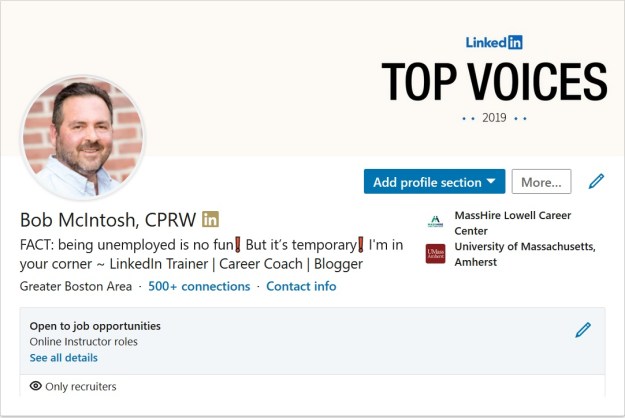


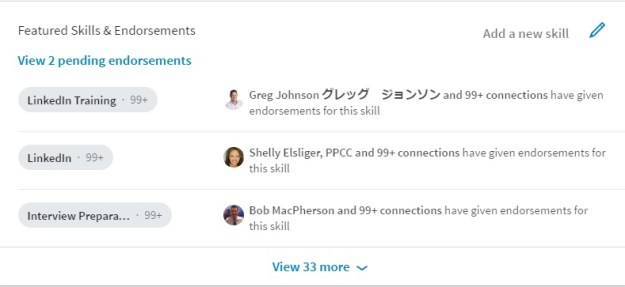



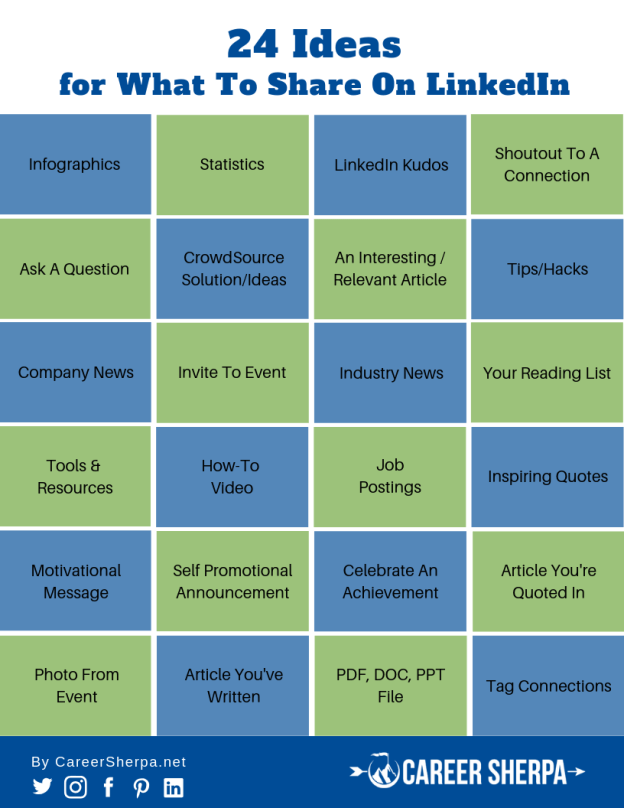







 Things Career Related