2 ways to ensure you receive a timely, quality LinkedIn recommendation

RecommendationMany jobseekers and employers think LinkedIn recommendations are worth gold. Recommendations espouse jobseekers’ performance, describing valuable skills and accomplishments, and are visible on their LinkedIn profile for potential employers to see. What a great LinkedIn feature.*

However, as valuable they are, requesting a recommendation can be frustrating for two reasons, timeliness or the quality of a recommendation…or both.

So after waiting for months and receiving something that doesn’t describe you the way you’d like, what do you do? Do you send the recommendation back to your reference, or do you post it on your profile as is? You send it back and you risk waiting even longer for a revised recommendation.

Let me suggest two ways to ensure a shorter wait, as well receiving a recommendation with which you’ll be happy.

1) First, offer some guidance to the person who’s writing your recommendation in terms of the types of skills, accomplishments, and experience you’d like to be included in the recommendation. Having written recommendations for others, I know how difficult it is to determine what to write about the recipient.

So eliminate any guesswork and tell your reference you’d like her to hit upon your leadership, customer service, team-building, technical expertise, or other strong skills. Also remind her about any accomplishments, e.g., you increased productivity 55% by taking the initiative to develop a better process to track and store electronic parts; just in case she has forgotten.

2) The second alternative is one that will require more work on your part; writing your own recommendation. This is a last-ditch effort but one your reference will greatly appreciate. You may remember doing this where you worked, when your manager told you to write your own for her to sign. Same idea.

This takes considerable work on your part because it takes stepping outside yourself to evaluate your performance. In other words, how would the person writing your recommendation see your current or past performance? You’ll be promoting yourself, which is not always the easiest thing to do. But this is not hard to do as long as you are as objective as possible. Refrain from using adjective like “excellent,” “outstanding,” “perfect,” etc. Stick to the facts. Also expect your professional reference to edit what you write, perhaps revise it significantly.

Recommendations are still valued by employers who visit your profile. It gives them an idea of your talents and promise for the future; so why drive yourself crazy waiting for them to arrive, and why guess what you’ll receive from the well-intentioned reference.

*Recommendations have been replaced by Endorsements as one requirement to reach 100% completion for a profile. This implies endorsements hold real value, which many LinkedIn members dispute. These naysayers think it’s a lot easier to click on someone’s skill/s than it is to write a thoughtful recommendation. I agree.

How Twitter Twesumes can help you find a job

twitterIf, like me, your writing is verbose and you struggle expressing yourself in 140 characters; forty-thousand characters would suit you more. (That was 140 characters, by the way.)

But as I gradually accept certain technology, Twitter now seems to be a pretty good idea. It keeps words to a minimum, forcing me to be brief. The idea that shorter is better starts to sink in.

Newsflash: there’s a very real possibility that the job search is heading, in part, in the direction of Twitter. In a world of busy recruiters, hiring managers, and HR professionals, where shorter is better, Twitter provides a great vehicle for sourcing talent.

But how can jobseekers present their experience, valuable skills, and accomplishments in 140 characters? Obviously they can’t. They can, however, use Twitter as a vehicle to achieve this in the form of a Twesume. The Twesume is not a new concept; I read about it in December, 2011, in a Mashable.com post, How a 140-Character Twitter Resume Could Land Your Next Job.

I have to admit I question the success of the Twesume, but I’m open-minded and willing to consider any advantage jobseekers can use to get themselves in front of employers. The Twesume usually comprises of two important components; a compelling value proposition and a link to either a LinkedIn profile or online résumé.

Here is an example of a value proposition (mine) with a link to a LinkedIn profile (mine).

Delivering trending job-search advice for your job-search success/LinkedIn training for business’ advantage. http://tinyurl.com/7gd4kqu #twesume. (137 characters.)

In order for your Twesume to work, you must be engaged in ongoing discussions on Twitter, follow potential employers, and let people know you’re looking for work.

To make companies aware that you’re looking for work, send your well-crafted Twesume to companies via a tweet to @company, or through a DM. Send your Twesume to companies who announce their positions on Twitter, or who will potentially be hiring in the future.

How real is the need for you to create a Twesume?  A CNN article writes, “Earlier this year, the chief marketing officer of U.S. technology company Enterasys, Vala Afshar, announced that he would only consider Twitter applications for a senior social media strategist position with a six-figure salary.”

As I think about the Twesume, I wonder if it will actually take hold and perhaps replace the résumé in some industries. A busy world of hiring authorities says it will.

An example of my Twesume:

sample twesume

Stories are important to the job search, but how many are necessary?

I have a hard time remembering my brothers’ birthdays, so you can imagine how difficult it would be for me to remember the specifics of my customers’ occupations and goals for employment. I need to know more than: software engineer in the defense industry, or nurse in pediatrics, or physics teacher in high school with a dual license in middle school.

I need a story, and not just any story, from my customers. A story that shows accomplishments and highlights  numerous skills. Employers feel the same way; they’re going to remember you best if you tell them compelling stories. You may wonder how many stories you’ll need in your arsenal to succeed at an interview.

How many stories are enough? Katharine Hansen in her blog titled, Create a Memory in Job Interviews By Telling Stories, talks about the importance of telling stories to help the employer remember you.

When I have taught students or conducted workshops about using story in job interviews,” she writes, “I have participants develop three stories—largely because most audiences can develop three in the short time period of a class/workshop. I’ve found that with even just three stories, participants can adapt the stories into responses to many, if not most, interview questions.”

Katharine continues to explain that preparing for an interview will probably require more than three stories. She refers to both Ellyn Enisman, author of Job Interview Skills 101, and Richard Bolles, What Color is Your Parachute, of the importance of the number seven—the magical number of stories a person needs to succeed at any interview.

Really, how many stories are enough? Katharine pushes the envelope, saying that 10-20 would be a better range of stories to tell, but then recants and says that the number seven is more realistic. I agree that the goal of 10-15 stories is a bit demanding. I encourage my customers to identify in a job ad the most important competencies for the position and write a story for each one. If there are eight competencies, develop eight stories. But this, I believe, is also pushing the envelope.

Stories tell more than one story. One wonderful thing about stories is that often they reveal more skills in the candidate than the interviewer originally asks for. For example, the interviewer asks you a question based on leading global teams. You tell a story that reveals not only leadership skills, but also problem solving, time management, and communication skills…with positive quantified results. The story is told with such conviction and confidence that it covers potentially four questions.

How to prepare your stories. There are many acronyms you can use to organize your stories. One I present to my customers is (STAR) situation/task (their task in the situation), actions, result/s. There are also (PAR) problem, actions, result/s;  (CAR), challenge, actions, result/s (OAR) opportunity, action, results, etc.

Regardless of which structure you use to tell your story, try to structure it the following way: 20% for the situation/task; 60% for the actions, and 20% for the results. Employers will be most interested in the actions you took to arrive at the result/s, so make sure you describe your role in the situation.

What if….It’s also important that you not only prepare success stories; you also prepare stories that address failures. These types of stories contain the same elements: the situation/task, the action you took to meet the situation, and the result; which in this case is mildly negative. You’ll also keep the “failure” questions short and sweet; don’t elaborate as you would with the success stories. It’s advisable to prepare a failure story for each competency. When you do the math, you may double the number of stories from seven or eight to fourteen or sixteen.

What you’ve read is a lot to stomach. The important thing to keep in mind is that stories when told well are powerful and memorable. Once you have written your stories based on the competencies required by the employer, most of the hard work is accomplished. The next step is telling your stories at the interview.

5 things to consider for an interview; it’s not all about the hard skills

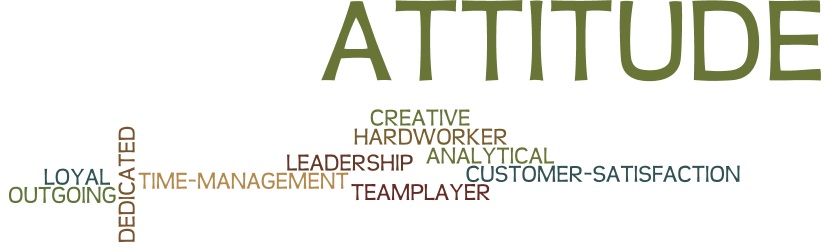
Recruiters and staffing agencies are not only concerned about job candidates’ hard skills; they’re also concerned about their soft skills. And this makes sense. Who would want to hire a dud who brings the operation down with his attitude? Jon Prete, “Who would you hire: Charlie or Ashton? It’s all about attitude!” and Jeff Haden, “The 5 Biggest Hiring Mistakes,” both emphasize the importance of hiring someone who will be a good fit.

This said, how should you prepare for the job search with this in mind? Here are five areas of your job search to focus on.

Be the round peg for the round hole: “The outstanding salesman with the incredible track record of generating business and terrorizing admin and support staff won’t immediately play well in your sandbox just because you hired him,” writes Haden. Let’s face it; if you’re difficult to work for, you have one strike against you already.

Look at yourself long and hard and determine what areas in your personality you might improve. Also determine in which work environments you feel most comfortable. If you’re a demanding person with little tolerance, you might consider an atmosphere with other demanding people…where you can’t terrorize other people.

Show it on paper: Many jobseekers say writing about their soft skills on their résumé and in their cover letter is irrelevant. This is bunk, especially with your cover letter. I don’t suggest that you use clichés like, “hard worker,” “team player,” “dynamic.” I suggest you illustrate these traits through your accomplishments. Show rather than tell.

A Manufacturing Manager who has a team-work approach and leadership skills might write: Consistently met production deadlines through collaboration with colleagues in various departments and providing effective leadership to (formerly) unmotivated subordinatesResult: Products were shipped to customers with a 97% return rate.

Talk about your soft skills while you’re networking: “I hate bragging at networking events,” I’m constantly told. “Nobody wants to hear about my personal qualities.” Yes they do. If someone is going to recommend you to a solid contact, wouldn’t you like to be assured that she will tell him that you loved what you were doing; you were a positive influence on you co-workers?

Demonstrate your enthusiasm while you’re networking, whether at events or on the sidelines of your daughter’s soccer game. Instead of saying, “I’m innovative”; say, “I came up with ideas that were often implemented and led to significant cost savings.”

Of course demonstrating your soft skills at the interview is important: This goes without saying. Interviewers today are using behavioral questions to find the people with the right attitude. “If crafted properly,” states Prete, “behavioral questions can provide a glimpse into a candidate’s decision-making process as well as their values. [Leadership Development Advisor, Beth Armknecht Miller] believes that a great majority of employees fail in a company because their soft skills and values don’t match those of their manager and company.”

Unlike the résumé where you have limited space, the interview provides you the platform to tell your stories using the STAR (situation, task, action, result) formula. You may be asked about your ability to effectively discipline subordinates. “Tell me about a time when you were effective in disciplining an employee. How did this help the employee perform better?” Have a story ready.

Seal the deal: The interview is not concluded until you’ve sent a follow-up letter, I tell my workshop attendees. This is another opportunity to emphasize your strong personality skills, making you a better fit for the position than other applicants. Many jobseekers fail to send a thank you note, and some don’t get the job for that reason.

A former customer recently wrote me, “The HR person really liked my hand-written thank-you note; said it was rare.” The message here is that you can stand out as a courteous, professional, and follow-through type of candidate simply by sending a thank-you note.

Jobseekers generally think that recruiters and staffing agencies care only about the technical skills. (After all, recruiters can’t present a zebra with orange stripes to their client when a zebra with black stripes is called for.) But two recruiters are telling you that employers want a great personality fit, as well. Take their advice and sell yourself as an all-around employee from the very beginning.

Why are jobseekers and recruiters/employers disconnected?

disconnectedI have been accused of being disconnected from my family. For example, with Easter approaching, I should’ve known that it’s a gift-giving holiday, when the girls will receive $100 Sperrys and my son a massive amount of candy, which will amount to a large dentist bill. How could I have forgotten?

This is a trivial matter compared to how disconnected jobseekers and recruiters/employers are when it comes to LinkedIn’s role in the hiring process. It makes me wonder if jobseekers are aware of how recruiters/employers value LinkedIn as a tool to find talent. The two parties aren’t on the same page.

An infographic published on The Undercover Recruiter paints a pretty telling picture of the importance recruiters et  al place on LinkedIn in finding candidates, while it also shows that  jobseekers seemingly place little importance on using LinkedIn.

Facts from the infographic show

Recruiters

Jobseekers

  • 48% of recruiters post jobs on LinkedIn and nowhere else on social media
  • 73% of recruiters filled a position using social media in 2012, a 15% increase from 2011


  • 50.5%: The percentage of LinkedIn users who have complete profiles


  • 89% of recruiters have filled a position using LinkedIn at some point in time


  • 0-2 hours: The amount of time per week most users spend on LinkedIn


  • 97% of all HR and staffing professionals use LinkedIn in their recruiting efforts

The reasons vary as to why jobseekers fail to utilize the very tool that recruiters/employers are increasingly relying on to find them. It may be that LinkedIn is difficult for some to master. Only 50.5% of LinkedIn users have a complete profile. Some of my customers complain about basic things like downloading a photo, remembering their password, how to connect with other members or the Jobs feature, etc.

Some may find it impinges on the numerous hours they spend on the job boards. Sadly, the average time spent using LinkedIn is a mere two hours a week. Good gosh, I spend two hours a day on LinkedIn. Can they give up half an hour a day? Fifteen minutes?

Others may wonder if LinkedIn actually works. There have been no cold facts on the success rate jobseekers have had at finding work directly or indirectly by using LinkedIn. We have heard that personal networking garners anywhere from 60-80% success if used as the primary job method, but some people will only believe it when they see it.

There are jobseekers I consider to be experimenters–they join LinkedIn because they’ve heard how it will help them get a job, only to abandon the application after a day or two of looking for immediate gratification. To these folks, I tell them to kindly close their account and not muck up the work for the rest of us.

Whatever reasons there are for recruiters and jobseekers being so disconnected, it is obviously clear that the two entities are fishing at different lakes. Recruiters will never reveal where the fish are; and I fear I will never understand that Easter is a gift-giving holiday.

2 ways employers can do a better job of hiring employees

Not to beat a dead horse, but employee (overall) fit keeps popping up in the news and conversations. Increasingly more employers are finding that the people they hire aren’t working out because they lack the right attitude, and they are quick to release those who don’t meet their expectations. This doesn’t  bode well for employees and employers.

An article in Forbes.com states that in a study of 2,000 hires only 46% worked out in an 18 month period. This is certainly alarming given that almost 50% of hires aren’t working out. What’s particularly telling is that 89% of those who failed, failed because of their attitude.

“Lack of coachability, low levels of emotional intelligence, motivation, and temperament, accounted for 89% of those bad hires,” according to the Forbes article.

Not for nothing, but this doesn’t surprise many people except, apparently, employers who eagerly interview and hire job candidates who look great on paper—e.g., meet most if not all the technical and transferable skills—but don’t put much weight into assessing their attitude. In other words, employers are falling down on the job of hiring the right people.

One way to determine if applicants possess these skills is by asking better interview questions.

The traditional questions like, “What is your greatest weakness?” or “Why do you want to work here?” or “What is your definition of a great manager?” are losing their effectiveness. Jobseekers can rehearse and provide the answers employers want to hear. The tougher questions, namely behavioral ones, will get to the heart of the matter with job candidates.

If the employer needs to know the person has or lacks leadership skills, a series of behavioral questions will draw this out. For example, “Tell me about a time when you inspired your subordinates to perform beyond their job description.” On the flipside, “Tell me about a time when you could have handled a personnel issue better, and how did you correct the issue?”

Questions like these will reveal more than typical traditional questions or tests that judge a person’s technical abilities. Employers who are asking behavioral questions tend to land candidates that last longer—up to 5 times longer, according to some, than those who are asked traditional questions.

Another way to determine if the applicant possesses the right attitude is hiring through referrals.

But it’s not only the questions employers need to ask to ensure better hires. The article states that referrals are employers’ ultimate choice when it comes to hiring people. That’s because the people making the referrals can vouch for the candidates’ personality and ability to go the distance for the company. As well, employers trust candidates’ references; they’re known by employers as people with whom they work, have worked, or know on a professional basis.

Jobvite.com conducted a survey in which it asked employers to rate the methods of hire that yielded the best results. Out of 10 points, referrals ranked the highest at 8.6. Job boards, incidentally, rated tied for last at 6.1. This makes me wonder why employers continue to advertise on Monster.com, SimplyHired.com, CareerBuilder.com, Dice.com, and so on. I guess it’s hard to break habits, even if they’re ineffective.

So what’s the secret behind hiring people who will stick for longer than 18 months? Better interviewing methods and relying on referrals, according to Forbes.com.

What this means for jobseekers. They must be prepared to answer behavioral question, as well as connect to people who know someone at the company or know someone who knows someone at the company. For ways job candidates cans prove their worth, see Recruiters and staffing agencies say your soft skill are important too.

This post was published a year ago, but ti’s still relevant today. Bad fit is one of the biggest complaints among employers, so what are they going to do about it?

Why we hate networking for jobs: confessions of a networking convert

Call centre

This is a guest post form one my favorite authors, Rebecca Farser-Thill. I decided to host it because it speaks not only to college students, to whom she gives a kick in the ass, it also speaks to jobseekers of all ages. I’m also hosting it because it’s one article that made my morning coffee go cold–a great sign of compelling writing.

Networking for jobs. When I mention the phrase to my Bates students, their noses wrinkle, their lips grow taut, and the tip of a tongue sometimes protrudes ever so slightly from their mouths. Disgust. That’s what they’re demonstrating. Pure disgust.
Ooo, there’s a balloon at the call center! That makes this job much more appealing. (Photo credit: Walt Jabsco)

I get it. I used to be an active member of United Anti-Networking Individualists. It’s a faith that effectively thwarts the creation of a fulfilling career, given that over 80% of jobs are unadvertised. My fellow worshipers and I were left with the plum jobs that everyone knows about, like these from a recent Monster search: Call Center Manager (the only thing worse than having people hang up on you is managing the people who get hung up on); Product Support Supervisor (you get to field calls from people who want to return faulty items; they should be fun to talk with); and Data Entry Clerk (entering client bills all day, every day – be sure to sign up for glasses and carpal tunnel surgery in advance!)

The thing is, I joined the dark side. I now – gasp – proselytize for job networking.

Yes, it’s true. As part of my mission, I offer you the top reasons we hate networking for jobs. And why we’re completely wrong. Based on psychological science, no less.

1. I Don’t Want to Bug People

Leave The Kids At Home And Turn Off The Damn P...Think people will react like this when you contact them? (Photo credit: Cayusa)

Let’s pause for a second and consider what happens when you contact someone with a networking request. You’re essentially saying to that person, hey, you’re in a great position in life and I’d like to emulate you, or at least get closer to emulating you, and I was wondering if I might ask you to talk about yourself for fifteen minutes or so, and share some of the awesome contacts that I’m envious you have made? Ah, yes, I see why this is “bugging people.” Not!

Number one:  People love to talk about themselves. That’s the cardinal rule of human psychology.

Number two: People love to be praised and to feel like they’re doing well on the social hierarchy. The second rule of human psychology.

So, “bugging people”? Uh, not so much.

2. I Want To Be Self-Sufficient

Ah, yes. The Western ideal run amock. I can do it myself! That’s what you think, right? Then why do humans fall apart when they’re socially excluded, suffering from depression and sometimes resorting to extreme aggression? Psychologists Baumeister and Leary claim that our “need to belong” drives much human behavior. In other words, we need one another to survive, both physically and psychologically. You’re going against your basic nature if you assert otherwise. When you’re in need (and when you’re out of work, you are in need) that’s the time to go with your evolutionary instincts, not fight against them. 

3. I Have the Wrong Personality For Networking

OK, you’re onto something here. Psychologists Wolff and Kim found that people who are extraverted and high in openness to experience are more likely to network for jobs than people with introverted, closed personalities. That said, personality does not dictate all of our behavior. We may have to go “against type” in order to network, but we’re required to go against type everyday for a variety of reasons.

I mean, for a true introvert, holding a spontaneous conversation can be excruciating. But introverts manage to do this all the time (thankfully). You’re not being asked to change who you are in order to begin networking for jobs; just to channel a different way of relating to the world. And only for a short while. Besides, if you are an introvert looking for a career, you’re probably drawn to career paths that other introverts love. Meaning you get to network with other introverts. That’s hella comforting (speaking from my introverted self).

4. I Don’t Have a Network

Isolated House - CasolareYou live here? (Photo credit: Aesum)

Oh wow, you’re a hermetic isolate who lives in a cave? I always wanted to meet someone like you (it’s very hard to do, seeing as how people like you never emerge from your dwellings). What, you’re not? You actually live in the real world? Then, hate to break it to you, you have a network. A network isn’t some fancy-schmancy secret club of Ivy League graduates who sit around drinking scotch while their chauffeurs polish the Mercedes. A network is just people. Plain ol’ people. If you ever talk to anybody, then you have a network. Period.

But wait, I feel my psychic skills abuzzing; your rebuttal is ringing in my ears:

5. No One In My Network Knows Anything About My Field

This may be true. Maybe your network is full of people with careers you detest, or with backgrounds you’d rather not admit. But who’s in their network? And in those people’s networks?

Here’s a tale from my anti-networking days:  I attended a career seminar at Cornell, back when I was plotting my great escape from grad school. To prove the power of networking, the career counselor made us each pair up with a random person in the room and see if we couldn’t comb their network for someone related to what we wanted to do (and they ours). My partner got an immediate bingo from me; my dad worked in his prospective field. I, on the other hand, came up with peanuts from him. Peanuts.

There, I thought, proof that networking is a joke.

Flickr friendsNone of your friends knows anything useful? Bummer… (Photo credit: Meer)

The counselor then went around the room, making everyone announce the connections they’d made. And they all had made connections. Except for me. (LOSER!)

When I professed my failure, the counselor kept hounding my partner and I, refusing to let the subject drop. You really have nothing to offer her? You can’t get anything from him?Nope, we said, nothing.

As the seminar concluded, I went over to my partner and offered my email address, so that he could get in touch with my dad. As I handed it to him, I noticed a word on his Izod shirt (this clothing choice alone offers insight into why we had nothing in common). “Falmouth,” I said, reading the word on his shirt. “As in Maine?”

“My Grandma lives there. Has her whole life.”

“That’s where I’m planning to move in a few months. To Falmouth, or nearby. And I don’t know a single soul there.”

The career counselor leaped over, like a possessed little jackal. “A-ha! I told you! Networking works!”

I glared at her, desperate to cling to my ideology. But as I talked to the grandma on the phone the next day, getting tips on where to live and where not to; the local publications in which to search for jobs; and the contact info of her niece who worked in social services, I couldn’t help but question my anti-networking faith. Could networking be this powerful? And this easy? But still:

6. I Hate Using People

Here’s the biggie, especially for you Millennials. Although you’ve come of age in the era of social networking, you’re loathe to “use” those networks for personal gain. They’re about self-expression and connection, right? Not about the trading of favors.

First, re-read Point #1 above.

Then stop and consider how you feel when you have a service you can offer to someone else. In the case of networking for jobs, it may be information about a certain career path, a connection to someone at your company, or the link to a friend or relative working in a particular industry. We humans are altruistic beings at heart, so when we give, we experience enhanced psychological well-being and decreased feelings of stress. We also earn social support from our actions.

As writer Elizabeth Scott says, “When people make altruistic personal sacrifices, they end up reaping what they sow in the form of favors from others. These individuals earn the reputation as altruistic people and end up receiving favors from others who they may not have even directly helped.”

So, in essence, when you’re asking others to help you, you’re giving them the opportunity to experience more well-being, less stress, and the likelihood of returned favors in their future. Oh yes, this sounds like “using” somebody alright. Whatever you say.

Final Thoughts

Chances are I haven’t made you a convert to networking for jobs just yet. It takes time. I know. But when you decide you’re ready to fail Career Avoidance 101, a great start is to accept networking into your life.

I’m not only a Nutty for Networking  member. I’m its President.

So what did I miss? What deters you from networking for jobs?

A moment to share an accomplishment

I was nominated for the Liebster “Very Inspiring Blogger Award.” The reason I’m really psyched about this is because I love getting recognized for my writing, especially by the blogger whose writing talent I’ve come to admire. Rebecca Fraser-Thill writes a blog called Career Avoidance 101. Her writing is insightful and soulful.

She describes herself as a procrastinator who has no intention of changing her career path (good decision). Reading her bio, one gets the sense that she has found the career of her dreams–teaching college students while also being able to write some really inventive prose.

To accept this nomination I am required to: 1/ Display the award logo on my blog; 2/ Link back to the person who nominated me; 3/ State 7 things about myself; 4/ Nominate 15 Bloggers for this award; 5/ Notify those bloggers. 

The only challenge I see in this is choosing only 15 bloggers out of the many I’ve come to admire for their ability to write great stuff. So here it goes:

Seven things about me in no order of importance:

  1. I love cheese cake and have been paid by some of my jobseekers (really only 2 came through for me) for helping them get a job.
  2. I have a great family, all of whom I’ve embarrassed in one way or another. Example, my eldest daughter whenever I talk to a stranger.
  3. I’m a good soccer coach but a lousy assistant basketball coach. I’m still learning the rules and improving; nonetheless, my son never wants me to be a head coach.
  4. My kids constantly comment on my Buddha belly.
  5. My dad was my hero, but I never had the chance to tell him this.
  6. I’m pretty damn good at what I do. Example, one of my customers told me today that my advice is priceless (or did he say useless?).
  7. I’m bummed that I can’t go on. This is really fun. Oh, like Rebecca I have preference for perceiving (MBTI speak) and, thus, am a procrastinator.

This is the hard part, nominating 15 bloggers for this award. There are so many great bloggers out there. I nominate the following bloggers, in no particular order.

  1. Kathy Hansen A Storied Career
  2. A compilation of neat writers Career Thought Leaders
  3. Laura Smith-Proulx Executive Resume Expert
  4. Martin Yate Knock em Dead
  5. Meg Guiseppi Executive Resume Branding 

  6. Chris Perry MBA Highway
  7. Danielle April Boucher P.S, I Love PR
  8. Rebecca Fraser-Thill Career Avoidance 101 (back at ya)
  9. Anton Brookes Lust and Rum
  10. Fozia Saeed foziasaeed
  11. Neal Schaffer Windmill Networking
  12. lthibault11 Listentomethunder
  13. Ben (simply Ben) Your Job List
  14. Tim Lushey Sell, Lead, Succeed
  15. Donna Serdula LinkedIn Makeover

If you’ve been nominated, you can follow the aforementioned rules and nominate 15 bloggers of your own. Let’s build a community of networkers.

The importance of informational interviews by Danielle April Boucher

danielleI prefer to call them  informational meetings, but that’s beside the point. I mention informational meetings in my Roadmap for Job Search Success workshop as a great source for gathering information, gaining leads, and perhaps hitting the jackpot. By this, I mean being there when the company may be in the process of looking for someone like you.

I digress, because what I want to do is share a blog post by someone who I think is a great writer and promising PR pro. She shares in her post below some sage advice on the importance of informational interviews (I prefer informational meetings).

Posted by Danielle April Boucher
Here is my follow-up post on Informational Interviews. You can find the first one on how to do informational interview here.
Thus far I have done 7 informational interviews and have met a significant number of different PR professionals from my area and have learned from first-hand experience. Completing 7 info interviews might seem like a lot, but once you get into the groove of contacting people you get good at it; it becomes easy and natural. I found that I wasn’t able to meet some people face to face and so I did some Skype and phone interviews as well.
Each type had its own feel, but because I was prepared and they were willing to help me, they all went smoothly. The key is making sure the info interviews are helping you and not stressing you out. So while I recommend that all graduating students do some, 7 might not be feasible for everyone. That being said, I have gathered some interesting insights from a variety of people from different areas of the PR industry. Because I believe in helping my peers and because I want to give my readers some value, I will share what these PR professionals so generously shared with me about the skills you need in PR and the advice they have for grads.
Essential Skills for PR 
(Other than writing and communication) 
  1. Business savvy. You need to understand your business, your organization’s priorities and how PR functions within the overall profitability of the business. This means not getting distracted by personal motives or caught up in the PR side without considering the business side.
  2. Data management. One of the interviewees told me “The person who has data wins.” In PR, evaluation is everything, so data is essential. The data points to what is working, what is not, why you do certain things and why you don’t do others. When analyzed properly, data is valuable information that can be leveraged to justify what you do, how you do it, and most importantly why it works!
  3. Perceptive abilities. In PR your job should not just be coming up with ideas, but seeing holes in plan where others may miss. The ability to anticipate reactions, needs, disasters and gaps where others can’t is what will separate you from others. This is why knowing who your stakeholders are key!
Advice for PR Students and Grads 

  • Volunteer work is a great way to build your portfolio and skills.
  • Finding a mentor is a great way to learn about your career goals.
  • Join professional organizations to make networking easier.
  • Network and build valuable connections whether it is in-person or via social media.
  • Keep in contact with people you meet; following-up is essential (this means following up with the people you do informational interview with).
  • Stay open to opportunities – say yes and always follow through.
  • Dress the part. No matter what you should look respectable; it shows that you care and that you pay attention to the little details.
  • Make a plan of your goals and be specific. Writing them down makes you more accountable to yourself.
  • Do something every day that will bring you closer to your goals. This will build your momentum and create a self-fulfilling prophecy.
  • You don’t get, if you don’t ask – this requires you to reach out and be proactive in seeking out opportunities.
  • Know what you are asking for (i.e. meeting or job) and know what your give is. When asking for something, make sure you can return the value in some way.

Finally, the great thing I learned from doing informational interviews is how to be confident when meeting people. I feel so much more comfortable in interview settings now and with cold calling people too. I also learned some great advice as shared here!

I hope this helped and if you have advice to share, please comment below. And let me know, how do you feel about informational interviews?

10 excellent reasons to read other people’s LinkedIn profiles

businesswomanPeople often ask me how they should write their LinkedIn profile. Among other things, I tell them to cruise around LinkedIn and look at tons of profiles to see which ones they like best. And then, without copying, emulate them. As the saying goes, “Imitation is the best form of flattery.”

  1. Notice their photos. Are they tie-and-jacket professional or casual professional?
  2. What about their title? Do they have a branding title–you know the ones that make you say, “WOW”? Or does it make you yawn?
  3. See what keywords they’re using for SEO (search engine optimization). Are their keywords strong enough to catapult them to the top?
  4. What kind of story do they tell in their Summary?
  5. What accomplishments do they tout in their Experience section?

My colleague Laura Smith-Proulx writes about 5 Reasons You Should Research Your Job-Seeking Competition on LinkedIn, in which she advises her clients to study their competition, not only to get an idea of how to begin and craft their profile. Her message is that you must become a student of examining your competition in order to really succeed in the job hunt.

In her article she asks you to look at five points as part of their strategy.

  1. Gaining insights applicable to your own career path.
  2. Forming new networking or career advisory relationships.
  3. Discovering which companies hire experts in your field.
  4. Learning how your skills stack up in the job market.
  5. Getting a close-up view of how to tune your Profile for internal SEO.

Laura goes beyond perusing others’ profiles to gather ideas for content. To build a powerful LinkedIn profile and then use it as Laura suggests, you’ll need to spend time and energy, which is what all the pundits say. Read Laura’s article.