
Category Archives: Career Search

The most important 120 characters on your LinkedIn profile

We’ve hit a dead end. My customer is over the limit by two characters. “What if we use an ampersand instead of ‘and’?” I suggest. No, she doesn’t like this idea. Doesn’t look aesthetically pleasing. Doesn’t match the flow. She’s exasperated…I’m getting exasperated.

120-characters

We’re running on 10 minutes just trying to figure out how to stay within 120 characters that are so important to her LinkedIn profile, so important to everyone’s LinkedIn profile. I’m talking about the Professional Headline, or what I call the Branding Headline (BH), as it’s an important part of your branding.

My customer and I are limited on time, and I can sense her impatience. “Is this really important?” she asks. Oh yes, extremely.

The Branding Headline can only be 120 characters (including spaces) long. Less characters than a tweet. It’s prime real estate. Basically it’s where you state what you do and how well you do it.

You may choose to go with a branding statement or your title/s and areas of expertise. It’s the first verbiage visitors will see, and it contains keywords that help you get found through a commercial search—it can make the difference of you being on the first of second page.

A poll taken awhile ago on LinkedIn deemed the BH more valuable than the Summary section but less than the Experience section. More valuable than the Summary?! Needless to say, your words must be well chosen.

Visibility: Where does the Branding Headline appear? Part of it appears on your connections’ homepage when you share an update, such as an article or quote or bit of advice. A quick glance at my homepage reveals that the majority of my connections are not posting original content; therefore, they’re not selling their skills in their BH.

Your Branding Headline doesn’t only appear when you 1) respond to an update, 2) “Like” an update 3), connect with someone, 4) start a group discussion, etc. In a commercial search your BH will always appear in its entirety, and the title and skills the person seeks should be highlighted in your BH.

Importance: For me if I don’t know a person who is asking me to join his network, I will make my decision based on 1) if he has a photo and 2) what his BH says. No photo and a weak BH, I won’t accept that person. Like the photo, the BH tells me quickly who the person is. I don’t have time to view every profile to see if the person is worth connecting with. In short, the BH should accomplish:

  • Along with your photo, your BH first brands you; it is a value statement, an attention grabber.
  • It sets the tone for the rest of your profile, a mini Summary statement. Another poll taken awhile back on LinkedIn says the important sections of the profile, in order, are Experience, Branding Headline, and Summary.
  • It contains important keywords that help employers, potential business parties, customers, and visitors in general find you.

Below are LinkedIn members’ Branding Headlines.

Change your Game and Make More Sales. My clients increase sales 30% or more. A mere 76 words, this Branding Headline captures my attention because of its value statement.

This BH is more impactful because of the accomplishment in it: Sales & Leadership Coach & Consultant; Award Winning Sales Consultant & Director; Wine Consultant/ Wine Judge/ Crafter. It uses 118 characters.

My BH consists of my title and areas of strength. I created it to optimize my profile for “LinkedIn” searches. I’ve used 111 characters. LinkedIn and Career Search Strategist | LinkedIn Profiles | Author | Blogger ~ Job Search, LinkedIn, Introverts

Another BH that sells this LinkedIn member: Online Branding Coach ✮ LinkedIn Trainer ✮ Social Media BootCamp Instructor ✮ Career Specialist ✮ INfluential Speaker!

There are other Branding Headlines that impress, but the time the LinkedIn members put into crafting them was probably significant. I’ve lamented over how I can utilize the remaining nine characters in my BH.


My customer eventually settled on the ampersand, but only after 15 minutes of deliberation. We’ve got another 15 minutes left on the clock. When I tell her this, she sighs and laments that we still haven’t gotten to her Summary.

Photo: BethAnn Ragen, Flickr

7 ways to drop the ball in the job search

mistakegirl

I’m not known for my etiquette. For instance, I often forget to send birthday cards to family members,; or I forget their birthdays entirely. When I’ve forgotten birthdays, I’ve essentially “dropped the ball.”

There are a number of ways jobseekers “drop the ball” in their search. They may not be aware of the mistakes they’re making, or they simply may not care. But it only takes dropping the ball once to lose out on an opportunity. Here are seven mistakes that come to mind.

1. Don’t update their résumés to reflect the job requirements. Some of my customers admit to sending a cookie cutter résumé, or one-fits-all, to a prospective employer because it’s the easy thing to do.

Not recommended. It’s sort of like giving someone a Valentine’s Day card that you’ve given your loved one the year before…and the year before that…and the year before that. In other words, you’re not showing any love.

Employers hate receiving résumés that aren’t written to them, ones that don’t address their needs and concerns. So make the extra effort when writing the most important document you’ll write until you land a job.

2. Don’t send a targeted cover letter. Again, like the résumé, the cover letter must reflect the skills and experience that are needed for the particular job. Your cover letter is a great way to tell your story and point the reader to the key accomplishments on your résumé.

One customer of mine sheepishly admitted that she once sent a cover letter with someone else’s name on it. That’s just plain embarrassing but goes to show you that care goes into writing and addressing the requirements of the job.

3. Fail to follow up after sending the documentation. Unless the employer strictly says, “No phone calls, please,” follow up to see if she has received your material. Employers aren’t dumb; they know why you’re calling. You’re calling to put a voice to the résumé and cover letter. In that case, make sure it’s a good voice.

Be prepared to talk about your interest in the job and company, but most importantly be prepared to state what makes you better than the hundreds of other applicants for the job. Have your personal commercial ready to deliver, a commercial that’s tailored to that particular job.

4. Avoid networking. Even though you’ve heard over and over again that networking is the most successful way to land a job, you would rather apply for jobs online. Guess what, the majority of jobseekers are applying for jobs online, and these jobs represent 20% of all jobs available in the job market.

The best way to land a job is to penetrate the Hidden Job Market by networking. Employers would prefer promoting their own employees, but if that isn’t possible, they’ll turn to referrals. The only way to be referred is by knowing someone at the company or knowing someone who knows someone at the company.

Networking doesn’t come easy to everyone, nor do some people like it; however, it must be done. You don’t necessarily have to attend networking groups, but you should make it part of your daily routine. Network wherever you go, whether it’s at a sporting event, your religious affiliation, your dentist’s office, a social gathering.

5. Aren’t taking LinkedIn seriously. I know this is tough for those qualified jobseekers who don’t know what LinkedIn is and don’t understand why it’s important in the job search. I see the dear-in-the-headlights look on my LinkedIn workshop attendees when I ask them how their profile matches up.

These are people who are curious about the application—how it can help in their job search. Well, it can’t help if your LI profile isn’t up to snuff. Rather it can hurt. Here are a few ways it can hurt: 1) it’s identical to your résumé in that it doesn’t provide any new information; 2) it isn’t fully developed; 3) you only have a few contacts or recommendations. There are many more mistakes you can make with your profile.

As a side note, the other night I was talking to a recruiter from RSA who said he spends every day on LinkedIn looking for people to fill his software engineer positions. One point of interest: he told me Monster.com is dead to him. This is how important LinkedIn has become.

6. Don’t prepare for the interview. At the very least you should research the job and the company so you can answer the difficult questions. Take it a step further by gathering insider information on the job and company. Some of my customers have been savvy enough to use LinkedIn to contact people in the company.

However, the night before you can’t locate your interview outfit. You haven’t taken a drive by the company to see where it’s located and how long it will take you to get there. How many times were you told to practice answering some of the predictable questions you may be asked? Again, can you answer questions like, “Why should I hire you” or “Can you tell me something about yourself”?

7. Don’t send a follow-up note. This one kills me. After all the hard work, you don’t follow through with a Thank-You note that shows your appreciation for being interviewed, mentions important topics that were discussed at the interview, or redeem yourself by elaborating on a question you failed to answer. I tell my workshop attendees that the interview isn’t over until they’ve sent the Thank You note.

Don’t drop the ball for any of the aforementioned reasons; instead keep focused on one of the most important times in your life. My not sending birthday cards to my relatives, or even forgetting them all together, is minor in comparison to losing out on an opportunity.

4 reasons why only “Liking” an article on LinkedIn is meaningless

Like button

In response to an article I read lauding LinkedIn’s Like feature, I felt it my duty to re-post this article I wrote in April decrying this very feature. I’ve added a fourth reason why Liking an article is meaningless.

_____________________________________

One day I shared an article on LinkedIn. No sooner had I done this, I received a Like from one of my connections. Now this person must be the fastest reader on earth, or she simply saw my name and hit the Like link.

Don’t get me wrong; I appreciate my articles being Liked. But I would rather receive a comment with or without a Like. Yes, even if the reader thinks it’s total bunk. Here are three reasons why only clicking Like is a waste of time.

1. It’s too easy. Clicking Like takes approximately two seconds, whereas writing a comment involves thought and effort. When I enjoy a great article, I am happy to praise it. But to simply Like it makes me feel lazy.

On the other hand, if the article starts off with a bang and ends dismally, I won’t comment or Like it. Chalk it up as a waste of time, as they say. If you don’t have anything good to say, don’t say anything is what some of us were told by our parents. I follow this advice.

2. It doesn’t promote real interaction. The recipient of a Like has no real recourse, not like he would if a person were to write a glowing statement about the article he shared or comment he contributed. With endorsements, LinkedIn made a statement about its members being more engaging and interacting with each other. At least endorsements provide us with the option of returning the favor.

When I saw the Like that day, I didn’t feel inclined to write a note to my connection, “Thank you for liking my post…uh….” You see what I mean? On the other hand, if said person wrote a comment praising or criticizing it, I would gladly write, “I see your point about brainstorming being appreciated by intuitive types, but for me it’s a drain and often uneventful.”

3. It clutters people’s homepage. Alex Likes a group discussion. Katie Likes this [photo]. When I’m trying to read through the updates that stream on my homepage, I don’t need Likes cluttering it.

One of my connections Liked a large photo that had an inspirational quote on it. I’m a huge fan of Morgan Freeman, but I don’t appreciate an image that covers half my screen, as well as an inspirational quote that…didn’t inspire me.

One of my valued connections, Trenton Wilson, wrote a great post that says it best, Don’t be a Homepage Hijacker!

4. It stinks of Facebook. As LinkedIn members, we’re always trying to separate ourselves from Facebook. Whereas LinkedIn is a professional networking site, Facebook is a social gathering. Yet over the years, LinkedIn is emulating Facebook, much like Ford compares itself to Toyota.

What this tells me about LinkedIn is that it wants to be more like Facebook, just as Ford wants to be more like Toyota. Let’s pray this doesn’t happen, for LinkedIn that is.

Do the right thing; comment on someone’s update. Whether it’s an article a person shares, a few words of sage advice, a work anniversary announcement, or even a photo with an inspirational quote; don’t merely Like it. Write a comment, instead; or Like it and also write a comment. Comments are so much more meaningful.

If you liked this post, or even if you didn’t; write a comment and Like it.

14 traits of a winning LinkedIn group

Your GroupsI’ve talked to my workshop attendees about the importance of participating in groups until my advice sounds like a mantra. “You’ll only benefit from a group if you participate,” I tell them. “Start discussions, contribute to discussions, network within your groups…blah, blah, blah.”

But here’s the thing: why should we participate in our groups if they don’t add value? If we’re the Top Contributor for weeks running, doesn’t it mean no one else is pulling their weight? Further, does this say no one cares enough to be part of the community?

As the owner of the group, you are responsible for its growth and productivity. And if it gets to the point where you run short of time and can’t monitor or contribute to every discussion, assign people who are dedicated and will keep your group vibrant.

Recently I inherited a group, and I reflect on the responsibilities that go with owning a group (I already own a group). Can I handle taking on another group? Will I make the members happy to be part of the group? Can I find people who will manage it when I run out of time? To run a winning group:

  1. Big doesn’t necessarily mean better. I’m talking about the number of members, of course. Many people think joining a group with hundreds of thousands of members is the way to go. It’s quality of members that matters, not quantity. A winning group has the best minds in the industry.
  2. Great discussions. This is a mark of a winning group. Discussion should be relevant but it doesn’t mean members can’t go off track and raise new issues. Thirty-nine comments are always a good thing; it indicates involvement. Let people feel comfortable introducing new thoughts, ideas, and advice.
  3. Conducive to networking. Winning groups promote virtual networking among its members, as well as direct communication. Groups are where members can communicate, even if they’re not first degree connections.
  4. Appropriate shared information. The group’s mission should be upheld, and group members should post discussions that are relevant. I left a group because even its members wondered if the information was appropriate.
  5. Attracting thought leaders and keeping them in your group. They’re the ones who keep it going with interesting discussions. Thought leaders add value to the group when they contribute to discussions—everyone listens. As a group owner or manager, add your two cents when a great curator provides newsworthy articles.
  6. Members feel welcome. A winning group makes its members feel welcome. The owner or managers should welcome new members by introducing them and encouraging introductions from them. It’s about creating a community.
  7. Hold members accountable for contribution. I write this with a huge grin on my face. Years ago I was removed from a group because I wasn’t participating at the rate at which I was expected. I had great respect for the owner for doing this and removed myself from eight groups.
  8. No SPAM. Spam is considered anything hinting of sales or self-promotion. This may be the breaking point where members start dropping like flies. The owner or managers can delete or move content to Promotions if the entry is spam.
  9. Group rules, but not stifling. Every winning group should have rules, but not rules that make members walk on eggshells. Rules, for example, on how to pose questions or start discussions are a bit Machiavellian. One group I’m in poses such rules. Maybe it’s time I exit this group.
  10. No pending submissions. I’m sorry, but if I submit a question, contribute to a conversation, mention a job, or post an article; I don’t want my submission to be reviewed. Trust those who contribute to the group…unless they break rule #2. In addition, some owners aren’t diligent about checking submissions, leaving people waiting for their discussion to show.
  11. Act quickly on people who want to join groups. Some owners and managers don’t clean house as quickly as possible. (Guilty as charged.) Winning groups act quickly on people who want to join the groups, not making them wait in limbo.
  12. Variety of contributors. In my group I love to see other contributors. I don’t want to be the only person whose face is covering the page—the top contributor. Winning groups have many people participating, contributing to its community.
  13. Jobs tab. Not common to all groups, but having a jobs section is nice for those who are looking for employment. It’s great when members contribute jobs that aren’t advertised, so group members are the first to hear about them.
  14. The articles shared must add value. Whether an article is one you read and enjoyed or one of your own, it must be well written and provide information of value. Include a question or statement with the article you’re sharing with a group.
  15. Get rid of the Promotions tab. Let’s face it, no one goes to the Promotions tab. It’ a wasteland where some legitimate contributions are banished to. If contributions are too promotional, they can always be banned. In some cases I want people to promote their upcoming job-search events.

Groups is perhaps the best feature LinkedIn offers. Some members encourage you to join the maximum number of groups allowed, 50, while others suggest joining only groups in which you can participate on a regular basis—I’m in this camp. Regardless of the number of groups you join, make sure the winning characteristics outweigh the losing traits.

If you think of any other attributes that make a winning group, let us know.

If you enjoyed this post, please share it on LinkedIn and Twitter.

9 major job-search changes for older workers

One question I ask during my introductory workshops is, “When did you last have to look for work?” Invariably I’ll get answers like “25 years,” “35,” 40,” and so on. On the other hand, others haven’t had to look for work in the past five or ten years, some in the past two years or less. The disparity is great between my customers who have been long-tenured workers and those who are veterans to the job search.

older worker2

The folks new to the job search didn’t have to write a résumé that fits today’s standards, if write one at all. Nor did they have to go through five to 10 rounds of interviews. They might also be new to networking, never used LinkedIn, haven’t engaged in informational meetings, and used other job-search methods. Some tell me, “Companies came to me. I didn’t have to do anything.”

These people have a lost look on their face. It’s as if they have to learn to walk all over again.

Needless to say, there have been changes in the job search in the past decade or two, changes that represent challenges to people who aren’t used to a different job search. Here are eight components of the job search that are new to older workers.

1. The most obvious change, being out of work. This comes as a complete shock, especially for those who worked at their last company for 20 or more years. Gone is their routine, the camaraderie they shared with their colleagues, the income they came to rely on. Also gone, for some, is their self-esteem and confidence.

They know they are experienced and valuable workers, but there’s self-doubt and fear that the job search will be long. In the back of their mind they know the longer they’re out of work, the harder it will be to regain it.

Older worker2

2. Longer hiring process. The good news is that employers are hiring. The bad news is that it’s taking them longer to pull the trigger. Depending on the Source, it can take as long as 28-39* days for a company to hire a candidate.

I’m witness to many job seekers who are getting jobs but usually after a longer process than before. It’s not unusual for job candidates to be interviewed multiple times over the telephone and endure additional face-to-face interviews.

One of my customers endured five telephone interviews before being hired. Another was hired after 12 personal interviews—No lie. This goes to show that employers are more cautious than in the past; they don’t want to make hiring mistakes, as it can cost tens of thousand dollars to hire a replacement employee.

3. Résumés have changed in the past decades. Nay, the past five years. Employers want to see accomplishments on résumés, not just duties. I remember applying for positions years ago where I would send résumés that were one-fits-all, didn’t include a Performance Profile, and were written in Currier font.

There are enough articles written on how it’s important to list quantified accomplishment statements. (Read this article that explains 10 important elements of a professional résumé.) But talk has increasingly turned to the importance of appeasing the Applicant Tracking System (ATS). Simply put, this software eliminates approximately 75% of résumés, based on the lack of keywords. Approximately 95% of my customers haven’t heard of the ATS.

4. Networking is imperative. During the days when securing a job took less time and all the jobs were listed in the newspapers, networking wasn’t as important as it is now. This is a tough change for many people who haven’t had to look for work for a couple of decades. Networking was necessary as part of their job. But to find a job? Not so important back then.

Now your business is called Me Inc.; meaning you are your own business and therefore networking is absolutely necessary. And it can be uncomfortable, even scary. (Read this article on getting outside your comfort zone to network.) Anywhere from 60% to 80% of your success can be attributed to personal networking.

older worker5. LinkedIn arrived on the scene. At least 95% of hiring authorities (recruiters/hiring managers/HR) are using LinkedIn to cull talent. Twelve years ago LinkedIn didn’t exist. My customers who haven’t had to look for work since 1988 feel like a confused child when they hear of LinkedIn’s ability to help them find work. Talking about having to learn to walk again.
Some are even afraid of “being on the Internet.” This is an immediate stopgap to LinkedIn. When I hear some of the long-tenure employees say they’re reluctant to disclose too much information, I’m inclined to tell them not to join LinkedIn. (Read this article on how LinkedIn isn’t for everyone.) One cannot be afraid of the Internet if he wants to benefit from LinkedIn.

6. Most jobs are posted online. Older workers are now faced with the prospect of searching for jobs on job boards like Monster.com, Dice.com, Simplyhired.com, and a plethora of others. Because most jobs—75%-80%—are unadvertised, this is time often wasted. In addition, the applications are difficult to fill out for some older workers who aren’t familiar with the computer.

Twenty years ago I remember picking up the Sunday edition of the Boston Globe which was thick with job ads, and the challenges of the Hidden Job Market weren’t as glaring as they are today. More jobs were obtained by using newspapers to locate them, and then we simply sent a generic résumé to land an interview. This speaks to changes in technology, which some older workers struggle with.

7. Telephone interviews are more challenging. This includes telephone interviews which are making the traditional screening process an oxymoron. Yes, employers want to know your salary requirement, but the questions go way beyond that. Telephone interviews are conducted by most employers. They are similar to face-to-face interviews, save for the fact you’re not at the company.

Now, as one former customer told me, the phone interview can consist of behavioral-based questions only. “They’re tough,” I hear. “I wasn’t prepared.” More than one customer told me they were only asked behavioral-based questions, approximately 12 of them. (Read this article on Preparing for behavioral interviews.)

8. The personal interview is tougher. Many of my customers are taken aback by group interviews. Thirty, or so, years ago, group interviews were not common. Rather, companies would conduct one-on-one interviews to size up the job candidates. Group interviews are commonplace these days; they should be expected.

The group interviews aren’t the only challenge candidates are facing. Tough questions, such as behavioral-based and situational, as well as tests to gauge one’s knowledge. Interviewers are asking questions that get to the core of the applicants. One of my customers told me that after a five-person group interview, he felt like he’d gone three rounds with Mike Tyson. He told me this prior to his next interview with the company, and maybe additional interviews henceforth. When do they end?

9. Age discrimination is the white elephant in the room. This is not a myth nor an excuse. Older workers are experiencing it from not only younger interviewers, but older interviewers as well. The reasons range from the demand for higher salaries than younger workers to inability to keep up.

However, the smart employers understand these reasons aren’t necessarily true. As well, older workers have many fine attributes they bring to the table. (Read this article on the 5 strengths of the older worker.) I suggest that my older job seekers explore companies that are older-worker friendly. AARP can be helpful, or simply looking on LinkedIn for companies whose average age exceeds 40 plus can be a find indicator.


These are a few of the changes that have occurred since older workers have had to look for work. Very talented people, who were at the top of their company, are experiencing changes that are hard for them to grapple. But eventually they get into the groove and learn the proper tenets of the job search. Some of the long-tenured workers even see this as a welcomed challenge.

*Jobvite 2017 Recruiting Funnel Benchmark Report. And based on occupation and industry, this figure (39 days) is less or more.

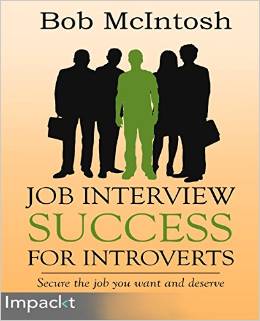
Job Interview Success for Introverts: So, you’re an introvert

So, you’re an introvert

Book Cover

I was in my mid 40’s when I discovered my preference for introversion. Until then, I thought I was an extravert (extrovert), mainly because I could, and still can, talk with ease to complete strangers. Truth be told, I hoped that my preference was for extraversion, not introversion; simply because society favors extraverts in most aspects of life: school, work, social interaction, and the job search, to name a few. I doubted my acceptance and didn’t speak proudly of my preference until I learned more about the Myers-Briggs Type Inventory.

Do you remember when you learned your preference for introversion? Were you in doubt like me? Did you have a sense of dread thinking of the stereotypes of introverts, such as shy, loner, standoffish, aloof, recluse, or rude? Furthermore, you may have believed that introverts couldn’t make small talk or associate with important, outgoing people.

But if all of this were true, how were you capable of talking with complete strangers, even approaching them, or want to be with your peers and attend social gatherings? How was it that some of your friends accused you of talking too much? And how have you been able to rub elbows with authorities in your town or city, to make small talk with the best of them? You were behaving more like an extravert, weren’t you? No, you were behaving like an introvert, able to adapt to your setting, and doing all the things mentioned here were a result of your introversion.

Now being an introvert doesn’t seem so bad, does it? In fact, being an introvert has its benefits. You are an intelligent conversationalist. You think before talking and, therefore, don’t make as many faux pas as some of your extraverted friends and colleagues. You are an engaged listener who doesn’t think about what you’ll say next before totally hearing the other person out. Being alone doesn’t upset you; rather, you enjoy going to the movies alone and eating alone. Your friends and family can’t understand this. You love writing and do it well. There are many things about being an introvert that you appreciate, feel comfortable with, and wouldn’t want to change.

There are truths, though, that set introverts apart from extraverts; truths that put introverts at a disadvantage in life and the job search, especially at the all-important interview. Some of the strengths introverts possess can be faults, particularly when it comes to verbal communications. Talking, small talk to be precise, is a challenge for introverts because they feel the need to think before speaking, whereas extraverts will speak before thinking. Because of their inclination to think before talking, introverts are often left out of conversations.


Job Interview Success for Introverts is available at Packt Publishing

Dear College Students, please read the following 10 LinkedIn tips

Increasingly more college students are joining LinkedIn, and that’s a good thing. I only ask that they keep these ten tips in mind. 

happy african american college student leaning against campus wa

Dear College Students,

If I could offer you some advice, it would be this: take a serious look at an application called LinkedIn. I suggest this because your demographic is still unrepresented on this platform. Facebook? You are well represented on this social medium. Twitter seems to be on the rise with you, as well as with younger folks. Heck, even my teenage kids are on Twitter.

I sincerely believe that LinkedIn will help you in the future. And if you think about it, there’s no time better than now to prepare yourself for the future. Isn’t that what you’re being taught in school, prepare for the future? If it were up to me, LinkedIn would be a required course. Maybe it will become part of the curriculum, but probably not for a while. Until then here are some strong suggestions:

  1. Get on LinkedIn immediately. Don’t think immediate gratification and forget about accumulating tons of “friends” and “followers.” It’s about making connections. LinkedIn ain’t sexy.
  2. Make an immediate impact with your branding title. “Seeking Employment” or “College Student at X college” is not going to do it. At least “Finance Major at X College | Aspiring CFO | Captain of Lacrosse Team | Dorm Advisor” would foreshadow greatness.
  3. Perception is half the battle, which means you will be judged on your photo. You’ll want a photo that will elicit confidence from potential networkers and employers; not one of you taken at Arizona State during a fraternity initiation with beer bong in plain sight.
  4. Some college-age profiles I’ve seen fail to tell a compelling story in the Summary section; rather they talk about enjoying their socialization process before going “Big Time,” not their aspirations of learning lean procedures or their philosophy of management.
  5. It’s hard to support a work history when students haven’t interned at Ernst and Young or Raytheon, but even working summers for the DPW demonstrates the hard work of toiling under the oppressive sun, removing roadkill from the road, and installing sewage pipes. Bottom line, show some type of work history in your Employment section.
  6. There’s no rule stating that you need to stick to the default setting of the profile sections. You might want to move the Education section to the top, below the Summary. There you can highlight Activities and Societies and Additional notes.
  7. This goes without saying; the world will be unforgiving of sloppiness. I recently saw a profile from a grad student who had approximately 10 spelling errors or typos in his Summary. I brought this to his attention and haven’t heard from him since. Oh well.
  8. Your LinkedIn profile now complete, it’s time to connect with quality people. Friends are nice, as are family members, but think future. Alumni, college professors (if they will), people who are currently working in your desired industry/ies, career professionals like me, etc. Check out the Find Alumni feature.
  9. Create a presence. I know many college students who are blogging on their topic of study and, hence, their future occupations. If you have great PowerPoint, Prezi, or YouTube presentations, post them on your Profile. Remember that it’s all about professionalism.
  10. This is my last bit of advice: be professional in everything you do with LinkedIn. No one on this application wants to know about your partying habits or fashion statements or see your photos of Spring Break. Sorry, it’s not about that.

My oldest daughter is off to college next year, so I hope she heeds my advice. Pinterest is fine, I tell her, communicating on Twitter is even better, but it’s LinkedIn that will help her network online. I haven’t seen LinkedIn offered as a core course at her school, but maybe I’ll make a strong suggestion.

Now read the follow-up to this article.

Photo: Flickr, Spanish Virtually

10 things to consider about your attitude when looking for work

I posted this article almost two years ago on this site but it’s timeless advice. If you haven’t read it, perhaps you should. I’ve also added two examples of behavior that contribute to a poor attitude.

angry-woman

No one will argue that being unemployed isn’t a traumatic experience, especially me. I was on the receiving end approximately 14 years ago and now I serve people in the same situation. Being unemployed isn’t what I’d wish on anyone.

Your negative attitude shows itself in how you appear and the way you communicate. Demonstrations of your mannerisms precedes any opportunity to appear before an employer. Failing to control your mannerisms can prevent you from getting to the interview.

Below are some signs of a negative attitude. These are things you should keep in mind when going out in public.

1. Arrogance impresses no one. You may have been outstanding at what you did, and you may be outstanding in the future, but keep in mind that diplomacy is your best card at this time. You will be relying on many people to help you in your job search, and most people don’t appreciate being looked down upon.

2. Apparel is one of the most obvious aspects of your attitude. This it’s second on the list. During the summer, when it’s hot, please refrain from wearing gym shorts and tee-shirts with Budweiser advertisements. At all times make sure you are well-groomed and presentable—you never know when a potential employer might be just around the corner.

3. Your countenance is more noticeable than you think. I’ve witnessed people who walk into the career center looking as if they’d like to strike anyone in their path. Their mouth looks like it was chiseled into a constant frown. There seems to be hatred in their eyes. This can be intimidating, if not off-putting.

4. And your posture. How you enter a room says a great deal about your attitude. Walking in with an erect posture says you’re confident. On the flip side, slouching as you enter a room indicates lack of confidence and in some cases hopelessness. You may be tired, worn out; but try to project the confidence people are drawn to.

5. Be outgoing…or at least fake it. For you introverts (I can relate), try to use every opportunity to network. Your most vital job search technique must include networking. Networking doesn’t necessarily mean going to large arranged events—maybe your thing is small get-together. Real networking is a daily thing and that’s why you have to be on your game every day. Always think of helping others in whichever way you can. The help you need will come around.

6. Mind your manners. “Thank you,” “It was great seeing you,” “Hope your day is wonderful,” etc., go a long way. These are things we learned in Kindergarten, yet not all of us practice the niceties as much as we should. I am often thanked by customers after a workshop. It’s nice to be appreciated, to know I play a small part in their finding a job.

7. Be prepared to talk about yourself. I’m not talking about a contrived elevator pitch which can be more irritating than impressive. Talk about your passion and how it’s led to your success. Explain your situation—you’re in transition but see hope—and your needs. Also listen to what others have to say; no one appreciates someone who does all the talking.

8. Don’t appear desperate and despondent. Most people want to help you, but if you seem like you are giving up the battle—your peers, career advisors, and people employed in your industry—will doubt your ability to succeed at your next job. “Don’t let ‘em see you sweat.”

9. Hide your anger. Some of the people I help don’t hide their anger. I tell them their anger comes across loud and clear and…it impresses no one. Yes, you were unfairly let go; but people are not drawn to anger. They’re pushed away.

Read this post on A little advice for my angry LinkedIn connection.

10. Think about the endgame. This means following-up. Have the attitude that follow-up is essential in the job search. Tell someone you’ll call them, call them. Tell someone you’ll meed them for coffee, meet them for coffee. Don’t drop the ball. When you don’t follow up,  you lose possible opportunities.

Why does this matter?

Simply put, your job search is ongoing. You are being judged wherever you go. The man or woman who has the authority to hire you, may be standing behind you in the checkout line. Those who try to help you take into account the aforementioned aspects of your overall attitude. If given the choice to recommend someone for a position, anyone is likely to back the person who has their attitude in check.

As I’ve said, maintaining a pleasant demeanor and appearing positive is difficult under an extremely stressful situation like being unemployed; but I’ll guarantee you that a negative approach to conquering unemployment will not lead to quick employment. Be mindful at all times how you appear to others.


Top photo courteous of Flickr, Laura Vanzo

6 sources of accomplishments for your résumé

The other day one of my résumé writing workshop attendees told the group she couldn’t think of any accomplishments from her last job. As I’m known to do, I told her she wasn’t thinking hard enough. Silence.

She’s an administrative assistant and, like we’ve all heard before, she was just doing her job. I began by asking, “Did you reduce your boss’ stress?”

“Yeah,” she said. “He told me I organized his life. He’d be lost….”

“Do you have that in writing?” I interrupted.

She smiled. “He sent me e-mails saying this. They were really great to read.”

“Did you keep them? Forward them to your personal e-mail? Did you keep a brag e-mail folder?”

No she hadn’t. I’m not one to harp on past mistakes; but this was a mistake, and a good lesson for the rest of the group. I didn’t need to say more; the lesson was learned.

Normally we think of quantified accomplishments as the only ones that matter—they matter a great deal—but what others write and say about you also matters. Take the following accomplishment for an administrative assistant:

Created an electronic filing system that reduced paperwork and increased productivity, prompting the following statement from the VP of operations, “You’ve made this office much more efficient.”

There are very talented people who don’t have access to dollar amounts or percentages to quantify their results. This is where what their boss said can be used as an accomplishment. If this is the case with you, consider the following sources of accomplishments for your résumé:

  1. E-mail is fair game. If you’ve received e-mail from you supervisor that touts your accomplishments, hold on to it and store it in a safe place, like a brag e-mail folder. I do this when I get e-mails from my customers thanking me for the help I’ve given them.
  2. Voice-mail can be used, as well. If your boss compliments you, consider using it on your résumé and other written communication. You might want to get your boss’ approval before you use her words in a public forum; it’s only courteous.
  3. Performance reviews are an obvious source of fodder for your résumé. These are professional documents that are often placed in your employee folder, used to justify promotions and raises if your performance is consistently good. Receiving outstanding marks on your performance reviews are certainly reason to tout them on your résumé.
  4. Verbal comments from your former boss can also be used on your résumé as quotes. “Director of marketing commented, ‘Josh, your ability to build and foster relationships has helped Company X achieve the financial success we’ve striven for.'” It’s especially important that you’re both on board with this, just in case she’s questioned about it during a reference check.
  5. Thank you cards from customers/clients speak to your customer service and other skills you’d like to highlight on your résumé. Have you received cards that thank you for your help and caring nature, or assistance in closing a large deal? If so, ask the sender if you can quote him on your résumé.
  6. LinkedIn recommendations have been used by my customers as fodder for their résumé. Not all employers will see your LinkedIn recommendation, either because they’re not on LinkedIn, or aren’t Internet savvy; so take advantage of what your connections have written about you.

Given that it’s difficult to think about accomplishments that are quantified using numbers, dollars, or percentages; don’t discount what your supervisors and manages have written or even said about you. You may want to set them apart as quotes or integrate them with accomplishment statements. Keep in mind that some industries, particularly high tech, may not fond of quotes. To others, quotes carry a lot of weight.

Going back to work is like getting back on a bicycle

bicycle raceIt’s much easier said than done, but going back to work is like getting back on a bicycle.

I remember that day, more than 10 years ago, like it was yesterday. After six long months of being unemployed, I was driving to an interview. It was time to get back on my bicycle.

Those six-months of unemployment were the worst of my life, bar none. As I drove the 45 minutes to the interview, I was consumed with the thought, I’m not ready to go back to work. I didn’t feel the confidence I would need do well at the interview. I was surely going to bomb for sure.

I felt like getting off at the next exit. Just turn back and go home. Not only was I interviewing for a position I wasn’t familiar with; I was about to change my career. Going from marketing and attempting to enter career development wasn’t going to be easy. “I’m going to bomb,” I told myself.

Prior to the interview my wife and I had a blowout fight—one among many during my unemployment. You see, what they don’t tell you in the school of the job search is that being out of work affects not only you, it strains relationships with the people you love, as well.

Depression,  anxiety, anger, feelings of hopelessness, and other maladies are not uncommon during the course of unemployment. It’s not something people want to succumb to; it just happens. Unemployment is a test of couples’ will, and it impacts families and friends. Most will go through a period of grief, others will seek the help of a therapist, and others will require medication.

My job search hadn’t been a smooth transition. I went on interviews for positions that weren’t in marketing and didn’t do well. I stayed with three young children who demanded constant attention, so there wasn’t a lot of time to focus on the steps to take necessary for a successful search. My dog walking business felt more demeaning than productive, and being the only father at playgroup was embarrassing. So now it was time to get back on the bicycle.

The director, Sharon, and I sat side by side with a small table separating us. I immediately felt like she was in my space. I was going to bomb. She asked me questions about my background, questions that seemed more out of curiosity than trying to find faults in my character and employment history. I asked questions at appropriate times throughout the interview. She led the interview like a discussion.

I had this sense of calmness and lucidity, evolving into confidence and enthusiasm. Hell, I didn’t know if I could do the job, but I was willing to try. The argument I had with my wife was buried in my mind. My answers were direct and articulate. They must have impressed her. I wasn’t going to bomb. “I want you to meet our marketing manager,” she said.

Pat welcomed me into her office like a school nurse. The only question I remember during the entire interview was hers, “What do you look for in an office environment?” I told her a professional environment but also one with banter and practical jokes. A smirk appeared on her face.

I was offered the job that day. All that was left to do was spend a day doing intakes with my job developer. I wasn’t getting paid for it; it was more like a situation aspect of the interview to see if I was right for the role and the role was right for me. Then I would tell Sharon if I wanted the job.

My wife told me I should take the job even though it paid 18K less than my previous one. The commute will suck I told her. I don’t know if I can handle the job I confided. Don’t know if I’ll like it. A lot of uncertainty, a lot of doubt, not sure I wanted to return to work.

Another thing they don’t tell you in the school of the job search is nothing’s for certain. There isn’t a crystal ball that will predict your future. Coordinating a program to help people with disabilities learn how to use Microsoft applications sounded interesting, but could I do it?

It turned out that I excelled at this new position. I learned more in three months than I did in seven years while peddling software applications I didn’t particularly care for. In this new position I was making a difference in people’s lives. I was a natural.

Most importantly…I got back on my bicycle. And things went back to normal.

Photo courtesy of dnuospeelsa, flickr