Category Archives: Résumé Writing

Checklist for 26 job-search topics for the New Year

For Christmas my wife sent me to the grocery store for various ingredients for our holiday dinner. I knew trying to remember all the ingredients was going to challenge my waning memory, so I asked her to write a list of said ingredients.

She rolled her eyes but understood how important it was for me to return with the proper ingredients–so important that her list numbered in the area of 25.

The lesson I learned from my shopping spree–by the way, I got all ingredients–was that it was akin to the list of must do’s in the job search.

In reading the list of must do’s below, ask yourself if you’re doing each one in your job search. For example, do you have an elevator speech? Have you attended informational meetings? Consider this the checklist below a partial list of your “ingredients” for the job search.

  1. Understand your workplace values.
  2. Determine what you want to do…what you really want to do. The Myers-Briggs Type Indicator is a great tool.
  3. Hannah Morgan, Career Sherpa, suggests, “a personal marketing plan. It ensures better information gathering during networking meetings and more proactive rather than reactive job search actions.”
  4. Ask for an informational meeting to talk to someone to make sure you’re on the right track, or to introduce yourself to a company.
  5. Assess your skills and accomplishments. Make a list for both.
  6. Learn how to write your résumé. Attend workshops offered by your college or local career center.
  7. Write a targeted résumé with highlighted experience and accomplishments.
  8. Write a cover letter template, which will later be targeted for particular positions.
  9. Create a personal commercial or elevator speech which explains your value to the employer.
  10. Determine how you’ll approach the job search, making networking your primary method.
  11. Join LinkedIn with full intention of engaging, not using it as a place mat on the Internet.
  12. Copy and paste the contents of your new résumé to your LinkedIn profile, which you’ll modify to be a better networking tool.
  13. Develop a networking list that includes past colleagues and managers, as well as others who we’ll call your superficial connections.
  14. Formally let people know you’re out of work. How can they help you if they don’t know you’re looking?
  15. Develop business cards for your business—the product you’re selling is you.
  16. Attend networking events. Make sure you bring your business cards.
  17. Follow up with everyone with whom you’ve conversed and exchanged business cards.
  18. Send approach letters/e-mails to companies for which you’d like to work.
  19. Organize your job search by keeping track of your inquiries, contacts, résumés sent out, etc.
  20. Prepare for telephone interviews. Make sure all of the above written communications are in place.
  21. Ask for mock interviews which should be recorded and critiqued by a professional career consultant.
  22. Do your research on the jobs and the companies to which you apply.
  23. Double check your first impression, including attire, body language, small talk, and portfolio.
  24. Be prepared to answer the difficult questions concerning job-related, transferable, and personality skills.
  25. Have your stories ready using the STAR formula.
  26. Write thank you notes via e-mail or hard copy.

Have you been doing everything on this list, or the majority of them? If you are missing any of the above, make sure to nail them this year. Let me know of others I’m missing. Perhaps we can double this list. And yes, the meal was excellent.


10 reasons why your résumé may be a zombie

zombie boyLast Halloween my son (at right) was talking about being a soccer-player zombie at least two months prior to this much-anticipated night. He explained he would paint his face white; outline his eyes with black; and, most importantly; apply fake blood to the sides of his mouth. The way he described it got me stoked for Halloween.

I shouldn’t have been surprised when his friend from up the street showed up as a zombie. Nor should I have been surprised when our adult neighbor walked over dressed as, you guessed it, a zombie. She was pregnant and had doll baby legs extruding from her large belly. I asked her what her husband was going to dress as, and she told me…a farmer zombie. Further, they dressed their one-year-old son as a zombie.

At least five zombie kids came to my door, and we were only one hour into a night of candy-crazed kids roaming the streets. I felt like I was in an episode of the Walking Dead.

What does last year’s Halloween have to do with the job search? It brings to mind how employers feel about the slew of résumés they receive that lack originality. Like nearly every kid (and adult) I saw dressed as zombies, employers are getting résumés that don’t speak to their needs; they are zombie résumés. Your résumé is a zombie if it has the following characteristics:

  1. A cookie cutter résumé. Written and done, is how some feel about their résumé. No thought about what employers need, therefore no mention of the skills and experience highlighting those needs. Like the zombies that arrived at my door, this résumé doesn’t make an impact.
  2. Failure to capitalize on your accomplishments. Quantified accomplishments are what immediately grab employers’ attention at first glance. Duty-based résumés don’t separate you from many other candidates.
  3. Contact information that lacks your LinkedIn URL. David Perry and Kevin Donlin, Co-Creators of The Guerrilla Job Search System, write, “If you’re not on LinkedIn and looking good, you don’t exist to most employers.” You have a zombie résumé if you’re not on LinkedIn and don’t proudly display it in your contact information.
  4. No branding headline. The best way to say who you are and what your areas of strength are is by having a headline that sets you apart from the other applicants. It’s where you first state keywords and phrases. Zombie résumés fail to make use of this valuable real estate.
  5. A say-nothing Performance Profile.  Zombie résumés start with statements like, Result-driven Project Manager with 20 years of experience in Manufacturing. Instead,  Project Manager who leads teams producing software that generate sales exceeding $3M in competitive manufacturing markets, would be more enticing to the employer.
  6. Your résumé isn’t prioritized. A zombie résumé fails to demonstrate your knowledge of what’s important to the employer, based on the job description. Your Profile should state your qualifications in order of the employer’s requirements, thus making her job of finding them very easy. Prioritize your statements.
  7. No core competency section. A résumé is not complete unless it has a Core Competency section that lists the skills required for a position, plus additional ones that can add to a person’s candidacy.
  8. The Work History lacks relevant accomplishments. Perhaps the most important aspect of a résumé is the Work History, but what makes it escape Zombie status is powerful accomplishment statements. Accomplishments that describe how you have contributed to the growth of an organization/company. Increased revenue, improved production, reduced costs, saved time are but a few accomplishments you should highlight.
  9. There’s no Training Section. If you were fortunate enough to receive training or took advantage of professional development, you should have a section for training. A zombie résumé contains no Training section and screams to employers that, “I have not taken advantage of bettering myself and keeping up with technologies.”
  10. The Education Section is incomplete and includes dates. All to often I have seen résumés that skimp on the Education section. Whether you earned a degree 5 years ago or 20, this section informs the employer that you started and completed something. Don’t be shy about writing that you made the Dean’s list four years running, something you accomplished through dedication and hard work.

Zombies roamed my neighborhood on Halloween walking lethargically, extending their hands for candy, just as many résumés lack the imagination and authenticity required to earn a place at an interview. Don’t submit a zombie résumé. Rather think about the ten important components of your résumé and how to make them strong. Who knows what next year’s Halloween will bring?

3 elements of a successful job search and playoff soccer

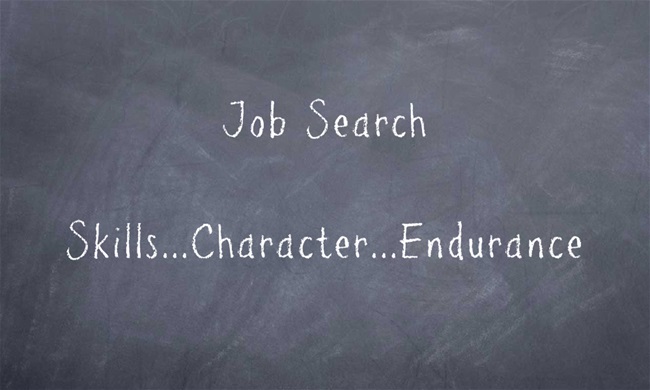
SkillsCharacterEnduranceThis past weekend my son participated in a soccer tournament for the state championship.

What this means is he played eight additional games for a total of 18 this spring.

This also means I coached 18 games. I never thought I’d say I’m sick of the world’s most popular sport, but I am.

The teams that succeed in reaching the state finals had three things going for them: skill, character, and endurance. The coaches and parents were just plain crazy for sticking it out.

Similarly jobseekers who succeed in landing a job—the winner of a state final in soccer of the job search—demonstrate the same three traits throughout the entire process.

Skills. Not enough to have the required skills and accomplishments, jobseekers must be able to display them in their written and verbal communications. I tell the participants who attend my Job Search 101 workshop that bringing their written and verbal communications together makes for a successful marketing campaign.

The most obvious example of written communications would be the résumé, which above all else must address employers’ needs by demonstrating the required qualifications. Employers want to see the skills and accomplishments needed to do the job well, not a generic, one-fits-all document.

The interview is the ultimate display of verbal communications. Let’s face it, if you can’t pass the interview, you don’t get hired. Only one person gets hired, and this is the person who shows he/she has the skills and accomplishments that fit the job. Know what skills the employer requires, so you can better predict the questions that will be asked.

Character.  This is a vague term but is essential to achieving likability, demanding respect, and showing humor. You must show your character when networking. Networkers appreciate other networkers who they understand—think clarity of skills and goals—as well as those who are willing to help them.

Your character is essential at the interview, as it demonstrates your interpersonal skills, motivation, enthusiasm, ability to work as a member of a team, and other desired “soft skills” the employer is seeking.

Your character also shows itself in your written communications. Many of us have received LinkedIn messages that are negative in verbiage and tone. The writers complain and make excuses about their past failures, showing a lack of self-awareness. This is another way for people to show a lack of character.

Endurance. This is perhaps one of the most difficult of the three components to sustain. Sadly I must admit I was willing–nay hoping–for the soccer tournament to end, because I felt my energy drain from me with each game.

Jobseekers sometimes feel this way, especially if the interview process stretches to five interviews over a period of 5 weeks. Some of  my customer have described this hellish situation to me.

This is when a jobseeker must reach down deep in his soul to move on, not dwelling on the worse–he doesn’t get the job. Maintaining endurance is a matter of treating yourself well during the process.

Get enough sleep, spread your research out over a period of days and not cramming like a college student, and take a well advised break are some of the things you should do to keep the endurance. My response to jobseekers during these times is stay the course and do your best.

Endurance is also required when writing tailored documents for each job, as opposed to blasting 20-30 resumes and cover letters over the Internet, or should we say into the black whole. Every resume and cover letter is unique to every job.

Jobseekers must faithfully attend networking events or network in public whenever they get the opportunity. LinkedIn is a great way to network online, but it should not replace face-to-face networking. Demonstrating excellent skills and character is essential when speaking with others who may be able to help you, so consistency is important as you brand yourself.

My son’s team was eliminated from the tournament in the semi-finals. You might think I was relieved, and up to the point where the final whistle blew, I thought I’d be happy for it to end; but I was actually disappointed that the games were over. The boys demonstrated skills, character, and endurance throughout the whole season. This is what I hope my customers are able to sustain. Of course the stakes are much higher–after all soccer is a game–but the same principles apply.

The word “innovative”; is it a crime to have it on your résumé?

Innovation

Innovation (Photo credit: masondan)

Did you know the word “innovative” is a cliché? According to some job search pundits it is. It made some notorious list that circulated on the blogosphere. TheFreeDictionary.com defines a cliché as “a trite or overused expression or idea.” If “innovative” has become overused, than it is by definition a cliché, but could it be called trite?

I have to admit that I’ve been telling my jobseekers to keep “innovative” and other adjectives off their résumé and out of their vocabulary, as they are subjective–it’s better to show than tell how you’re innovative. In fact, I wrote an article bemoaning the use of words that are considered clichés, some good words at that. So it appears I’m contradicting myself, but this wouldn’t be a first.

But I had an epiphany when I was talking on the phone with a customer whose résumé I’m writing. As I was going over her résumé pointing out some of her accomplishments, I told her she is innovative, at which she agreed with great delight that, yes, she is. To get her to realize this made the word “innovative” special, not a cliché.

I once described myself as innovative but when I read that it was one of the 10 clichés to avoid on your LinkedIn profile, I stopped writing and saying that I’m innovative. After all, it’s a cliché, right? This was like the time my brother said Miso soup tastes like low tide. His expert opinion ruined the soup forever for me.

I just sent my customer her résumé with the adjective “innovative” included in the professional profile, and I didn’t feel the least bit guilty–considering she had initiated social media at her current company, implemented a preventative care program at yet another company, and more accomplishments that clearly show her as innovative.

In fact, my customer also demonstrated that she’s “creative” and “dynamic,” which are also considered taboo by the cliché police. With all of what I’ve expressed, I’m beginning to question the validity of experts who trash some great words just because they’re considered overused.

What if there are a lot of jobseekers and workers who are “innovative,” “creative,” and “dynamic,” and these are the best words to use to describe them? Should we use words that don’t mean quite the same, or should we use words from a different language? No, we need to show rather than tell, right?

“Designed a (an innovative) social media curriculum for students at risk that taught them how to market the school’s English Language Art’s program, earning Department of the Year.

I suppose this secondary teacher’s accomplishment statement shows innovation, but what’s wrong with using “innovation” in the sentence to give it more flavor. Further, when a job description calls for someone who’s “innovative,” and you’re trying to meet as many of the keywords to pass the Applicant Tracking System’s test, do you exclude this word? Just a thought.

I’m now beginning to think a little too much emphasis is being placed on finding ways to reinvent ways to describe jobseekers and workers. To hell with worrying about what the pundits consider to be clichés. They’re ruining the pleasure I get when writing a résumé or advising jobseekers on how to describe themselves, just as my brother had ruined my appetite for Miso soup.

Your résumé should make the employers choice to interview you easy

easySome jobseekers have a misconception that, like a buffet dinner, more is always better on their résumé. What results from this misguided belief is a ton of unfocused and untargeted information that usually leads to information overload for the recruiter, human resources manager, or hiring manager.

These jobseekers feel that the more duties they list on their résumé increases their chance of getting an interview. (The person with the most toys wins.) What they fail to realize is a very logical point Colleen Roller raises in her article, “Abundance of Choice and Its Effect on Decision Making.” It’s this: if we give the reviewer too many choices, she gets bombarded by information and is likely to lose focus on the message the jobseeker is trying to convey.

I often take time to look at my Résumé Writing workshop attendees’ résumés; and at first glance I get the sense that a reviewer might see reading their résumés as a chore. This is not the case with all my attendees, but some of the résumés read like a novel…not good. Can you imagine how a reviewer must feel if she has to select 10 candidates from among 100 résumés, most of which are full of unnecessary text?

Ms. Roller is a usability/decision architect and her eloquent article is about how we take in and remember information, which is essential in creating an effective website. She tells us that when given a choice of chocolate, for example, on the surface we’d prefer 30 different varieties. (I bet you chocolate lovers can think of at least 15.) However, when presented with so many varieties of chocolate, we become overwhelmed. Instead, a choice of six chocolates is what we’re capable of handling.

So how different is selecting from among 30 kinds of chocolate than deciphering a résumé that is nothing more than a list of duties? Not much different.

Ms. Roller says, “As the number of options increases, the evaluation process can become overwhelming and intimidating, especially when it feels like making a choice requires expert information or skill.”

Take advice from résumé reviewers who have been clamoring for résumés that are rich with quantified accomplishments and fewer duties, than ones that only list duties and look more like a grocery list. The overwhelming consensus is that they want résumés that provide the information they need upfront—I refer to it as prioritizing one’s statements as they relate to the job requirements. When jobseekers list only what’s important, the reviewer is quickly able to see the value in jobseekers.

So the question is, “How do jobseekers know which skills and experience to list on their résumé?” The answer lies in a complete understanding of the positions they seek. They must examine and dissect the job ad, and focus on all of the competencies required by the employer. By doing this jobseekers will not overload the reviewer with 30 varieties of chocolate; they will make the choice an easier one to make.

The importance of competencies on your résumé, according to Martin Yate

If you’re wondering why the hundreds of résumés you’ve submitted online to various job boards haven’t resulted in an interview, not even a confirmation–it might have something to do with some very important information missing from your résumés.

The information in question, and what Martin Yate writes about in his latest blog post, Resume Getting Lost In The Resume Databases?, is your core competencies.

Martin Yate, author of the popular Knock em Dead series, describes in layman terms the importance of core competencies, how they act as the keywords that front-line managers use to search their company’s database for the next best hire. Don’t have the proper keywords, you may not end up in the pile of 20 résumés to be read by the front-line manager. Read this article to grasp the importance of keywords and how to present them on your résumés so they land on the top of the pile.

Shorter and shorter we go when it comes to the résumé

The other day I received a text message from my daughter that read, “Need water. Bring some.” Now, someone who didn’t know the situation–she was life guarding at a pool near our home, so bringing her the much needed water was no big deal; I didn’t mind the rudeness of her text; and I didn’t want her to suffer–would probably hit erase and not give it another thought.

Her text message made me think about the course of the résumé, how they’re getting shorter and shorter, until, I fear, they’ll resemble a text message.

According to some résumé writing pundits and many recruiters, less is better when it comes to the overall content of your résumé. Just a couple of years ago this belief was hitting the streets; now lesser than less is better is the word. I tell my jobseekers who haven’t hunted for jobs in the past ten years that writing résumés has changed since then; hell, it’s changed since the past couple of years.

We all know that recruiters and hiring managers are inundated with hundreds of résumés for one job and that Applicant Tracking Systems (ATS)–that identify keywords–are necessary to make the process more manageable. Further, résumés that don’t speak to employers’ needs are considered as useful as a paper bag. Accomplishments are essential, as they show the value you can bring to the company. Résumés are given six to 20 seconds to be scanned and determined whether they’ll be read more thoroughly. All of this has been stated ad nauseam.

With this said, those four-line, no nonsense personal profiles can be reduced to a one-line list of value-added words, which looks more like a branded headline than a personal profile. All of this must be done while still addressing the needs of the employer and including keywords. This requires the best of the best editing. Words like, “Experienced,” “Innovative,” Results-oriented,” are out the window…have been out the window.

Job summaries in the experience section have likewise been reduced from, say, four lines to two. This is where you state your duties and a quick blurb on your value-added; and for those who believe the more duties, the better, you are out of luck. Following the job summary should be bulleted accomplishments that, you guessed it, must be reduced from, say, two lines to one. While you don’t have a lot of real estate to elaborate on your accomplishments,  a one-liner will have to do.

Are we looking at this through a single lens, though? Are we assuming all recruiters or hiring managers are reading tons of résumés and just trying to keep their head above water, or that recruiters are the only ones reading our résumés? Employers of start-ups, smaller companies, and nonprofits spend more than 20 seconds to peruse a résumé before reading it in its entirety, because they have more time.

Before you tightly edit your two-page résumé, think about to whom you’re sending it. A hiring authority who doesn’t read thousands of résumés, might be confused by a one-line personal profile that resembles more of a branding headline than the typical profile. Think of your audience.

As for my daughter’s text messages, I know what she means when a terse one-line message hits my screen. It would be nice if she would add, “Love, your daughter.”

Don’t lead with a boring summary statement on your résumé

Nearly two years ago I read an article by Laura Smith-Proulx, Award-Winning Executive Résumé Writer, called Is Your Résumé Summary Boring Employers? In her article, she asserts that jobseekers need to state accomplishments upfront in the summary, not simply save them all for the work history.

I took exception to Laura’s assertion, thinking why reveal the good stuff so early in the game. I mean wouldn’t it be like showing the opposing team your best routes in football warm-ups or your homerun power during batting practice or giving your kids the best Christmas gifts first?

So I contacted Laura and asked for her reasons behind showing the firepower so soon on a résumé. I don’t recall her exact words, but the general gist was get the employers’ attention quick and, yes, save enough fire power for the rest of your résumé. This made complete sense to me.

Since our correspondence, I’ve rethought my reasoning and believe in the great WOW statements that Laura describes so aptly in her article. I now tell my workshop attendees (of all levels) that a summary full of clichés, lofty adjectives, and broad statements of greatness are garbage. And why would an employer want to read thoughtless verbiage, let alone a boring summary?

Allow me to quote Laura: “You’re boring hiring managers if your résumé contains an opening paragraph like this: Accomplished professional with proven experience leading cross-functional teams, managing budgets, increasing revenue, and creating strong customer relationships. Able to work effectively in fast-paced environments, lead teams to successful project delivery, and communicate at all levels of the organization.

Instead, she advises to start with a concise, quantified accomplishment: “Logistics Director noted for launching global supply chain that cut expenses by $1M, plus orchestrating consistent supplies across U.S. operations for 19 distribution centers.”

The difference between the former boring summary and the latter precise, metric-driven WOW statement hits you over the head. Proudly displaying three or four accomplishment statements in your summary will prompt employers to pick up the phone immediately and schedule the interview.

Jobseekers, read Laura’s article and practice what she tell us. Employers will not be bored and will look forward to reading the rest of your résumé.

Make your résumé easy to read if you want to be considered for an interview

I don’t know what’s worse, a résumé that is so dense that it looks like something James Joyce wrote, or so sparse that it looks like a Haiku.

Look, one of the golden rules of writing your résumé is that it has to be easy to read…yet sells you with accomplishments and relevancy. I know this is a tall order but it can be done.

You’ve been told over and over how your résumé is your marketing collateral. Consider reading a brochure that takes you longer than three minutes to complete during the busiest part of your workday. Consider reading a product flyer in a crowded retail store with your kids screaming to leave or wandering off. You only have 30 seconds to get the gist of the product before you decide to explore further.

This is how the employer feels when she reads a résumé to decide if you’ll be considered for an interview. On average an employer will take 15 to 45 seconds deciding whether to invite you in for an interview. The first phase of the résumé review is a quick scan, which means you must make the scanning process as easy as possible for her.

Capturing important information. Keep this general rule in mind when crafting your résumé: do not exceed 4-5 lines per word block. When possible include accomplishments that are quantified with dollars, numbers, and percentages. As quick scans go, these quantifiers will surely draw attention from the employer and entice her to read further. Just glance at the text below to see if it’s something that would be easy to digest in a 15-30 second scan.

Hired to revamp marketing department and turn around declining revenue. Managed 4 employees, including marketing communications writer, graphic designer, and webmaster. Interfaced with members of the media, partners, and consumers; recognized by many for providing excellent customer service. Oversaw more than 10 tradeshows, both organization and attending. Increased number of media contacts from 30 to 6,000 at ABC company within only 4 months. Overall contacts exceeded 30,000. Garnered 20 awards in major trade journals, including “Data Storage Product of the Year,” (5 years in a row) “Product of the Year,” “Editor’s Choice,” and other honors from top trade publications. Placed more than 50 reviews and articles in trade magazines. Designed a 60-page Website and maintained it, while maintaining role of public relations; thus saving the company more than $25,000. Received “Outstanding Employee of the Year” for volunteering to take on this endeavor.

I recently critiqued a résumé that look similar to the above. Now read the same paragraph divided into short word blocks.

Hired to revamp marketing department and turn around declining revenue. Managed 4 employees, including marketing communications writer, graphic designer, and webmaster. Interfaced with members of the media, partners, and consumers; recognized by many for providing excellent customer service. Oversaw more than 10 tradeshows, both organization and attending.

Accomplishments

  • Increased number of media contacts from 30 to 6,000 at ABC company within only 4 months. Overall contacts exceeded 30,000.
  • Garnered 20 awards in major trade journals, including “Data Storage Product of the Year,” (5 years in a row) “Product of the Year,” “Editor’s Choice,” and other honors from top trade publications. Placed more than 50 reviews and articles in trade magazines.
  • Designed a 60-page Website and maintained it, while maintaining role of public relations; thus saving the company more than $25,000. Received “Outstanding Employee of the Year” for volunteering to take on this endeavor.

Do potential employers a favor when crafting your résumé; make it easier to read. Density is one reason employers may decide to place your résumé in the…circular file cabinet.

Get rid of the clutter on your résumé

I hate clutter. If I could get rid of half the stuff in my house, it would take two dumpsters and five days of work. As I clean my house—the kids and my wife at the Fine Arts Museum in Boston—I’m throwing away every useless item I see on the floor.

All this clutter makes me think of the clutter some jobseekers have on their résumé. And I imagine the employers feel the way I’m feeling right now.

I met with a customer the other day to critique his résumé. It was four pages long; but that’s not what made critiquing it difficult—it was wading through the clutter on it. Here are some examples of duty statements, plus one accomplishment.

  • Managed a group of 25 sales people and 10 office staff. (And?)
  • Responsible for hiring and firing employees. (So what.)
  • Led meetings on a weekly basis. (And?)
  • Wrote articles for the company’s monthly newsletter. (So what.)
  • Spearheaded the company’s first pay-for-service program which increased sales 30% and earned the sales department an Award of Excellence. (Okay, now we’re talking.)

The first four duty statements were clutter; they added nothing to his résumé. The last statement, a quantified accomplishment, said something worth reading. It talked about his ability to lead, which effectively covered the first two bullet points.

I asked him about the newsletter to which he contributed articles. He told me it was initially sent via e-mail to 60 partners and customers, and in six months time the readership had grown to 12,000. As well, he wrote two, sometimes three articles a month for it; in which he talked about product releases, offered tips on data storage, and announced tradeshows. He often received favorable reviews from customers, OEMs and VARs.

I suggested that he keep the first duty and elaborated on his group’s productivity, stability, and endearing affection for him. He admitted that 10 of the 25 sales people and half of the office staff had to be let go because of downsizing. However, productivity wasn’t affected; rather the reduced team maintained and even surpassed projections set by upper management by 25%.

The bullet points on leading meetings and hiring and firing employees were clutter, much like the coffee cups sitting beside me on my office desk. Trash these, I told him. A bazillion managers lead meetings, and many are responsible for hiring and firing employees. So what.

He was fine with getting rid of the meetings’ duty statement but was reluctant to let go of hiring and firing employees. I asked him how many employees he had to fire, aside from the ones that were let go because of downsizing. He told me, a lot. “Well, doesn’t that mean you made poor hiring decisions,” I asked him? He didn’t respond.

What we had remaining of the original four duty statements and one accomplishment statement was:

  • Reduced sales force by 40% due to budget restraints, while surpassing productivity expectations by 25%.
  • Spearheaded the company’s first pay-for-service program which increased sales 30% and earned the sales department an Award of Excellence.
  • Authored articles for the company’s monthly newsletter, announcing product releases, providing tips on color management, and promoting tradeshows; increasing readership from 60 to 12,000 in just six months.

He was still a little bummed because he wanted to demonstrate that he had hired and terminated employees. Isn’t that what managers do, he asked me? Yeah, I wanted to say, but they don’t fire people because they made bad hiring decisions. So unlike the clutter that occupies my house, the clutter on my customer’s résumé was drastically reduced.