Category Archives: Career Search

Do first impressions matter in the job search? Not as much as performance, according to Lou Adler

First ImpressionWhen someone gives me a limp handshake or, worse yet, a sweaty palm, I cringe inside. The handshake, to me, says a great deal about a person’s character. It says, I’m a stand-up guy or gal. Really nice to meet you. The handshake should be firm but not crush one’s bones.

Eye contact means a great deal to me, as well. Steady eye contact says, “I’m paying attention. I’m interested. I’m not hiding anything, etc.” A pleasant smile helps to create a great first impression, as well.

But Lou Adler downplays the importance of first impressions in his article Performance Matters, First Impressions Don’t.  Now what would Lou Adler know about interviewing and hiring quality candidates? A boatload. He wrote the books: Hire With Your Head and The Essential Guide for Hiring, the second of which I own. What do I know? Not as much as him. I’ve interviewed people before but not the thousands he has. Here’s what he writes in his article:

“The only common trait among the best people is their track record of solid performance, not the quality of their first impression.”

Were this to be true, that’s great, because some people’s first impression simply suck. They come across as approachable as Sheldon on The Big Bang Theory, devoid of character; or they maintain eye contact like a shy child being interrogated…I mean questioned by adults; or they shake your hand like they’re afraid to touch you. I agree with Mr. Adler that performance is paramount, but a terrible first impression? Read Mr. Adler’s article, a wonderful tale.

Anonymous LinkedIn Member, who art thou?

I’ll tell you. You’re one notch below “Someone in the Architectural  & Planning industry” in my “Who’s Viewed Your Profile”  area. That’s akin to being nobody. Why would you want to be “nobody?”

I’m not alone in decrying your secrecy. Firebrand Marketing Director Carolyn Hyams wrote an article called 13 things that really annoy people on LinkedIn , in which she writes, “And whilst I’m on this subject, don’t change your privacy settings to “anonymous” when you’re looking at other people’s profile. It makes them feel like someone is stalking them.” The article is quite good.

To be accused of stalking someone is strong language, but I agree. At least have the decency to tell me what company or industry you’re from. I tell my LinkedIn workshop attendees that not declaring who you are is like spying on people…don’t do it.

Help me figure out why you are secretive. Is it 1) because you think I’m an employer who is about to interview you 2) you don’t want me to read your profile for privacy reasons 3) you’re just naturally distrustful? Here’s the thing: I’m not an employer who is going to interview you. If you’re concerned about privacy, you shouldn’t be on LinkedIn, let alone the Internet. And networking is all about trust and building relationships.

One other thing: I’m delighted when someone looks at my profile. I’m thankful when they declare who they are.

So, who art thou? I’d be happy to meet you via reading your profile, and I might even want to connect with you…if you’ll let me. Until then, please declare your complete name and let me see your photo. I bet you’re a pretty decent person.


3 elements of a successful job search and playoff soccer

SkillsCharacterEnduranceThis past weekend my son participated in a soccer tournament for the state championship.

What this means is he played eight additional games for a total of 18 this spring.

This also means I coached 18 games. I never thought I’d say I’m sick of the world’s most popular sport, but I am.

The teams that succeed in reaching the state finals had three things going for them: skill, character, and endurance. The coaches and parents were just plain crazy for sticking it out.

Similarly jobseekers who succeed in landing a job—the winner of a state final in soccer of the job search—demonstrate the same three traits throughout the entire process.

Skills. Not enough to have the required skills and accomplishments, jobseekers must be able to display them in their written and verbal communications. I tell the participants who attend my Job Search 101 workshop that bringing their written and verbal communications together makes for a successful marketing campaign.

The most obvious example of written communications would be the résumé, which above all else must address employers’ needs by demonstrating the required qualifications. Employers want to see the skills and accomplishments needed to do the job well, not a generic, one-fits-all document.

The interview is the ultimate display of verbal communications. Let’s face it, if you can’t pass the interview, you don’t get hired. Only one person gets hired, and this is the person who shows he/she has the skills and accomplishments that fit the job. Know what skills the employer requires, so you can better predict the questions that will be asked.

Character.  This is a vague term but is essential to achieving likability, demanding respect, and showing humor. You must show your character when networking. Networkers appreciate other networkers who they understand—think clarity of skills and goals—as well as those who are willing to help them.

Your character is essential at the interview, as it demonstrates your interpersonal skills, motivation, enthusiasm, ability to work as a member of a team, and other desired “soft skills” the employer is seeking.

Your character also shows itself in your written communications. Many of us have received LinkedIn messages that are negative in verbiage and tone. The writers complain and make excuses about their past failures, showing a lack of self-awareness. This is another way for people to show a lack of character.

Endurance. This is perhaps one of the most difficult of the three components to sustain. Sadly I must admit I was willing–nay hoping–for the soccer tournament to end, because I felt my energy drain from me with each game.

Jobseekers sometimes feel this way, especially if the interview process stretches to five interviews over a period of 5 weeks. Some of  my customer have described this hellish situation to me.

This is when a jobseeker must reach down deep in his soul to move on, not dwelling on the worse–he doesn’t get the job. Maintaining endurance is a matter of treating yourself well during the process.

Get enough sleep, spread your research out over a period of days and not cramming like a college student, and take a well advised break are some of the things you should do to keep the endurance. My response to jobseekers during these times is stay the course and do your best.

Endurance is also required when writing tailored documents for each job, as opposed to blasting 20-30 resumes and cover letters over the Internet, or should we say into the black whole. Every resume and cover letter is unique to every job.

Jobseekers must faithfully attend networking events or network in public whenever they get the opportunity. LinkedIn is a great way to network online, but it should not replace face-to-face networking. Demonstrating excellent skills and character is essential when speaking with others who may be able to help you, so consistency is important as you brand yourself.

My son’s team was eliminated from the tournament in the semi-finals. You might think I was relieved, and up to the point where the final whistle blew, I thought I’d be happy for it to end; but I was actually disappointed that the games were over. The boys demonstrated skills, character, and endurance throughout the whole season. This is what I hope my customers are able to sustain. Of course the stakes are much higher–after all soccer is a game–but the same principles apply.

Want great customer service, go to Starbucks

starbucksI’m a coffee snob. But I’m frugal. I buy a pound of Starbucks dark roasted coffee at the grocery store to brew at home; and when I’ve brewed a full pot, I’ll pour what my wife and I don’t drink into a container, which goes in the refrigerator.

As a treat, I’ll go to Starbucks drive-through and buy a Venti ice coffee with half ice. (Yes, I use the word “Venti.”) When time and the funds permit, I’ll frequent a Starbucks café. (Read Chief Influence Officer Brian Ahearn‘s post on 5 Reasons Why Starbucks is so Persuasive.)

Starbucks has not only won my loyalty for its excellent coffee; it’s won me over for its customer service, as well.

Customer service is such a priority to me that I’ve abandoned a famous hamburger joint up the street from us because it takes forever to get served. I’ve also traveled miles out of my way to give my money to another branch of a large retail store because I’ve been treated rudely by some teenager whose main concern is texting his girlfriend.

Customer service weighs so heavily on my mind that my kids get sick of hearing me say, “That was great customer service,” or the opposite, which is more the case than the former these days. My kids also get embarrassed when I ask for the store’s manager so I can commend an associate who did his/her job the way it should be done.

As much as I hate poor customer service (maybe we’ve come to expect it), I feel much stronger about superior customer service. And thus, I feel Starbucks “is all that” when it comes to customer service. Why? Let me reenact a greeting from a Starbucks associate at the drive-through I frequent when driving home from my mother’s-in-law house.

“Good evening. Welcome to Leominster’s Starbucks. How may I help you?” the young man wearing the headsets says.

At this point my wife and I look at each other and mouth, “Great customer service.”

“I’d like a Venti ice coffee with half the ice,” I reply. Less ice, more coffee.

“Venti ice coffee light on the ice. Will that be all?”

“Yes, thank you,” I say driving forward. My kids in the back seats drone, “Great customer service.”

“Thank you, my friend,” I hear as I’m approaching the bend. Now I think, here is a guy who really loves his job.

And here’s the kicker—Starbucks’ coffee associates always get my order correct, whether it’s at a café or drive through.

I think about customer service wherever I shop, but there aren’t many retailers that prompt me to ask a manager what contributes to their associates’ excellent customer service. I’ve spoken to a few Starbuck’s managers about why their  customer service is so great. Perhaps this is because great customer service isn’t all that prevalent; maybe not enough businesses are focusing on training their employees on this seemingly lost art.

2 ways to ensure you receive a timely, quality LinkedIn recommendation

RecommendationMany jobseekers and employers think LinkedIn recommendations are worth gold. Recommendations espouse jobseekers’ performance, describing valuable skills and accomplishments, and are visible on their LinkedIn profile for potential employers to see. What a great LinkedIn feature.*

However, as valuable they are, requesting a recommendation can be frustrating for two reasons, timeliness or the quality of a recommendation…or both.

So after waiting for months and receiving something that doesn’t describe you the way you’d like, what do you do? Do you send the recommendation back to your reference, or do you post it on your profile as is? You send it back and you risk waiting even longer for a revised recommendation.

Let me suggest two ways to ensure a shorter wait, as well receiving a recommendation with which you’ll be happy.

1) First, offer some guidance to the person who’s writing your recommendation in terms of the types of skills, accomplishments, and experience you’d like to be included in the recommendation. Having written recommendations for others, I know how difficult it is to determine what to write about the recipient.

So eliminate any guesswork and tell your reference you’d like her to hit upon your leadership, customer service, team-building, technical expertise, or other strong skills. Also remind her about any accomplishments, e.g., you increased productivity 55% by taking the initiative to develop a better process to track and store electronic parts; just in case she has forgotten.

2) The second alternative is one that will require more work on your part; writing your own recommendation. This is a last-ditch effort but one your reference will greatly appreciate. You may remember doing this where you worked, when your manager told you to write your own for her to sign. Same idea.

This takes considerable work on your part because it takes stepping outside yourself to evaluate your performance. In other words, how would the person writing your recommendation see your current or past performance? You’ll be promoting yourself, which is not always the easiest thing to do. But this is not hard to do as long as you are as objective as possible. Refrain from using adjective like “excellent,” “outstanding,” “perfect,” etc. Stick to the facts. Also expect your professional reference to edit what you write, perhaps revise it significantly.

Recommendations are still valued by employers who visit your profile. It gives them an idea of your talents and promise for the future; so why drive yourself crazy waiting for them to arrive, and why guess what you’ll receive from the well-intentioned reference.

*Recommendations have been replaced by Endorsements as one requirement to reach 100% completion for a profile. This implies endorsements hold real value, which many LinkedIn members dispute. These naysayers think it’s a lot easier to click on someone’s skill/s than it is to write a thoughtful recommendation. I agree.

How Twitter Twesumes can help you find a job

twitterIf, like me, your writing is verbose and you struggle expressing yourself in 140 characters; forty-thousand characters would suit you more. (That was 140 characters, by the way.)

But as I gradually accept certain technology, Twitter now seems to be a pretty good idea. It keeps words to a minimum, forcing me to be brief. The idea that shorter is better starts to sink in.

Newsflash: there’s a very real possibility that the job search is heading, in part, in the direction of Twitter. In a world of busy recruiters, hiring managers, and HR professionals, where shorter is better, Twitter provides a great vehicle for sourcing talent.

But how can jobseekers present their experience, valuable skills, and accomplishments in 140 characters? Obviously they can’t. They can, however, use Twitter as a vehicle to achieve this in the form of a Twesume. The Twesume is not a new concept; I read about it in December, 2011, in a Mashable.com post, How a 140-Character Twitter Resume Could Land Your Next Job.

I have to admit I question the success of the Twesume, but I’m open-minded and willing to consider any advantage jobseekers can use to get themselves in front of employers. The Twesume usually comprises of two important components; a compelling value proposition and a link to either a LinkedIn profile or online résumé.

Here is an example of a value proposition (mine) with a link to a LinkedIn profile (mine).

Delivering trending job-search advice for your job-search success/LinkedIn training for business’ advantage. http://tinyurl.com/7gd4kqu #twesume. (137 characters.)

In order for your Twesume to work, you must be engaged in ongoing discussions on Twitter, follow potential employers, and let people know you’re looking for work.

To make companies aware that you’re looking for work, send your well-crafted Twesume to companies via a tweet to @company, or through a DM. Send your Twesume to companies who announce their positions on Twitter, or who will potentially be hiring in the future.

How real is the need for you to create a Twesume?  A CNN article writes, “Earlier this year, the chief marketing officer of U.S. technology company Enterasys, Vala Afshar, announced that he would only consider Twitter applications for a senior social media strategist position with a six-figure salary.”

As I think about the Twesume, I wonder if it will actually take hold and perhaps replace the résumé in some industries. A busy world of hiring authorities says it will.

An example of my Twesume:

sample twesume

Stories are important to the job search, but how many are necessary?

I have a hard time remembering my brothers’ birthdays, so you can imagine how difficult it would be for me to remember the specifics of my customers’ occupations and goals for employment. I need to know more than: software engineer in the defense industry, or nurse in pediatrics, or physics teacher in high school with a dual license in middle school.

I need a story, and not just any story, from my customers. A story that shows accomplishments and highlights  numerous skills. Employers feel the same way; they’re going to remember you best if you tell them compelling stories. You may wonder how many stories you’ll need in your arsenal to succeed at an interview.

How many stories are enough? Katharine Hansen in her blog titled, Create a Memory in Job Interviews By Telling Stories, talks about the importance of telling stories to help the employer remember you.

When I have taught students or conducted workshops about using story in job interviews,” she writes, “I have participants develop three stories—largely because most audiences can develop three in the short time period of a class/workshop. I’ve found that with even just three stories, participants can adapt the stories into responses to many, if not most, interview questions.”

Katharine continues to explain that preparing for an interview will probably require more than three stories. She refers to both Ellyn Enisman, author of Job Interview Skills 101, and Richard Bolles, What Color is Your Parachute, of the importance of the number seven—the magical number of stories a person needs to succeed at any interview.

Really, how many stories are enough? Katharine pushes the envelope, saying that 10-20 would be a better range of stories to tell, but then recants and says that the number seven is more realistic. I agree that the goal of 10-15 stories is a bit demanding. I encourage my customers to identify in a job ad the most important competencies for the position and write a story for each one. If there are eight competencies, develop eight stories. But this, I believe, is also pushing the envelope.

Stories tell more than one story. One wonderful thing about stories is that often they reveal more skills in the candidate than the interviewer originally asks for. For example, the interviewer asks you a question based on leading global teams. You tell a story that reveals not only leadership skills, but also problem solving, time management, and communication skills…with positive quantified results. The story is told with such conviction and confidence that it covers potentially four questions.

How to prepare your stories. There are many acronyms you can use to organize your stories. One I present to my customers is (STAR) situation/task (their task in the situation), actions, result/s. There are also (PAR) problem, actions, result/s;  (CAR), challenge, actions, result/s (OAR) opportunity, action, results, etc.

Regardless of which structure you use to tell your story, try to structure it the following way: 20% for the situation/task; 60% for the actions, and 20% for the results. Employers will be most interested in the actions you took to arrive at the result/s, so make sure you describe your role in the situation.

What if….It’s also important that you not only prepare success stories; you also prepare stories that address failures. These types of stories contain the same elements: the situation/task, the action you took to meet the situation, and the result; which in this case is mildly negative. You’ll also keep the “failure” questions short and sweet; don’t elaborate as you would with the success stories. It’s advisable to prepare a failure story for each competency. When you do the math, you may double the number of stories from seven or eight to fourteen or sixteen.

What you’ve read is a lot to stomach. The important thing to keep in mind is that stories when told well are powerful and memorable. Once you have written your stories based on the competencies required by the employer, most of the hard work is accomplished. The next step is telling your stories at the interview.

5 things to consider for an interview; it’s not all about the hard skills

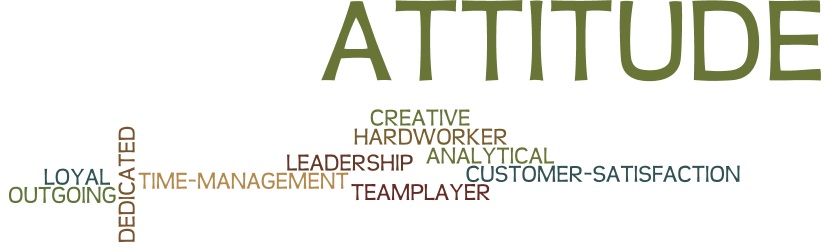
Recruiters and staffing agencies are not only concerned about job candidates’ hard skills; they’re also concerned about their soft skills. And this makes sense. Who would want to hire a dud who brings the operation down with his attitude? Jon Prete, “Who would you hire: Charlie or Ashton? It’s all about attitude!” and Jeff Haden, “The 5 Biggest Hiring Mistakes,” both emphasize the importance of hiring someone who will be a good fit.

This said, how should you prepare for the job search with this in mind? Here are five areas of your job search to focus on.

Be the round peg for the round hole: “The outstanding salesman with the incredible track record of generating business and terrorizing admin and support staff won’t immediately play well in your sandbox just because you hired him,” writes Haden. Let’s face it; if you’re difficult to work for, you have one strike against you already.

Look at yourself long and hard and determine what areas in your personality you might improve. Also determine in which work environments you feel most comfortable. If you’re a demanding person with little tolerance, you might consider an atmosphere with other demanding people…where you can’t terrorize other people.

Show it on paper: Many jobseekers say writing about their soft skills on their résumé and in their cover letter is irrelevant. This is bunk, especially with your cover letter. I don’t suggest that you use clichés like, “hard worker,” “team player,” “dynamic.” I suggest you illustrate these traits through your accomplishments. Show rather than tell.

A Manufacturing Manager who has a team-work approach and leadership skills might write: Consistently met production deadlines through collaboration with colleagues in various departments and providing effective leadership to (formerly) unmotivated subordinatesResult: Products were shipped to customers with a 97% return rate.

Talk about your soft skills while you’re networking: “I hate bragging at networking events,” I’m constantly told. “Nobody wants to hear about my personal qualities.” Yes they do. If someone is going to recommend you to a solid contact, wouldn’t you like to be assured that she will tell him that you loved what you were doing; you were a positive influence on you co-workers?

Demonstrate your enthusiasm while you’re networking, whether at events or on the sidelines of your daughter’s soccer game. Instead of saying, “I’m innovative”; say, “I came up with ideas that were often implemented and led to significant cost savings.”

Of course demonstrating your soft skills at the interview is important: This goes without saying. Interviewers today are using behavioral questions to find the people with the right attitude. “If crafted properly,” states Prete, “behavioral questions can provide a glimpse into a candidate’s decision-making process as well as their values. [Leadership Development Advisor, Beth Armknecht Miller] believes that a great majority of employees fail in a company because their soft skills and values don’t match those of their manager and company.”

Unlike the résumé where you have limited space, the interview provides you the platform to tell your stories using the STAR (situation, task, action, result) formula. You may be asked about your ability to effectively discipline subordinates. “Tell me about a time when you were effective in disciplining an employee. How did this help the employee perform better?” Have a story ready.

Seal the deal: The interview is not concluded until you’ve sent a follow-up letter, I tell my workshop attendees. This is another opportunity to emphasize your strong personality skills, making you a better fit for the position than other applicants. Many jobseekers fail to send a thank you note, and some don’t get the job for that reason.

A former customer recently wrote me, “The HR person really liked my hand-written thank-you note; said it was rare.” The message here is that you can stand out as a courteous, professional, and follow-through type of candidate simply by sending a thank-you note.

Jobseekers generally think that recruiters and staffing agencies care only about the technical skills. (After all, recruiters can’t present a zebra with orange stripes to their client when a zebra with black stripes is called for.) But two recruiters are telling you that employers want a great personality fit, as well. Take their advice and sell yourself as an all-around employee from the very beginning.

Why are jobseekers and recruiters/employers disconnected?

disconnectedI have been accused of being disconnected from my family. For example, with Easter approaching, I should’ve known that it’s a gift-giving holiday, when the girls will receive $100 Sperrys and my son a massive amount of candy, which will amount to a large dentist bill. How could I have forgotten?

This is a trivial matter compared to how disconnected jobseekers and recruiters/employers are when it comes to LinkedIn’s role in the hiring process. It makes me wonder if jobseekers are aware of how recruiters/employers value LinkedIn as a tool to find talent. The two parties aren’t on the same page.

An infographic published on The Undercover Recruiter paints a pretty telling picture of the importance recruiters et  al place on LinkedIn in finding candidates, while it also shows that  jobseekers seemingly place little importance on using LinkedIn.

Facts from the infographic show

Recruiters

Jobseekers

  • 48% of recruiters post jobs on LinkedIn and nowhere else on social media
  • 73% of recruiters filled a position using social media in 2012, a 15% increase from 2011


  • 50.5%: The percentage of LinkedIn users who have complete profiles


  • 89% of recruiters have filled a position using LinkedIn at some point in time


  • 0-2 hours: The amount of time per week most users spend on LinkedIn


  • 97% of all HR and staffing professionals use LinkedIn in their recruiting efforts

The reasons vary as to why jobseekers fail to utilize the very tool that recruiters/employers are increasingly relying on to find them. It may be that LinkedIn is difficult for some to master. Only 50.5% of LinkedIn users have a complete profile. Some of my customers complain about basic things like downloading a photo, remembering their password, how to connect with other members or the Jobs feature, etc.

Some may find it impinges on the numerous hours they spend on the job boards. Sadly, the average time spent using LinkedIn is a mere two hours a week. Good gosh, I spend two hours a day on LinkedIn. Can they give up half an hour a day? Fifteen minutes?

Others may wonder if LinkedIn actually works. There have been no cold facts on the success rate jobseekers have had at finding work directly or indirectly by using LinkedIn. We have heard that personal networking garners anywhere from 60-80% success if used as the primary job method, but some people will only believe it when they see it.

There are jobseekers I consider to be experimenters–they join LinkedIn because they’ve heard how it will help them get a job, only to abandon the application after a day or two of looking for immediate gratification. To these folks, I tell them to kindly close their account and not muck up the work for the rest of us.

Whatever reasons there are for recruiters and jobseekers being so disconnected, it is obviously clear that the two entities are fishing at different lakes. Recruiters will never reveal where the fish are; and I fear I will never understand that Easter is a gift-giving holiday.

2 ways employers can do a better job of hiring employees

Not to beat a dead horse, but employee (overall) fit keeps popping up in the news and conversations. Increasingly more employers are finding that the people they hire aren’t working out because they lack the right attitude, and they are quick to release those who don’t meet their expectations. This doesn’t  bode well for employees and employers.

An article in Forbes.com states that in a study of 2,000 hires only 46% worked out in an 18 month period. This is certainly alarming given that almost 50% of hires aren’t working out. What’s particularly telling is that 89% of those who failed, failed because of their attitude.

“Lack of coachability, low levels of emotional intelligence, motivation, and temperament, accounted for 89% of those bad hires,” according to the Forbes article.

Not for nothing, but this doesn’t surprise many people except, apparently, employers who eagerly interview and hire job candidates who look great on paper—e.g., meet most if not all the technical and transferable skills—but don’t put much weight into assessing their attitude. In other words, employers are falling down on the job of hiring the right people.

One way to determine if applicants possess these skills is by asking better interview questions.

The traditional questions like, “What is your greatest weakness?” or “Why do you want to work here?” or “What is your definition of a great manager?” are losing their effectiveness. Jobseekers can rehearse and provide the answers employers want to hear. The tougher questions, namely behavioral ones, will get to the heart of the matter with job candidates.

If the employer needs to know the person has or lacks leadership skills, a series of behavioral questions will draw this out. For example, “Tell me about a time when you inspired your subordinates to perform beyond their job description.” On the flipside, “Tell me about a time when you could have handled a personnel issue better, and how did you correct the issue?”

Questions like these will reveal more than typical traditional questions or tests that judge a person’s technical abilities. Employers who are asking behavioral questions tend to land candidates that last longer—up to 5 times longer, according to some, than those who are asked traditional questions.

Another way to determine if the applicant possesses the right attitude is hiring through referrals.

But it’s not only the questions employers need to ask to ensure better hires. The article states that referrals are employers’ ultimate choice when it comes to hiring people. That’s because the people making the referrals can vouch for the candidates’ personality and ability to go the distance for the company. As well, employers trust candidates’ references; they’re known by employers as people with whom they work, have worked, or know on a professional basis.

Jobvite.com conducted a survey in which it asked employers to rate the methods of hire that yielded the best results. Out of 10 points, referrals ranked the highest at 8.6. Job boards, incidentally, rated tied for last at 6.1. This makes me wonder why employers continue to advertise on Monster.com, SimplyHired.com, CareerBuilder.com, Dice.com, and so on. I guess it’s hard to break habits, even if they’re ineffective.

So what’s the secret behind hiring people who will stick for longer than 18 months? Better interviewing methods and relying on referrals, according to Forbes.com.

What this means for jobseekers. They must be prepared to answer behavioral question, as well as connect to people who know someone at the company or know someone who knows someone at the company. For ways job candidates cans prove their worth, see Recruiters and staffing agencies say your soft skill are important too.

This post was published a year ago, but ti’s still relevant today. Bad fit is one of the biggest complaints among employers, so what are they going to do about it?