
Tag Archives: interviews

5 hard truths about the interview, according to an interviewer

Interviewers who proclaim that most interview advice is simplistic irritate me. These are people who view advice on eye contact, handshakes, how to answer difficult questions, and avoiding smoking before an interview, as obvious and unworthy of  mention.

But the fact remains that occasionally some of these know-it-alls speak the truth, and the truth sometimes hurts. Let’s face it, although eye contact and the handshake need to be in check, there are more important things to consider at an interview.

Charles B is one of these people who warn jobseekers to be aware of more pressing issues at an interview. At the behest of a customer of mine, I read an article by Charles entitled Why I Won’t Hire You. It’s quite good, albeit abrasive. For example, he writes:

“When you first walk in to my office, I am expecting you to be one of the 99%+ people who I know I won’t hire in the first 5 minutes. I am hoping I will be proven wrong, because I really want to hire you and be done interviewing. Unfortunately, most people looking for jobs don’t deserve them….”

Don’t pull any punches, Sir Charles.

Charles goes on to address some of his pet peeves, those that will certainly prevent job candidates from getting hired by him. I see truth in all of them, and have my own comments to add.

1. You send me a stupidly long résumé

Bingo, the shorter the better. If you’ve read his article in full before reaching this point, you’ll note that he’s a bit hypocritical, as his article is quite long. But his point about writing a résumé that addresses the requirements he lists in his job ads is spot on. In the hiring manager’s mind, it’s all about her needs, not a candidate’s desire to pontificate on irrelevant skills and qualifications.

2. You can’t tell me why you like your current job

That’s right, be specific and sound enthusiastic about what you did at your last job. Generic statements like, “I enjoyed the challenges” are seen as avoiding the question. Someone who’s serious about working for a company will see this as an opportunity to talk about responsibilities and challenges that exist at the perspective company.

3. No career plans or vision

As Charles says, “If you just want a job, why should I care? Someone else will come to me with their vision. Eventually.”

He states as a valid reason being disappointed with the lack of growth opportunity at one’s former company and an opportunity to advance at his company. Why would an employer want to hire someone who doesn’t know what he wants? Failure to express career direction at in interview indicates a lack of focus on the job.

4. No Skills

This is a common complaint among recruiters and hiring managers; people apply for jobs they’re not qualified to do. Charles says to not waste his or others’ time and be honest in your written communications about how you’ll need to learn the required skills. For example, he accepts someone who writes, “Looking to grow skills in Unix administration from a project background.”

5. Answer my questions with conjecture

Here he’s saying don’t bull s_ _ _  me. If he asks a questions that calls for an example, job candidates better have one, lest Sir Charles loses his patience. I see his point. Interviewees who are dancing in circles come across as desperate or unsure of themselves. Just be honest and say you can’t provide an example.

How to Win the interview

There are five specific traits Charles is looking for:

  1. Show me you can get things done.
  2. Show me you are intelligent.
  3. Show me how I fit into your vision
  4. Be highly skilled.
  5. Be Passionate.
  6. Don’t let me see you sweat. (This is my suggestion.)

The bottom line is that Charles B is telling it how he thinks it is. Jobseekers shouldn’t discount other information given by job search experts, but they should heed what this hiring manager writes. The truth sometimes hurts. But isn’t it better to know the truth than go to an interview with blinders on? Incidentally, Charles B might not like what I’ve written, but the truth is that I don’t care.

PS. Since I wrote this a few days ago, I visited Charlie’s comments and was amazed by the positive and negative…downright nasty…comments he has received. I urge you to read his article.

This article previously appeared in January of 2012, but it still holds true to the nature of interviews.


3 ways introverts need to promote themselves in the job search

I’m cleaning the house, going room to room, and come across a test sheet attached to the refrigerator with a magnet that says Welcome to Massachusetts. The test is one of my daughter’s and it says in large red ink, “100%!” Upon close inspection, I notice the test was taken in September of last year. I throw away the test.

I go to the living room and start watching the Celtics/Heat game and suddenly jump out of the seat. I stride to the trash. There I retrieve my daughter’s test sheet and put it back on the refrigerator.

I don’t do this because the test covers a stain on our refrigerator—I do this for a different reason. When my daughter attached her test to the fridge, she did it because she wanted to promote her achievement. I want her to know that self-promotion is acceptable.

My colleague, Wendy Gelberg, is a champion of introverts. I believe she would call my daughter’s act of tacking her test on the refrigerator a healthy way for a teenager to promote herself to her parents; and in fact we were very pleased when we first saw her grade…almost eight months ago.

Introverts who have a hard time promoting themselves must learn how to do it correctly. Especially when it comes to jobseekers who are trying to make a great impression in the job search. In her article, Alternatives to Self-Promotion, Wendy suggests three ways for introverts to promote themselves without looking boastful:

  1. Let others speak for you
  2. Bring a portfolio
  3. Report the facts.

Of the three ways mentioned in Wendy’s article, my daughter illustrates “bring a portfolio.” She is providing a visual aid for us when she attached it to the refrigerator. She can tell us every time she does well, but she feels that showing proof of her success would deliver the message more effectively.

“We all know that sometimes a picture is worth a thousand words–and sometimes having some visual aids can help you promote yourself,” Wendy states.

The portfolio jobseekers show potential employers acts as a picture. Wendy gives “work samples, news articles, certificates/licenses, letters of praise, or other documents” as examples of bringing a portfolio. Bringing a  portfolio to the interview also helps introverts get over the fear of “boasting,” as it confirms to introverts of their accomplishments; it is concrete. Furthermore, employers are convinced of said accomplishments.

The third way to promote yourself in the job search, Report the Facts, is also imperative to doing well at the interview. This means you must back up what you claim. Wendy suggests answering question with the Problem-Action-Result (PAR) formula, and I agree. The PARs explain the skills you’ve demonstrated in the past and also uncover other valuable skills, skills the employers might not ask for but will be happy to hear.

The Celtics are down by nine points, the bathroom still needs to be cleaned, and I have to make dinner; but I’m feeling a sense of pride for what my daughter has accomplished, even if it was eight months ago. More to the point, I’m proud of her for realizing that self-promotion is necessary, even if it’s only for her parents. Self-promotion will be more important in her future job search. This is something I’m going to tell her when I have the chance, even though she’s only 16 years-old.

If you enjoyed this post, please share it.

5 things to consider for an interview; it’s not all about the hard skills

Recruiters and staffing agencies are not only concerned about job candidates’ hard skills; they’re also concerned about their soft skills. And this makes sense. Who would want to hire a dud who brings the operation down with his attitude? Jon Prete, “Who would you hire: Charlie or Ashton? It’s all about attitude!” and Jeff Haden, “The 5 Biggest Hiring Mistakes,” both emphasize the importance of hiring someone who will be a good fit.

This said, how should you prepare for the job search with this in mind? Here are five areas of your job search to focus on.

Be the round peg for the round hole: “The outstanding salesman with the incredible track record of generating business and terrorizing admin and support staff won’t immediately play well in your sandbox just because you hired him,” writes Haden. Let’s face it; if you’re difficult to work for, you have one strike against you already.

Look at yourself long and hard and determine what areas in your personality you might improve. Also determine in which work environments you feel most comfortable. If you’re a demanding person with little tolerance, you might consider an atmosphere with other demanding people…where you can’t terrorize other people.

Show it on paper: Many jobseekers say writing about their soft skills on their résumé and in their cover letter is irrelevant. This is bunk, especially with your cover letter. I don’t suggest that you use clichés like, “hard worker,” “team player,” “dynamic.” I suggest you illustrate these traits through your accomplishments. Show rather than tell.

A Manufacturing Manager who has a team-work approach and leadership skills might write: Consistently met production deadlines through collaboration with colleagues in various departments and providing effective leadership to (formerly) unmotivated subordinatesResult: Products were shipped to customers with a 97% return rate.

Talk about your soft skills while you’re networking: “I hate bragging at networking events,” I’m constantly told. “Nobody wants to hear about my personal qualities.” Yes they do. If someone is going to recommend you to a solid contact, wouldn’t you like to be assured that she will tell him that you loved what you were doing; you were a positive influence on you co-workers?

Demonstrate your enthusiasm while you’re networking, whether at events or on the sidelines of your daughter’s soccer game. Instead of saying, “I’m innovative”; say, “I came up with ideas that were often implemented and led to significant cost savings.”

Of course demonstrating your soft skills at the interview is important: This goes without saying. Interviewers today are using behavioral questions to find the people with the right attitude. “If crafted properly,” states Prete, “behavioral questions can provide a glimpse into a candidate’s decision-making process as well as their values. [Leadership Development Advisor, Beth Armknecht Miller] believes that a great majority of employees fail in a company because their soft skills and values don’t match those of their manager and company.”

Unlike the résumé where you have limited space, the interview provides you the platform to tell your stories using the STAR (situation, task, action, result) formula. You may be asked about your ability to effectively discipline subordinates. “Tell me about a time when you were effective in disciplining an employee. How did this help the employee perform better?” Have a story ready.

Seal the deal: The interview is not concluded until you’ve sent a follow-up letter, I tell my workshop attendees. This is another opportunity to emphasize your strong personality skills, making you a better fit for the position than other applicants. Many jobseekers fail to send a thank you note, and some don’t get the job for that reason.

A former customer recently wrote me, “The HR person really liked my hand-written thank-you note; said it was rare.” The message here is that you can stand out as a courteous, professional, and follow-through type of candidate simply by sending a thank-you note.

Jobseekers generally think that recruiters and staffing agencies care only about the technical skills. (After all, recruiters can’t present a zebra with orange stripes to their client when a zebra with black stripes is called for.) But two recruiters are telling you that employers want a great personality fit, as well. Take their advice and sell yourself as an all-around employee from the very beginning.

Job interviewers, 10 things you need to know about your candidates

In a US News Money.com article titled 10 Things You Should Know About Your Interviewer, Alison Green enlightens job candidates on what interviewers are thinking during the hiring process. Interviewers are human too and have their own struggles. Her 10 statements are below.

But job candidates have their own struggles. Let’s look at it from the candidates’ points of view, according to what jobseekers have told me.

1. We want to find the best person for the job. Many job candidates want to be that person but are passed over for a number of reasons, such as they don’t perform we at the interview…regardless of their qualification. There are other reasons why candidates don’t qualify as the best person for the job, but should nerves be one of them?

2. We’re busy. Candidates get that and value your time. But keep in mind, the best candidates will take a great deal of time preparing for the interview, sometimes more time than some interviewers.

3. We might have our hands tied by human resources. HR is the gatekeeper and makes it difficult for candidates who just want to deliver their résumé and cover letter to the person who will make the decision. So interviewers shouldn’t complain; candidates have it tough from the get-go.

4. We’re afraid of making the wrong hire. Job candidates don’t want you to make the wrong hire either. They want you to hire them as long as it’s going to be a happy marriage and won’t end poorly. In this case, it’s not “better to love than love at all.”

5. We want to hire someone we get along with. Ditto.

6. We’re trying to figure out what you’ll be like to manage. Most candidates want to know what it will be like being managed, as they might have had difficult managers. It’s a two-way street, as they say.

7. We want you to help us figure out why we should hire you. That’s fair. Don’t ask them a bunch of stupid questions like what kind of tree they’d like to be, or where they’d like to be in five years, or what is their greatest weakness and strength. Take some time to figure out how to get the best answers out of them, not the answers you’d necessarily like to hear.

8. We won’t always tell you what we really think. Now why wouldn’t you? If a candidate is daft enough to tell you he hated his last boss, or seems more concerned about the length of lunch time, or seems completely insincere; he deserves to hear your thoughts ASAP.

9. We’re wondering what you’re not telling us. Ditto again.

10. We hate rejecting people. Jobseekers don’t want to be rejected either, but they hate being put on hold more. If you’re not going to hire the candidate, and you know this very soon in the game, have compassion and tell him as soon as possible.

It seems, according to what Alison says, there is a lot of angst over hiring the candidates to fill positions, and it’s refreshing to hear some honesty. What it comes down to is making the best hiring decision. The process isn’t perfect–some say as high as 60% of all hires don’t work out–but who’s to blame for that?

When giving advice to jobseekers, remember to keep an open mind

If you are going to advise jobseekers on how to properly conduct a job search, please do them a favor; get over yourself. That’s right, remember it’s not about you; it’s about giving your listeners options and opening their minds to possibilities.

Occasionally I’m told about speakers my jobseekers hear at  networking events who speak from one point of view, their own. One speaker told the audience that he never reads cover letters. Because he’s an eloquent speaker, an accomplished recruiter, I’m willing to bet everyone in the room left thinking, phew, I don’t have to write cover letters anymore.

Recently I heard of a hiring authority who said she prefers one-page résumés. Now, I know she was speaking for herself, but immediately following the presentation, one of my jobseekers rushed to tell me she was changing her résumé to a one-pager. I spoke with her and we agreed that she had enough experience and accomplishments to warrant a two-page résumé. Further, we agreed that she should construct a one-page résumé. I don’t have anything against one-page résumés, but different situations call for different types of résumés.

A job coach once told me that he doesn’t think job candidates should go to interviews prepared; rather they should go in and wing it. Better to be relaxed than all hyped up, he reasoned. Screw the research, right? He also tells jobseekers that cover letters are a waste of time. He never got a job using a cover letter, so what’s the sense for all jobseekers to write them.

We tend to give advice based on our experience, sometimes forgetting there are other points of view, other ways of doing things. I’m guilty of doing the same. In my mind a cover letter is a compliment to one’s résumé—you write one that’s tailored to each job for which you apply. But I also get that that some recruiters don’t read them. To some, cover letters are fluffy narrative that aren’t worth the paper (or bytes) they’re written on. My advice is to send a cover letter unless specifically told not to.

I realize that one-page résumés are preferred by some hiring authorities. Hell, I’d rather read a résumé that tells it all in one page. But some people have significant accomplishments that simply can’t be covered in one page. Nonetheless, I show my Résumé Writing workshop attendees an example of an excellent one-page résumé that consists of one hundred percent quantified accomplishments. I have an open mind.

Some jobseekers can go to an interview having not researched the company or position for which they’re applying and do quite well. They’re loose and confident. They have the gift of gab. I have to admit that I’ve never suggested an alternative to preparing for interviews, but perhaps I should…nah…prepare your ass off.

I cut my jobseekers a little slack when I explain the ways they can write their LinkedIn profiles, particularly when it comes to the summary. I like one that’s lengthy, written in first person, and tells a story. Others suggest summaries written much like a résumé’s. Not for me, but who’s to say what works best in certain situations. I’m sure hiring managers in the technical fields like things short and sweet. I tend to be long-winded. Can’t you tell?

Look, your advice is probably sound, but there’s more than one way to skin a…bad analogy. Just present sound options and let the smart jobseeker decide what’s best given the situation. Let’s face it, if there were only one way to tell people how to find a job, we’d be rich people. Or we’d be out of work.

Nerves can be a killer at an interview; don’t let them

Interviews are stressful. I know only one person who said she loved being interviewed, but I don’t know if she was telling me the truth.

Personally, I’m not a big fan of being interviewed—the last one I attended was four years ago and it ended successfully. I “performed” well and shined more than I thought; but I was still nervous and couldn’t remember a word of what I said.

Jobseekers who attend my interview workshops nod their heads in agreement when I talk about how nerves can sabotage the interview for any qualified candidate. It just seems to overcome them when sitting in the hot seat. This, to say the least, is a stressful situation.

Stressful is fine. We have to experience stress to keep us on our toes, as well as learn how to deal with it better. Yet, some people have a very hard time taming their nerves at an interview. You talk with them in a different environment, and they’re as calm as a lake in the morning. But at an interview it’s as though they’re about to walk the plank.

I notice it in one woman I coach. She maintains steady eye contact, speaks with a steady voice, and recalls the answers to any question; but she admits that at an interview, this all goes out the window. It’s the nerves.

Here are some ways to get over the nervousness that leads to a stressed-out interview, including some things you’ll want to do before the meeting.

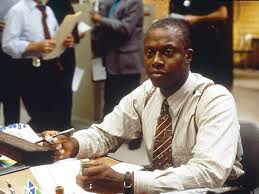
  1. Realize that the interview is nothing more than a conversation between you, the seller, and the employer, the buyer. Your job is to engage in the conversation. Don’t see it as an interrogation, where you’re getting raked over the coals by Andre Braugher from Homicide: Life on the Streets. Henceforth remove “interview” from your vocabulary.
  2. Be prepared. Let’s say it three times: prepare, prepare, prepare. This means knowing what some of the tough questions might be asked. Forbs.com recently wrote a piece on 10 of the toughest questions. There are many more, but this sample of questions gets to the root of what employers are trying to determine about you. It goes without saying that you must know the competencies for the job and can predict questions based on meeting them.
  3. Realize the interviewer has one purpose and one purpose only, to find the right candidate. She wants to get as much pertinent information from you as possible. This means she wants you to relax and answer her questions with clarity and confidence. She doesn’t want you to fail. Doesn’t that make you feel better.
  4. You are the right person for the job. You’ve applied for a position you’re suited for. If you haven’t applied for the right position, you shouldn’t be at the meeting. There will be other people who applied for the same position and aren’t qualified, but you are. You’ve earned the right to be there, so give yourself a hoorah.
  5. Prepare yourself emotionally for the meeting between you and your potential employer. If given the chance to meet with the employer later in the day, take it and use the morning to review some facts about the job and company. Take a walk and practice your answers, call a friend and talk about light matter, do yoga before getting dressed, or any activity that relaxes you.
  6. To further decrease your nervousness, you may want to bring a cheat sheet. Although I recommend against it, some jobseekers use it as a security blanket. An an article in CareerBuilder.com supports bringing a cheat sheet: “Bringing a cheat sheet and questions. There is no rule that says you can’t bring a nice portfolio with some notes and question on it so during the interview you glance down at it,” says Mark Lyden, author of “Professionals: Do This! Get Hired!”. “What should be on the cheat sheet are little reminders of situations (your life experiences) that you may want to give as an example to answer one of the interview questions

I’ll be the last one to say the meeting between you and the employer will be stress-free. I experience the nerves before and during any time I have to speak before a group of people, but I’ve learned to turn that nervousness into positive energy, mainly because I’m confident of what I have to say.

If you are paralyzed by fear and nerves, perhaps you should speak to a professional who can suggest coping skills. Your chance of getting a job should not be dictated by your fear and nerves; you’re the right one for the job, and you know it.

Recruiters advised to interview properly; jobseekers advised to be well prepared

Listen up jobseekers! Recruiters are looking for and finding better ways to interview you. In-house or third-party recruiters are being advised to find the right candidate, not the one who interviews best, but the one who can do the job. The one who can still do the job six months from the time he/she’s hired. 

What does this mean to you? Everything recruiters are advised to do, you must follow their lead…and more.

In Ben’s (simply Ben) article, 5 Ways a Recruiter can Improve Their Interview Technique, posted on http://www.recruitersblog.com/, this recruiter offers his colleagues some sage advice on how to hire the best talent through proper interviewing techniques and attitude. What he has to tell his colleagues is exactly what those of you who seek the help of recruiters should know. What follows are a few of Ben’s notable points.

Recruiters shouldn’t base their decision on interview “performance.”

There are those who interview well but can’t do the job. In other words they’re frauds. Conversely, there are those who don’t interview so well, but can do the job. They suffer a bout of stage fright. Ideally recruiters would like to present people who have both qualities to the hiring manager; but the latter is much more preferable than the former. Side note: unfortunately performing well is still something you must strive to do. Prove you can do the job and then do it.

“I’m sure we’ve all had experiences we’re we’ve hired someone because we got on with them at the interview stage,” Ben writes.  “Then, six months into the role, he or she were still great people but couldn’t/struggled to achieve what was required of them in the first place.”

Don’t focus on first impressions.

Another thing I admire about Ben’s thinking is how he tells his colleagues to deemphasize the first impression interviewers make. Don’t ignore it completely, but don’t make it a deciding factor like we’ve heard done so often in the past. Some say a recruiter or employer will make his/her decision within the first 30 seconds. Here’s what Ben suggests to his colleagues:

“My challenge to you? Be really disciplined on this one. Take those first impressions (we’re all human after all and can’t switch off this natural reaction) but park them.  Write them down somewhere at the beginning of the interview and refer to it again at the end to compare with your final thoughts.”

Use behavioral interview techniques.

One last thing I’d like to point out is the value of behavioral questions. Ben nails this one on the head when he talks about speculative responses as opposed to proven responses. All of us can rehearse for the traditional questions, but the answers we provide to a behavioral question are proven over and over to be accurate…and truthful:

“Just because a candidate says they will do something in 5 weeks time if X Y or Z happens doesn’t mean they actually will.  Instead of asking them what they would do if something happened simply switch the question around.  Ask them for specific examples where they’ve encountered that situation and what they actually did. What were the results? What were the challenges? What were the biggest lessons and how did they change as a result?”

Job search advisors are hearing more and more about how recruiters are employing the best practices to present the right people to the employers, candidates who have not only the technical skills but the transferable and adaptive ones as well. Jobseekers can hope that recruiters and employers will practice best interview techniques, but they must also be prepared for poor interviewers.