Category Archives: Interviewing

Why preparation and practice do make perfect with interviewing; tips for success

Contribution from Dorothy Tannahill-Moran.

Recently, I conducted an interviewing workshop where I polled the group on how many times had they interviewed and how many times had they practiced interviewing.  Out of 16 people, only 2 had interviewed at all in the previous year; and none of them had practiced.  How can you expect to be any good at something if you don’t practice?  How can you be any good at something you only do once or twice a year?  Quick answer: You can’t be any good at interviewing if you don’t prepare and don’t practice.  It’s like expecting a toddler to walk well the first time – it’s just not going to happen.

This is like getting in shape for an athletic event; there are things you need to do and continue doing now and throughout your job search to be at the top of your game.

Interview preparation:

Create a list of interview questions. Obtain a list of most-asked interview questions. You can find them all over the internet. Or, at the next networking event you attend, ask people what questions they’ve been asked during interviews.

Write your response.  Sit down, think through your approach to the response and write down your response to each question.  Walk away from what you’ve done and come back later to reread what you’ve written.  You may discover you were brilliant, or that you need to refine your thoughts.

Read your responses out loud.  When we go through the process of writing and then reading what we’ve written out loud, it helps solidify the message in our brain.  It also helps us really hear whether or not what we’ve written sounds good.  Don’t memorize your responses or they will sound memorized when you do the interview.  Your brain will remember the main points of what you want to convey if you make the list of questions, write your response, and read your response out loud.

Repeat.  Refresh yourself on a regular basis, like weekly or minimally bi-monthly.  You want to read your answers out loud over and over again.

Practice:

Conduct mock interviews. Find other job seekers and friends who would be willing to spend a half hour interviewing you.  They can cook up their own questions or you can give them your list of questions.  Make sure to give them a copy of your resume so they have a basis for their questions.

Ask for feedback.  Find out if your answers sounded good and if you conveyed energy and interest.  Ask if you had any nervous habits that you need to eliminate or body language that doesn’t work well.  This will be one of the few times you might get some useful feedback throughout your entire job search process; so ask for it and do something with it to improve.

If you haven’t done these steps, you aren’t ready for an interview.  You might think well “on your feet,” but think of how much better you will be if you have prepared and practiced.  If you don’t think well on your feet, this is a critical activity you need to be scheduling right now.

Dorothy Tannahill-Moran is a Career Coach and expert on helping her clients achieve their goals. Her programs cover: Career growth and enhancement, Career Change, Retirement Alternatives and Job Search Strategy. Want to discover specific career change strategies that get results? Discover how by claiming your FREE gift, Career Makeover Toolkit at:http://CareerMakeoverToolKitShouldIstayorShouldIGo.com

Companies that are doing it wrong, you might learn some things from “Blink”

The book, Blink by Malcolm Gladwell, talks about decisions made from our unconscious and the negative or positive consequences such decisions produce. Some may call them split decisions or acting without thinking; Gladwell calls this phenomenon “the power of thinking without thinking.” The point is that whether we know it or not, there are decisions we make based on what little knowledge we have of a situation. 

Two specific examples in the book stand out for me. The first one: four policemen in Brooklyn, New York, shoot an innocent man because of their instinctive reaction to a sketchy situation. This is a sad occurrence as a result of not knowing enough about the situation, relying completely on “blink.”

The second and most poignant story Gladwell tells is about how the Munich Philharmonic Orchestra hires a talented Italian trombonist player. The search committee, striving for total objectivity, sets up a screen so the auditioning musicians cannot be seen. They hire the best trombonist they hear. To their chagrin, the musician they choose as the best player is a woman.

The consequence of this instance of “blink” is hiring the best trombonist for their orchestra—a far cry from unloading 42 bullets into an enclosed entryway and killing a man because he was reaching for his wallet. Nonetheless, they are devastated to find that the winner is a woman.

This second instance of “blink” makes me wonder is this is a viable practice all employers who are hiring jobseekers for positions should practice. What the Munich Philharmonic accomplished was to prove that total objectivity yields the best result, albeit not what they wanted in terms of gender. Perhaps employers continue to use ineffective ways of hiring people because they make their decisions based on biases, or…they’re given the opportunity to think.

Following the practice of the Munich Philharmonic Orchestra would most likely preclude employers from discriminating against various populations, including the disabled; minorities; woman; one of the hardest hit populations, the older workers; and other groups. In other words, the most qualified candidates would be hired the majority of the time. But there could be some drawbacks for employers who, for instance, are trying to get a viable “fit.”

How would employers emulate the success of the Munich Philharmonic?  To safeguard against preventing them from discriminating against the aforementioned populations, they would have to abide by the following rigid steps:

Step One. Conduct telephone interviews to determine minimum technical requirements met and salary expectations are in synch with their budget. The telephone interview remains pure and objective to this day. Next a face-to-face interview would be scheduled if the two issues are ironed out.

Step Two. Candidates, like the musicians who auditioned for the Munich Philharmonic, would enter the interview location unseen and unheard. Interviewers would not see their bodies and faces—it’s a well-known fact that the “blink” phenomenon has played a role in determining a person’s perceived greatness. (Ex. The notorious President Warren Harding, explained by Gladwell in Blink, was elected, in part, because of his physical stature.)

Step Three. Interviewers will literally conduct all interviews with a twelve-foot screen separating them and the job candidates. All candidates would be equipped with a voice scrambling device, thus disguising their gender, ethnicity, age, or vocal disability.

Step Four. There would be no trick/illegal questions asked to determine candidates’ isms. Questions like these would be forbidden:

  • “What country are you from?”
  • “When did you graduate from college?”
  • “Do you favor the current President, or the opposing party?”
  • “Who is the breadwinner in your house?”
  • “Do you require any special accommodations?”

Interviewers may ask questions that are neutral and reveal the candidates’ required skills and experience. These could include any technically related questions, behavioral-based questions, and questions that get to the applicant’s personality fit.

Step Five. Once the interviewers’ decision is made, based on objective, unbiased questions; it is final. Had the interviewers hoped for someone in his/her 30’s; tough. If they wanted someone who was a man, or woman; too bad. Tough cookies if they wanted someone as healthy as a horse but ended up with someone in a wheelchair—install a ramp.

What are some possible drawbacks of this approach to interviewing? Interviewers would not see the candidates’ body language and visa-versa. Interviewers would have to rely on the content of the candidates’ answers to ensure overall fit, including technical, transferable, and personality skills. Further, candidates would not be allowed to see the companies’ facilities in order to maintain total anonymity. The personal nature of the interview would be eliminated.

The likelihood of employers conducting this kind of interview is very slim at best. Employers have a right to hire who they want. But to “blink” and not be given time to think, would eliminate some of what’s wrong with the interview system. Let’s look at the Munich Philharmonic’s example of objective hiring as something that’s attainable in a theoretical way. Lord knows too many qualified people are slipping through the cracks.

Be prepared for the big and little things at an interview

The other day a job seeker named Bill came to my workshop carrying a newspaper article from the Boston Herald titled: “Be prepared for [the] unexpected at [the] job interview.” It’s not often someone brings in a newspaper article for me to read, nor do I often see a newspaper. So I was a bit stunned.

I was grateful for the article Bill brought me because much of what was written confirmed what I tell job seekers about the interview process. Not what questions to predict; not how to successfully structure their answer to a behavioral question; and not how to negotiate salary. The article talked about the simpler acts interviewees sometimes take for granted.

Two of the do’s some job seekers take for granted, according to this article, are maintaining eye contact and arriving on time. Weren’t we told many years ago that these faux pas are unforgivable? Reading that these interview mistakes still occur is almost incomprehensible. In the worst economy of our time, I can’t see any room for even these minor mishaps. Sweaty palms, a bit of hesitation, some “umms” here and there, are borderline acceptable.

So what goes wrong after job seekers zip off a great résumé and cover letter, pass the phone interview, and head for the all important face-to-face? Some of it can be attributed to nerves and downright fear, and some of it can be because the interviewee doesn’t have the common sense of a Labrador Receiver.

Marvin Walberg, the author of this article, writes that a survey was conducted by Accountemps to see what the kinds of silly mistakes are made at interviews. The mistakes go beyond not maintaining eye contact and being late; we’re talking about other more serious mistakes, definite interview killers.

Of more than a thousand hiring managers, six blunders stood out more than others. The percentages indicate which mistakes came to the managers’ mind first.

1. Little or no knowledge of the company: 38 percent
2. Unprepared to discuss skills and experience: 20 percent
3. Unprepared to discuss career plans, goals: 14 percent
4. Lack of eye contact: 10 percent
5. Late arrival: 9 percent
6. Limited enthusiasm: 9 percent

The first three failures point directly to unpreparedness. What more can job search professionals tell jobseekers? Prepare, prepare, prepare. It’s that simple. If you’re not prepared for the interview, your raw intelligence, good looks, and charm will probably not land you the job.

Questions about the job: Expect questions regarding the company and the job. Interviewers want to know why you want to work for them, what you know about their plans and goals, what understanding you have of their products and services. And they also want you to sell their company to them.

Knowing the company’s competitors will be an added bonus. Going to the interview loaded with all this knowledge can solve the employers’ last most common mistake, failing to show enthusiasm.

Be able to discuss your skills and experience: “Know thyself” is such a well known cliché, but it’s true. You have to know what duties you’ve performed, how well you’ve performed them; and it all has to relate to the position you’re seeking. As we’ve read hundreds of times, quantified accomplishments sell.

People with good recall usually have no problems recounting their experience, so those whose memory isn’t that great need to study their résumé before going to the interview.

Know your goal plans: Where do you plan to be in five years? Who the hell knows? At least show your ambition by telling employers that you reach for the stars and won’t be a clock puncher—in at 9:00 out at 5:00 on the dot.

If you want to be an individual contributor and are tired of the management route, demonstrate your desire to accomplish great things in your new role. Let them know you want to help the company’s bottom line. This is providing the role doesn’t have management responsibilities in the future.

The last three, my friend, are simply common sense. If you avoid peoples’ eyes, are constantly late, and show no enthusiasm, it’s time to do an about face and change your ways. I’m glad some people still read the newspaper and are thoughtful enough to bring in the cut-outs.

Nerves can be a killer at an interview; don’t let them

Interviews are stressful. I know only one person who said she loved being interviewed, but I don’t know if she was telling me the truth.

Personally, I’m not a big fan of being interviewed—the last one I attended was four years ago and it ended successfully. I “performed” well and shined more than I thought; but I was still nervous and couldn’t remember a word of what I said.

Jobseekers who attend my interview workshops nod their heads in agreement when I talk about how nerves can sabotage the interview for any qualified candidate. It just seems to overcome them when sitting in the hot seat. This, to say the least, is a stressful situation.

Stressful is fine. We have to experience stress to keep us on our toes, as well as learn how to deal with it better. Yet, some people have a very hard time taming their nerves at an interview. You talk with them in a different environment, and they’re as calm as a lake in the morning. But at an interview it’s as though they’re about to walk the plank.

I notice it in one woman I coach. She maintains steady eye contact, speaks with a steady voice, and recalls the answers to any question; but she admits that at an interview, this all goes out the window. It’s the nerves.

Here are some ways to get over the nervousness that leads to a stressed-out interview, including some things you’ll want to do before the meeting.

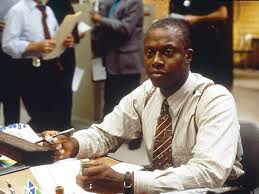
  1. Realize that the interview is nothing more than a conversation between you, the seller, and the employer, the buyer. Your job is to engage in the conversation. Don’t see it as an interrogation, where you’re getting raked over the coals by Andre Braugher from Homicide: Life on the Streets. Henceforth remove “interview” from your vocabulary.
  2. Be prepared. Let’s say it three times: prepare, prepare, prepare. This means knowing what some of the tough questions might be asked. Forbs.com recently wrote a piece on 10 of the toughest questions. There are many more, but this sample of questions gets to the root of what employers are trying to determine about you. It goes without saying that you must know the competencies for the job and can predict questions based on meeting them.
  3. Realize the interviewer has one purpose and one purpose only, to find the right candidate. She wants to get as much pertinent information from you as possible. This means she wants you to relax and answer her questions with clarity and confidence. She doesn’t want you to fail. Doesn’t that make you feel better.
  4. You are the right person for the job. You’ve applied for a position you’re suited for. If you haven’t applied for the right position, you shouldn’t be at the meeting. There will be other people who applied for the same position and aren’t qualified, but you are. You’ve earned the right to be there, so give yourself a hoorah.
  5. Prepare yourself emotionally for the meeting between you and your potential employer. If given the chance to meet with the employer later in the day, take it and use the morning to review some facts about the job and company. Take a walk and practice your answers, call a friend and talk about light matter, do yoga before getting dressed, or any activity that relaxes you.
  6. To further decrease your nervousness, you may want to bring a cheat sheet. Although I recommend against it, some jobseekers use it as a security blanket. An an article in CareerBuilder.com supports bringing a cheat sheet: “Bringing a cheat sheet and questions. There is no rule that says you can’t bring a nice portfolio with some notes and question on it so during the interview you glance down at it,” says Mark Lyden, author of “Professionals: Do This! Get Hired!”. “What should be on the cheat sheet are little reminders of situations (your life experiences) that you may want to give as an example to answer one of the interview questions

I’ll be the last one to say the meeting between you and the employer will be stress-free. I experience the nerves before and during any time I have to speak before a group of people, but I’ve learned to turn that nervousness into positive energy, mainly because I’m confident of what I have to say.

If you are paralyzed by fear and nerves, perhaps you should speak to a professional who can suggest coping skills. Your chance of getting a job should not be dictated by your fear and nerves; you’re the right one for the job, and you know it.

Recruiters advised to interview properly; jobseekers advised to be well prepared

Listen up jobseekers! Recruiters are looking for and finding better ways to interview you. In-house or third-party recruiters are being advised to find the right candidate, not the one who interviews best, but the one who can do the job. The one who can still do the job six months from the time he/she’s hired. 

What does this mean to you? Everything recruiters are advised to do, you must follow their lead…and more.

In Ben’s (simply Ben) article, 5 Ways a Recruiter can Improve Their Interview Technique, posted on http://www.recruitersblog.com/, this recruiter offers his colleagues some sage advice on how to hire the best talent through proper interviewing techniques and attitude. What he has to tell his colleagues is exactly what those of you who seek the help of recruiters should know. What follows are a few of Ben’s notable points.

Recruiters shouldn’t base their decision on interview “performance.”

There are those who interview well but can’t do the job. In other words they’re frauds. Conversely, there are those who don’t interview so well, but can do the job. They suffer a bout of stage fright. Ideally recruiters would like to present people who have both qualities to the hiring manager; but the latter is much more preferable than the former. Side note: unfortunately performing well is still something you must strive to do. Prove you can do the job and then do it.

“I’m sure we’ve all had experiences we’re we’ve hired someone because we got on with them at the interview stage,” Ben writes.  “Then, six months into the role, he or she were still great people but couldn’t/struggled to achieve what was required of them in the first place.”

Don’t focus on first impressions.

Another thing I admire about Ben’s thinking is how he tells his colleagues to deemphasize the first impression interviewers make. Don’t ignore it completely, but don’t make it a deciding factor like we’ve heard done so often in the past. Some say a recruiter or employer will make his/her decision within the first 30 seconds. Here’s what Ben suggests to his colleagues:

“My challenge to you? Be really disciplined on this one. Take those first impressions (we’re all human after all and can’t switch off this natural reaction) but park them.  Write them down somewhere at the beginning of the interview and refer to it again at the end to compare with your final thoughts.”

Use behavioral interview techniques.

One last thing I’d like to point out is the value of behavioral questions. Ben nails this one on the head when he talks about speculative responses as opposed to proven responses. All of us can rehearse for the traditional questions, but the answers we provide to a behavioral question are proven over and over to be accurate…and truthful:

“Just because a candidate says they will do something in 5 weeks time if X Y or Z happens doesn’t mean they actually will.  Instead of asking them what they would do if something happened simply switch the question around.  Ask them for specific examples where they’ve encountered that situation and what they actually did. What were the results? What were the challenges? What were the biggest lessons and how did they change as a result?”

Job search advisors are hearing more and more about how recruiters are employing the best practices to present the right people to the employers, candidates who have not only the technical skills but the transferable and adaptive ones as well. Jobseekers can hope that recruiters and employers will practice best interview techniques, but they must also be prepared for poor interviewers.

Be strong at the interview; Nowitzki vs. James

During the NBA Finals, I wrote with great anticipation about the Dallas Mavericks hopefully beating the Miami Heat. My son and I wanted the Mavs to beat the Heat because 1) they knocked our beloved Celtics out of the play-offs and 2) we despised the way Lebron James made a circus out of leaving Cleveland, practically claiming to be the chosen one.

Maverick players were getting it done by being demonstrative and touching each other by high-fiving, patting butts, handshakes, etc. I related this to management’s attempt to raise morale as a great thing and that companies need more of it.

Now I’d like to talk about Dirk Nowitzki and Lebron James and how they are analogous to jobseekers vying for the same position. No one will stage a great debate as to whether James is better than Nowitzki; James is a dominant, every-coaches-dream player…at least on paper.

What I’m going to assert is that if you’re not the best person on paper (Nowitzki), it doesn’t mean you’re not the best one for job. I’m referring to your résumé, which may indicate a lack of certain job-related skills. It may not be the best one submitted for the job, but keep in mind that a résumé doesn’t get the job; the interview does.

Although a great résumé helps in getting to the interview, a good one can accomplish this, as well. Let’s go back to James and Nowitzki. On paper James is king, but during the playoffs, Nowitzki ruled. To further the analogy, let’s look at the playoffs as the interview.

Interviewers often look for the intangibles in job candidates. They see that the other candidate for a Marketing Manager position, for instance, has the prerequisite skills, while you’re missing a few and not coming across, on paper, as not the strongest candidate (Nowitzki). What’s your plan of action?

  1. At the interview demonstrate your enthusiasm for the job and mention your strong personal and transferable skills whenever you can. You show initiative, hustle (another word for work hard) and are willing to dive for every ball. You’re a true leader who inspires your colleagues to do their best.
  2. Take every moment to explain your accomplishments and how they raised revenue, saved money, and improved processes at your last job. Quantify your results with numbers, dollars, and percentages. Use the Situation/Task, Action, Result (STAR) formula to tell your stories.
  3. Be prepared to answer the tough questions, one of which will be, “Why should we hire you?” or some deviation of this. You can do the job, will do the job, and will fit in, is the foundation for this answer. Rattle off the requirements you meet, not the ones you don’t; talk about your love for the company and all it stands for; and mention how you were respected, not feared, by all your colleagues.
  4. Appear confident and unstressed by questions regarding the technical skills you may lack. One of which might be your experience with direct mail. Talk about experiences that required total organizational, follow-through, management, and cool-under-pressure skills. Don’t spend the alloted two minutes answering this question.
  5. Do your due diligence: follow up the interview with a thank-you note that reiterates your strong abilities to do the job. Don’t revisit the one area of the position where you lack the experience; rather focus on the ones where you do. Be gracious of the time the employer took interviewing you. Address any potential problem the company has that was raised during the interview; explain in detail how you can help them solve it.

Keep in mind the words of Rick Carlisle, the manager of the Mavericks, “Our team is not about individual ability, it’s about collective will, collective grit, collective guts.” Employers look for the intangibles job candidates have, what they can do for the company in the future. If your lack of experience is insurmountable, take pride in the effort you put forth at the interview. It was Nowitzki and his team that beat James and the Heat, despite how the King looked on paper.

Don’t overlook the value of One-Stop career center job search workshops

The other day I was talking with a neighbor who has been out of work for over six months. He’s a project manager who worked at a medical equipment conglomerate for five years. I asked him how his job search was going. He told me great; he had sent out more than 10 resumes that day on a number of job boards. I cringed—in to the black hole they went.

Find a job

I encouraged him to come down to the One-Stop career center, for which I work, for help with his job search. “The Unemployment Office?” he asked. Obviously he hadn’t been to a career center, where unemployment insurance assistance is one of many services the career centers offer.

“No the career center. We can help you with your job search. We have workshops on all kinds of job-search topics….” I also wanted to tell him that he’d feel very comfortable at our career center. He’d fit in.

Adapting to a Rapidly Growing Professional Job Seeker Clientele

One common misconception of One-Stop career centers is that the only people who attend job search workshops are those who know little to nothing about seeking employment or are non-exempt workers. For a vast majority of people, nothing could be further from the truth.

Increasingly more job seekers who attend workshops are savvy job seekers who come from all types of occupations. Positions like marketing, engineering, sales, pharmaceutical development, document control, manufacturing management, as well as mechanics, construction workers, et cetera.

To better serve the more experienced job seekers, career centers have had to upgrade many of its services. Workshop Specialists (WS) are finding the challenge of serving experienced job seekers to be both exhilarating and mentally stimulating.

They’ve had to up their game and are meeting the challenge. The consequence of not enhancing their knowledge is letting savvy job seekers down and driving them away. Below are some of the more popular workshops that WS’s have developed.

LinkedIn: To answer the demand of the LinkedIn aficionados, many career centers are offering workshops on Intro to LinkedIn and Advanced LinkedIn. The latter workshop addresses the elements that make a LinkedIn profile appealing to employers who are enabling the Hidden Job Market by searching for passive or active job seekers via LinkedIn. Employers are increasingly foregoing the traditional search process and instead using LinkedIn and social media like Facebook and Twitter. Approximately 80% of employers are using LinkedIn.

Advanced Résumé Writing: This is another area of the job search where advanced job seekers expect more than the rudimentary theories on writing this important marketing piece. Many of them have received costly assistance from outplacement agencies and professional résumé writers, so they know the drill when it comes to writing an effective marketing piece. Advanced Résumé Writing workshop focus more on Strategy, Positioning, and Selling one’s skills and experience. Workshop Specialists stress results that are quantified and related to the jobs to which jobseekers apply.

The Interview Process: Advanced jobseekers need to know more about the interview process than simply the etiquette one has to demonstrate at an interview, e.g. steady eye contact, a firm handshake, and good body posture. The importance of researching the job and company comes to no surprise to them, but combining the power of LinkedIn and reading the company’s website for additional details of the job is some food for thought. (The more experienced job seekers have an advantage over the ones who haven’t looked for work in more than ten years.) Behavioral questions and how to prepare for them is often new even to advanced job seekers. Many of them haven’t experienced behavioral questions, and if they have they were often taken off guard.

Networking: There is a clear divide between the experienced and inexperienced job seekers in a career networking workshop. The advanced job seekers have been attending networking groups once or perhaps twice a week, so they’re familiar with organized networking technique. The focus on how networking enables one to penetrate the Hidden Job Market. It’s fascinating to see workshop attendeess’ faces when WS’s talk about today’s hiring process—that 80% of employers are hiring from within, not advertising the very best positions and entertaining only the savviest networkers.

Job Search Letters: Experienced job seekers know the importance of effective written communications, but in this workshop they’re reminded of how important it is to be proactive in one’s job search. WS’s talk about approach letters as a way to network. Cover letters are always sent with a résumé unless instructed otherwise. When asked how many send cover letters with résumés, most don’t raise their hand. Jobseekers are encouraged to go beyond the typical cover letter with the typical first sentence, and write a vivid tagline that grabs employers’ attention. Boring doesn’t win brownie points with employers—it’s simply boring. The thank you letter is the conclusion of the interview process.

The next time you see someone who is biding his time applying online for jobs, suggest that he visit a One-Stop career center; talk to a career counselor; look into training; and, of course, join as many workshops as possible. Jobseekers of all experience levels shouldn’t turn their nose up to One-Stop career centers that are making a great effort to accommodate the expanding number of experienced job seekers…and often succeeding.

Recruiters and staffing agencies say your soft skills are important too

Based on two recent blogs I read on LinkedIn Today (a great feature), recruiters and staffing agencies are not only concerned about job candidates’ hard skills; they’re also concerned about their soft skills. And this makes sense. Who would want to hire a dud who brings the operation down with his attitude? Jon Prete, “Who would you hire: Charlie or Ashton? It’s all about attitude!” and Jeff Haden, “The 5 Biggest Hiring Mistakes,” both emphasize the importance of hiring someone who will be a good fit.

This said, how should you prepare for the job search with this in mind? Here are five areas of your job search to focus on.

1)       Be the round peg for the round hole: “The outstanding salesman with the incredible track record of generating business and terrorizing admin and support staff won’t immediately play well in your sandbox just because you hired him,” writes Haden.

Let’s face it; if you’re difficult to work for, you have one strike against you already. Look at yourself long and hard and determine what areas in your personality you might improve. Also determine in which work environments you feel most comfortable. If you’re a demanding person with little tolerance, you might consider an atmosphere with other demanding people…where you can’t terrorize other people.

2)      Show it on paper: Many jobseekers say writing about their soft skills on their résumé and in their cover letter is irrelevant. This is bunk, especially with your cover letter. I don’t suggest that you use clichés like, “hard worker,” “team player,” “dynamic.” I suggest you illustrate these traits through your accomplishments. Show rather than tell.

A Manufacturing Manager who has a team-work approach and leadership skills might write: Consistently met production deadlines through collaboration with colleagues in various departments and providing effective leadership to (formerly) unmotivated subordinates. Result: Products were shipped to customers with a 97% return rate.

3)      Talk about your soft skills while you’re networking: “I hate bragging at networking events,” I’m constantly told. “Nobody wants to hear about my personal qualities.” Yes they do. If someone is going to recommend you to a solid contact, wouldn’t you like to be assured that she will tell him that you loved what you were doing; you were a positive influence on you co-workers? Demonstrate your enthusiasm while you’re networking, whether at events or on the sidelines of your daughter’s soccer game. Instead of saying, “I’m innovative”; say, “I came up with ideas that were often implemented and led to significant cost savings.”

4)      Of course demonstrating your soft skills at the interview is important: This goes without saying. Interviewers today are using behavioral questions to find the people with the right attitude. “If crafted properly,” states Prete, “behavioral questions can provide a glimpse into a candidate’s decision-making process as well as their values. [Leadership Development Advisor, Beth Armknecht Miller] believes that a great majority of employees fail in a company because their soft skills and values don’t match those of their manager and company.”

Unlike the résumé where you have limited space, the interview provides you the platform to tell your stories using the STAR (situation, task, action, result) formula. You may be asked about your ability to effectively discipline subordinates. “Tell me about a time when you were effective in disciplining an employee. How did this help the employee perform better?” Have a story ready.

5)      Seal the deal: The interview is not concluded until you’ve sent a follow-up letter, I tell my workshop attendees. This is another opportunity to emphasize your strong personality skills, making you a better fit for the position than other applicants. Many jobseekers fail to send a thank you note, and some don’t get the job for that reason.

A former customer recently wrote me, “The HR person really liked my hand-written thank-you note; said it was rare.” The message here is that you can stand out as a courteous, professional, and follow-through type of candidate simply by sending a thank-you note.

Jobseekers generally think that recruiters and staffing agencies care only about the technical skills. (After all, recruiters can’t present a zebra with orange stripes to their client when a zebra with black stripes is called for.) But two recruiters are telling you that employers want a great personality fit, as well. Take their advice and sell yourself as an all-around employee from the very beginning.

A Heart-Warming Story

A blog entry from Martin Yate called Put Joy in Your Life is touching and on the surface seems to have nothing to do with the job search.

But putting aside the fact that Joshua Bell, one of the greatest musicians in the world, is playing merely for fun, let’s stretch our imagination and envision some analogy to the job search.

Maybe a lesson about being unsuccessful because of poor marketing and the inability to sell oneself. Joshua only made a handful of money.

“After 45 minutes of continuous playing: Only 6 people stopped and listened for a short while. About 20 gave money but continued to walk at their normal pace. The man collected a total of $32,” writes Martin.

If we thing long and hard, we could think of some way to relate the story to the job search. The inability to understand one’s audience; as in poorly written or verbal communications.

This could be a lesson on being the most qualified person for the job (the guy’s world famous) but not getting it because he’s playing to the wrong audience. Obvious. 

But I’m sure our analysis of the story would trivialize it and probably make a mess of the message Martin is trying to send.

Read the story on Martin’s blog and you may ask, “Why is it posted on Knock ‘Em Dead’s blog?” On the other hand, it may hit you like a brick and make complete sense…it’s just an awesome story about a man having some fun.

Talking about Ageism: Three Pieces of Advice from Matthew Levy

I was searching around LinkedIn for some questions to answer. It’s been awhile and I miss my old routine of answering tons of questions. I came across a great question from Matthew Levy on ageism, but instead of answering his question, I decided to write this blog article in response to a very important topic—ageism and how to break down the barrier of age discrimination.

Let me start by saying that Matthew’s article was very insightful, albeit lengthy even for a verbose writer as myself. He suggests three methods for the 40+ crowd to use in combating possible age discrimination. The first method he talks about is modifying your appearance to make you appear younger. Second, he urges you to dive into social media; and third, he advises a strategic approach to writing a résumé.

Modifying one’s appearance. Matthew writes that one day he advised a gentleman to shave his beard, which according to Matthew, took five years off the man’s appearance.

I also witnessed a man who had shaven his beard and took years off his appearance. For some men it’s hard letting go of a beard he’s had for a good part of his life; but once the job is secured, the beard can return.

Matthew also suggests modifying other aspects of your appearance: eyeglasses; hair color; make-up; clothing, e.g., suits, blouses, skirts, et cetera.

Embracing social media. Using media like LinkedIn, Twitter, Facebook, and YouTube to network puts you in the company of Y-generation jobseekers.

I lead workshops at an urban career center, where I see many mature workers. These folks attend my LinkedIn workshop and are excited at the prospect of getting online, or if already there, enhancing their online footprint.

“If you stay in the dark by resisting change and new technologies, the Millennials (who are interviewing you, recruiting you and referring you) might typecast you as ‘behind the times’ and ‘set in your ways,’” Matthew writes.

How true and scary.

Don’t show too much work history on your résumé. Matthew advises that jobseekers keep their work history within 20 years due to relativity, which is sound advice. But I say keep it within 15 years, as 20 years already dates you at least 43 years-old. The bottom line is why kill your chances of getting to the interview? Once at the interview you can sell yourself, thus negating your age.

Other smart suggestions Matthew offers are to remove graduation dates from your education, applying more up-to-date fonts, eliminating an objective statement and “references available upon request,” and not limiting your résumé to one page. This may seem like simple advice, but appearance in every aspect counts when making a first impression.

Matthew gives older jobseekers some great commonsense advice, but I think encouraging them to join the social media party is the best advice of the three topics.

Incidentally, Matthew asks for other ideas to help older jobseekers in their job search. My piece of advice would be to enter an interview with a positive attitude. Think as though your 20 years younger than you are because what does age matter anyways?