
4 reasons for NOT saying at an interview that you’re a Perfectionist

PerfectionistI can say with certainty that I am not a perfectionist. Today, for instance, I’m wearing brown shoes, olive-green pants, a black belt, a blue striped shirt, and a Mackintosh plaid tie. And, oh, my socks don’t match. I attribute this imperfection to my upbringing in a chaotic household, where no one really knew how to dress.

My colleague won’t mind me telling you that she prepares her room the night before her workshops. She puts aside exactly three Starbursts, a cup of lukewarm water, two paper towels, and enough sharpened pencils for twenty attendees. Not only that; she reviews her presentations before every workshop. Is she a perfectionist? Quite possibly.

If you claim perfectionism as a strength at an interview, you’re likely to lose the job before the interview’s over. Here are four reasons why:

1. Interviewers have heard this claim far to often and it insults their intelligence. Someone I once interviewed answered my question, “What is your greatest strength?” with a smug look on his face, that he was a perfectionist. I immediately thought he was a con man.

2. A perfectionist is someone who has a difficult time finishing projects or assignments because she thinks it must be perfect,which is a tough bill to fill. I knew a person who would prolong delivering something as simple as a PowerPoint presentation because the thought of handing it in imperfect terrified her.

3. A perfectionist is most likely going to irritate those around him because he will expect perfection from them. CBS Money Watch repeats“It also messes up the people around you, because perfectionists lose perspective as they get more and more mired in details.”

perfect woman4. An astute interviewer realizes that there are negative ramifications that accompany perfectionism. Psychology Today states,  “A one-way ticket to unhappiness, perfectionism is typically accompanied by depression and eating disorders.”

Those who consider themselves to be perfectionist are so concerned about being successful that they’re more focused on not failing. It’s a recipe for disaster.

Bad news for perfectionists abound when Wikipedia also claims there’re serious psychological ramifications associated with it: “Researchers have begun to investigate the role of perfectionism in various mental disorders such as depression, anxiety, eating disorders and personality disorders.” Yikes. This makes me glad that my ties rest in my drawer at work like a nest of snakes, instead of hanging neatly on a tie rack at home.

However, there seems to be some contradiction when Wikipedia describes perfectionists as perfectly sane people who simply excel: “Exceptionally talented individuals who excel in their field sometimes show signs of perfectionism. High-achieving athletes, scientists, and artists often show signs of perfectionism.”  This makes sense. I suppose that if I were to be operated on, I would want a perfectionist as my surgeon.

I’m certainly not a perfectionist, and it hasn’t hurt my performance–my performance reviews consistently garner “Very Good”–but I wonder what it would be like if my clothing were perfectly matched. I’m sure I’d suffer some malady. One thing is for certain, it’s better to choose a different strength to give at an interview.

4 skills college students must learn in college

Is it a lack of technical skills employers are most concerned about when they consider hiring college graduates? Nah, those can be learned.  It’s the lack of soft skills employers are concerned about. 

What do the following skills have in common: writing, presentation, teamwork, and critical thinking?

According to an article on Glassdoor.com, What Employers Wish You’d Learned in College, these are valuable skills lacking in most college grads with technical degrees.

True, they have the technical know-how but, “When soft skills are lacking, there’s a direct effect on the bottom line,” the article asserts.

College StudentWritten communications: We all realize that writing is an important skill, but what does it have to do with being an engineer?

A lot, according to HR director Amanda Pollack who is quoted in the article: “A big part of what we do as engineers is write reports and specifications for our plans, and we find that writing isn’t something that is really taught to engineers.”

Verbal communications: In addition to written communications, we can’t neglect to mention the importance of verbal communications, listening skills, and body language. These all contribute to effective communications. College students should be taught proper communications and have to practice it in real-life situations.

Would it be too far-fetched to require college students to attend Toastmasters or an organization similar to it?

Little emphasis was placed on presentation skills when I attended college, yet delivering workshops is my job. Somewhere along the way I learned the art of public speaking, but it was a long journey.

Similarly, project managers are expected to present to upper management the progress of the projects they oversee. Sales people rely a great deal on their ability to speak persuasively to their potential customers.

Some employers claim that communication skills, verbal and written, are the most important transferable skills an employee can possess.

Collaboration: Another skill held in high regard by employers is being able to function as a team. “Most importantly, employers are looking for teamwork,” said Brian Tabinga, a program manager who is quoted in the Glassdoor.com article.

No surprise here. Companies are working with less, while trying to produce more. Tabinga, who works with military members, says there’s no difference between the military and private sector in terms of trying to meet their collective needs.

How can colleges teach teamwork? Some elementary and middle schools are attempting to teach teamwork through collaborative projects—I’m surprised yet delighted with the number of group projects my kids work on.

More projects that are graded based on participation within a team is one way to ensure that students learn teamwork in college. Should there be courses offered on teamwork or, perhaps, minor degrees in “Collaboration?”

Critical thinking/Problem solving: The last skill the article mentions is critical thinking. Tabinga states, “Critical thinking means being able to look at a problem from multiple angles.

A lot of times you are trained to go from A to B in a straight line, and that’s not always what’s needed. Critical thinking means taking a step back to look at multiple solutions,” The article says.

All is not lost. The article gives four suggestions to help graduates develop these skills once in the workforce:

  • Get a mentor, someone in the office or outside work who can spot your shortfalls and coach you to improve them.
  • Listen openly to feedback from your supervisor.
  • Join young professional groups like The United States Junior Chamber (Jaycees), where peers get together to improve their career skills

To me, this seems a bit late. If colleges are interested in preparing students for the competitive labor market, they should do something about it before they release young students, strong on theory but needing improvement on their soft skills, into a world that requires employees to hit the ground running.

Photo: Flickr, Mikey Smith

4 reasons why you should just answer the question

Before I ask someone a question which requires a yes-or-no answer, I feel like adding a disclaimer: “I don’t want a 10-minute diatribe or even an extended answer. I simply want a ‘yes or no’.”

I’ll take it from there. This is particularly true when I’m leading a workshop that has a two-hour limit.

For some reason unbeknownst to me some people feel the need to pontificate until I give them the “enough” signal, which is as obvious as I can be. In other words, I hold up my right hand to gesture, “Stop!” This seems to get people’s attention; although, it leaves me with the feeling that I’ve been rude.

If you’re reading this and get the sense that I’m far too rigid leading workshops, keep in mind that if I don’t require people to just answer the questions, I probably won’t cover all the topics.

There are times when elaboration is required, such as when you’re asked an open-ended question at an interview. “Why do you feel that customer service is your greatest strength?” requires an answer that is longer than five seconds. It’s a question that gives you the “go” sign. And when your answer is complete, simply conclude with, “This is why customer service is my strongest skill.”

The ability to communicate verbally is essential in our work and job search, arguably more important than our ability to write; and knowing when to put the brakes on talking plays an important part in communicating. Here are four reasons why just answering the question is required.

1. Time is valuable. I’ve been told I’m always in a hurry to get nowhere, and sometimes I feel that way. But when I’m rushing to get to a workshop or a meeting, I don’t have time to waste listening to an elaborate response to a very simple question.

“How’s it going?” is perhaps an overused question. It really means, in a sense, “Hi there.” Some people take it literally and feel the need to tell me how it’s really going. My mistake. If I were to say, “Tell me how your day is going, and don’t leave out any details,” I would completely understand an elaborate answer.

2. It’s inconsiderate to dominate airtime. In my workshops I’ll ask yes-or-no questions, and I expect yes-or-no answers. Of course I ask open-ended questions, to which I expect some detail—not too much detail, mind you, as there is an agenda.  This is not the time for someone to dominate airtime simply to show off his/her knowledge.

How I’ve handled this dilemma when I see it coming on is by quickly interrupting the person by saying, “Yes or no?” If the person persists I again ask, “Yes or no?” It’s important to know that in the job search, interviewers don’t appreciate people who talk too much. It may make the difference between getting the job or not.

3. I really don’t care. Harsh, I know, but that’s how I feel some times. “In two sentences can you explain what value you’ll offer the company?” Because you’ll make our customers happy and increase return business. That’s one sentence. Because you’ll write code that will require minimal quality assurance and therefore your product will ship sooner than expected. That’s it. On to the next question.

But, “And I’ll work extended hours,” you continue. No (stop signal). Cut. I don’t care to hear more, and besides you don’t follow directions. One more minute added to the interview. One more minute added to the workshop. Can’t you see the person in the back row rolling her eyes? Don’t lawyers on TV say, “Just answer the question?” This is why I don’t care.

4. When a longer answer is required. A time such as this is usually when I’m asking my kids about their day. And, sadly, their answers are too brief. “It was fine,” they say. Fine as in nothing unusual happened? Fine as in Josh didn’t break up with you? “Just fine. Okay?”

This is similar to answering an interview question about your greatest strength with, “My greatest strength is developing teams….” Care to elaborate? This is where the interviewer needs more. Tell me how you’ve built teams. “Well, where I last worked I built teams.” And what were the situations? What were your actions? What were the results?

There are other times when elaboration is necessary, such as when you’re having a conversation with someone. Recently we took our daughter’s boyfriend and her out for dinner after we watched him compete in a swim meet. He proved to be a very good conversationalist.

When I asked him open-ended questions he responded to them with detailed answers, and he seemed relaxed and confident. Had he simply said, “Yes” to my questions, “Are the pools you race in always so sweltering in the stand section,” I would have been concerned about my daughter’s choice in men.

Extravert or Extrovert? Does it matter? My 3 reason for being contrary

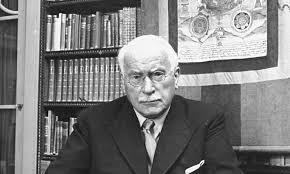
jungA woman who comment on an article I wrote called 7 awesome traits of the introvert stated that she “loved” the article, but noted I misspelled “extrovert.”

I understand her confusion because there are two accepted spellings for this dichotomy on the introvert/extrovert spectrum of the Myers-Briggs Type Indicator (MBTI). The other is “extravert.” I prefer the latter.

I was aware of the two spellings before I began writing about introverts and extraverts. I was also aware that the “extrovert” spelling was the most common of the two. However, I made a conscious decision to run with the less common spelling.

Some would peg me as being a nonconformist or contrary. I began spelling the name of this dichotomy I think because “extra” means “outside” in Latin–as in outside oneself–and, most importantly, it was easier to remember.

However, the second reason is not a valid reason to spell a word a certain way, a way that is uncommon to most. So to justify my unconventional way of spelling this word, I decided to research the spelling of extravert/extrovert.

A fellow blogger, Bill McAneny, wrote on this a blog post on this topic, which appears first when you type in Google “extravert vs extrovert.” He defends his use “extravert” in his writing by quoting Carl Jung:

“Carl Gustav Jung first coined the terms and he was very clear:

Extraversion [sic] is characterized by interest in the external object, responsiveness, and a ready acceptance of external happenings, a desire to influence and be influenced by events, a need to join in…the capacity to endure bustle and noise of every kind, and actually find them enjoyable, constant attention to the surrounding world, the cultivation of friends and acquaintances… The psychic life of this type of person is enacted, as it were, outside himself, in the environment.

CJ Jung, Psychological Types, CW 6, pars. 1-7″

Further research on this subject–which now was becoming an obsession with me–led me to turn to Wikipedia, which uses “extraverstion” to describe the differences between the two dichotomies on the spectrum.

My search continued for a valid reason for the difference of spelling extravert.

The Merriam-Webster Dictionary offers the “extrovert” spelling and “extravert” as an option. In other words, “extrovert” is the favorite child. I guess the dictionary has progressed to modern day times.

One blog claimed “extrovert” is bad Latin and recounts a story (hard to verify) where Jung was asked the question of which spelling is correct, to which Jung’s secretary replied on Jung’s behalf that “extrovert” is bad Latin.

The general feeling I get from this little issue is that the Latin spelling is being thrown out the window in favor of modern day jargon…rubbish.

At this point I’m thinking I’ve spent way too much time on this topic, and if you’ve read this far, you probably have better things to do. I have come up with three reasons why I will continue to write “extravert” rather than “extrovert”:

  1. I’ve spelled it this way in every post I’ve written and don’t feel like going through all of them and changing the spelling simply to satisfy people who don’t like it.
  2. It’s easy for me to remember…extra meaning “outside.”
  3. If it’s good enough for Carl Jung, it’s good enough for me.

These are my three reasons for being contrary. Next I’ll explain why I spell “jobseeker” and not “job seeker.” Or not.

The Perceiver’s ability to handle problems with ease and other facts about Perceivers

Cat eating food

And a story about my daughter and cat food.

When my oldest daughter was a toddler she had a tendency to stick dried cat food up her nose. The first time she did it it was no big deal. I simply fished it out with tweezers and then asked my frantic wife what we were having for dinner.

The second time, however, my wife insisted we bring her to the emergency room, where we waited a solid hour until we were seen by a doctor. (By then, the cat food had puréed and was running out of her nose.)

The doctor was nonchalant about this “emergency.” He took one look at the situation and excused himself  (I suppose to laugh at the young couple who brought their child to a emergency room to have cat food extracted from their daughter’s nose).

He returned approximately 20 seconds later with a paperclip, which he unfolded while humming all the while. Gently he stuck the U-shaped part of the paperclip up our daughter’s nose and pulled the gooey mess out.

I don’t know who was more embarrassed;  my wife for insisting that we bring our daughter to the emergency room, or me for giving in to her demand. “I didn’t want you to stick the tweezers into her brain,” my wife said as she held our daughter in her arms on the way to the car.

What does this story have to do with the Perceiver on one of the Myers-Briggs Type Indicator’s spectrum, which contains those who prefer the dichotomies Judging or Perceiving? The doctor demonstrated the calm nature of the Perceiver.

Often times we focus mainly on introversion and introversion the first two dichotomies and not enough on the last two, Judging and Perceiving. This fourth preference pair describes how you like to live your outer life.

On the Judger/Perceiver spectrum,  my wife is a J. This is a good thing because she organizes the family affairs. I, on the other hand, am an off the chart P, which means I’m more likely to handle problems with more ease than the Js.

I once shared an office with a J who was the epitome of organization. She would remind me of workshops I had to do everyday, and I would say, “I remember, Ellen.” Ps aren’t that disorganized.

To add to my role in our working relationship, I would calmly handle any issues she had with, say her computer, or I would calmly tell her not to worry about the size of her workshops—for me the larger number the better. We Ps handle problems in stride.

She was an interesting J, extremely organized. I would walk in the morning of my workshop without having set up the night before, whereas she would have everything prepared; all the paperwork to hand out; the name tags set up (I don’t use name tags); her station organized to include exactly four Starburst candy, a warm mug of water, not cold, and four paper napkins.

How do my workshops go, you may wonder. If the majority of my marks are “Excellent,” I guess that’s a good indication of how well I do. Ps want to succeed as much as Js; we just do it differently. Another great trait of the Ps is spontaneity. This is why none of my workshops are exactly the same, another reason why my marks are very high. “Bob makes things interesting,” is a common comment on my evals.

One thing we are known to do is procrastinate. (Read my post on the curse of Perceivers.) We’re not proud of this. Many years ago I had to install a screen door on our house. After a week of patiently waiting, my wife put her foot down and told me to “get it done.”

A Judger probably would have had that screen door attached the day after the screen was ripped by our upstairs tenants. He would have written it on his calendar and made a list before going to Home Depot. The screen door eventually was attached to our house, which was a proud moment for me, but an irritant for my wife.

I’m glad the doctor extracted the cat food from my daughter’s nose with such precision and that I didn’t pierce her brain with tweezers (my wife and I still argue about the likelihood of that happening). Was the doctor a Perceiver? Who knows. All I know is that his calmness reminded me of my preference for perceiving and how proud I am to be a P.

Photo: Flickr, Trond Hagheim Kristensen

Why I stopped reading a blog post on how to brand oneself

And sadly I won’t know if it was any good.

No photoYou’ve probably read so many blog posts on the importance of a LinkedIn photo that you’re tired of the topic. I know I am. So why am I revisiting it? Because the message doesn’t seem to be getting through to enough LinkedIn members.

I recently began reading what had the potential to be a well-done post about how jobseekers should brand themselves in their job search; but then I stopped in my tracks.

Why? Because the author made a most obvious blunder—he had no photo on his own profile. What’s the big deal, you’re asking? Here’s the deal; without his photo, he lost credibility with me. His purpose was totally deflated.

How can someone write about succeeding in the job search without having a photo on his own LinkedIn profile, and be convincing? He can’t. Plain and simple, a profile sans photo doesn’t give people faith in a person. This person came across as a hypocrite.

At this point almost every LinkedIn member has a photo—albeit sometimes of poor quality—so someone who doesn’t have a photo is an odd ball. I can safely say that more than 90 percent of my connections have a profile photo. Nay, 95% at least.

I know this because one benefit of having a photo on your profile is that you become memorable, hopefully in a positive way mind you. Lacking photo makes you memorable in a negative way, and you don’t want that. Right?

Because LinkedIn encourages its members to include a photo on their profile, anyone who goes against the grain is seen as unprofessional. Someone who is unprofessional comes across as unqualified to share information or undesirable to connect with.

Many people won’t even open a profile without a photo. This includes me. I don’t trust who I can’t see. I don’t judge people based on their physical appearance; although, I will judge them on the quality of their photo. But even if I don’t like the quality of their photo, I’ll still connect with them, especially if their Value Headline is strong.

It’s estimated that profiles with a photo are 14x more likely to be opened than those that don’t. This illustrates my point. I remember the days when the lack of a photo was commonplace. Heck, for the longest time I didn’t have a photo; instead I sported a picture of a soccer ball in its place.

A profile without a photo seriously hinders him from branding himself. This is what ruined the reading experience for me. Your first impression on LinkedIn begins with your photo. Do you want to make it a poor first impression by not including one, or a poor photo? Of course not.

I’m not suggesting placing a photo on your profile at all expense. A photo of you at a frat party participating on a beer bong event is not how to brand yourself. A photo of good quality, on the other hand, will brand you.

There’s no excuse for not having a photo. One of my customers showed me his LinkedIn photo, which was taken by his wife with an iPhone. Not too bad. Not bad at all. If you don’t have the means to have a photo taken professionally, this is a good substitute.

“Certainly you could have gotten past the fact there was no photo on this person’s profile, Bob,” you might be saying to yourself. To that I say, If the author is going to talk about branding oneself on LinkedIn, one of the most fundamental component is the photo.

Yes, we’ve read posts about LinkedIn photos ad nauseam, but I couldn’t let this person’s mistake go without saying something. What’s unfortunate is that this post may have been a very good one, nay great one; but because the person didn’t sport a photo, I just couldn’t finish reading it.

Call me shallow if you like, but this goes to show how important a photo is in branding oneself. If this is the 100th post you’ve read on the importance of a profile photo, thanks for bearing with me. If this is your first, hopefully you get the message.

16 of my rigid LinkedIn principles…

…and my story about being accused of lying.

serious man

There are some LinkedIn principles I hold which are quite rigid. They guide me in how I interact with people on LinkedIn. You may agree with some of them, and you may think some of them are bunk.

Before I go into them, there is a story I have to tell. (You are welcome to skip the story and jump to my LinkedIn principles.) This is a story I relay to my workshop attendees when I talk about principles.

My story

Although I don’t live by an exorbitant amount of principles in my life, I will not be accused of lying or stealing.  An event I tell my workshop attendees is one that happened some 15 or so years ago.

One morning I went into my local convenience store to make a purchase. I gave the cashier, a cantankerous woman who often confronted me over the smallest reasons, a 20 dollar bill. I walked out of the store without incidence. Note: I later remember seeing her gliding the $20 I gave her to the left of the camera.

Later that day I returned to purchase other items. Upon arriving at the cash register, said woman told me I hadn’t paid for my previous purchase. The owner of the store happened to be standing next to her. I said, “Excuse me?”

“You didn’t pay for your items this morning.”

“I certainly did,” I told her a bit angry at the accusation.

“We have you on tape,” she said pointing at the video camera.

“Great, let’s play the tape.”

The owner of the company suddenly became nervous. “Oh no,” he said. Not necessary he implied.

Here’s where I applied my principles. “If you don’t play the tape or apologize to me, I will never set foot in this store again. Do you want that? I drop at least $40 a week here.” And here’s where she stonewalled me.

To this day, I have not stepped foot into that store, even though it’s changed ownership. Let me now tell you that some of my workshop attendees’ mouths drop. “I know,” I tell them, “sick.”

My rigid LinkedIn principles

  1. Like many people, I will not accept an invite without a personalized note. Tell me how we know each other, at least. “Bob, I took your Advanced LinkedIn workshop and would like to connect.” Good enough. (I make one exception; If I know the person, I will forgive this faux pas.)
  2. I will thank you for connecting with me. I guess this goes back to my childhood when I was taught to always say thank you. There is one exception to this policy (and this rarely happen); if you send me an invite without a personalized note and I accept it, I won’t feel the need to thank you for the invite. I figure if you’re lazy, I’ll return the favor.
  3. Please don’t use LinkedIn’s Publish a post feature as a way to announce your events or advertise your products. This is not what it was intended for. Yet, occasionally I see people provide links to promote their events. Maybe they don’t know better. Unfortunately LinkedIn did away with a feature called…can you guess? Events.
  4. I will not open your profile if you don’t have a photo. Sorry. I think you’re hiding something. I know you might be concerned about age discrimination, but please. A photo gives you an identity, an identity that is necessary when you’re networking. Honestly, I think not showing a photo is creepy.
  5. I will lose respect for you if you abandon LinkedIn. I’ve seen people work hard to create a kickass profile, only to abandon it perhaps because it’s too much work. Or they’ll land a job and forget that networking must continue even as they’re working. “I don’t have time,” they tell me. “Make time,” I retort. (Read my post on abandoning LinkedIn.)
  6. I will hide you if your face appears on my home page numerous times in a row. When I see someone’s face 10 consecutive times, my initial thought is, “Did you schedule these updates on Hootsuite to occur at the same time?” People, spread them out. Note: I am a bit a hypocrite; I update multiple times a day; way beyond the one-time-a-day recommendation. Who came up with this arbitrary number, anyways?
  7. Read my posts and comment on them, I’ll do the same with yours. This is just common courtesy and good blogging etiquette. As well, I won’t simply “Like” your posts without leaving a few words of what I thought of it. I figure if you put the effort into expressing your thoughts, I’ll return the favor. (Read my post on why “Liking a post is not enough.”)
  8. Don’t use LinkedIn as a Twitter chat. I know it’s tempting to converse real time with your connections, but when you do it in a group discussion; it’s reminiscent of tweeting. Don’t get me wrong. I enjoy Twitter, but LinkedIn ain’t Twitter; at least I hope it doesn’t become Twitter.
  9. Briefer isn’t always better. You’ve been told that your profile Summary should be as brief as possible—that no one wants to read a novel. This is sound advice for your résumé, but keep in mind that you are given 2,000 characters for this section of your profile to tell your story, show your passion, and grab visitors with some accomplishments. 
  10. I don’t know where you got the idea I have skills in staff development and project management, or that I want to add nonprofit to my list of skills. I know you’re trying to be helpful, and I appreciate it; but please don’t suggest skills for me.  I’m trying to present as accurate a picture of who I am as possible.
  11. If your profile is a wasteland, I’ll think you’re not serious about LinkedIn, maybe using it as a place mat, or you were told to be on LinkedIn so you obliged. Whatever the reason may be, I’ll form a negative opinion of you and won’t read your profile. (Read my post on what constitutes a strong Experience section.)
  12. You immediately ask for something. Some people don’t know better. They’ll send me an invite with a personalized message, but in it will be a request for, say, a critique of their profile. Hold on a second. Start a conversation before going for closing. This is another reason for me to hit Ignore. Read: 4 steps–at minimum to ask for a favor on LinkedIn.
  13. When I see an update that is negative, I won’t respond to it. I believe in truth and honesty. So here’s the truth, when you’re negative, I pass on you. As an example, I have a string of conversation developing in response to a post I wrote (8 major job-search changes for older workers), and some of the respondents are going off on a negative slant. I didn’t respond, “Like,” or comment. I simply passed on the conversation.
  14. If you ask me to await your call, call me. Key to conducting business or your job search is follow up. I once tried to get together via the phone for many consecutive Fridays, but he was always busy. On the surface it didn’t seem vital, but you never know what comes from exchanging ideas.
  15. It irritates me when people say LinkedIn alone will get them a job. This is more the fault of an adviser or articles they’ve read, but jobseekers need to know that LinkedIn is not a magic potion; it takes personal networking as well. LinkedIn is a supplement to personal networking.
  16. Further, I’m frustrated when people tell me they’re afraid of being on the Internet. To them I say to not bother with LinkedIn or any application on the Internet. LinkedIn isn’t for everyone. I’ve come to realize this and tell people outright that LinkedIn isn’t for everyone.

So there you have 16 of my rigid LinkedIn principles. I know they’re not as extreme as the story I relayed to you, but everyone has to have principles in my opinion. If you have a rigid principle, e.g., you don’t like to be accused of lying, I’d love to hear about it.

If you want to learn more about LinkedIn, visit this compilation of LinkedIn posts.

Photo: Flickr, Alessandro Liga

10 reasons why your LinkedIn profile photo is important to me

Adrienne TomI published this post less than a year ago, but the need for a photo on your LinkedIn profile can’t be emphasized enough. 

One day a customer of mine came up to me appearing quite irritated and told me he had sent me an invite on LinkedIn. But I didn’t accept his invite, according to him. I asked him if he wrote a personalized message with his invite. Yes he did. I then asked him if he had a photo. No he didn’t. “Ah,” I said. “That’s why I ignored you.” This is one of my principles, as harsh as it sounds.

While many of my colleagues won’t connect with their customers/clients, I see no reason not to connect as long as my customers embrace the necessity of having a LinkedIn photo. If they don’t embrace it, they’re in for a disappointing LinkedIn campaign. One of my favorite things to say when I’m critiquing a customer’s profile that lacks a photo is, “What’s wrong with this picture?” I know, not very funny.

Jeff SheehanPerhaps I’m getting old and stodgy, but here are 10 reasons why your LinkedIn profile is important to me.

I recognize you. If you only have the default light grey ugly box in the photo area, I have no idea who you are. I’m terrible with names, so a face helps me. I feel closer to you, even if we live 3,000 miles away from each other.

Your photo tells me something about your personality. My photo tells people that I’m caring, sincere, and friendly. All of this is true. I’m assuming your photo would say what kind of person you are, creative, authoritative, welcoming, etc.

AntonYou’ve gone though the effort to have a professional photo taken of you. One of my jobseekers told me he had his photo taken for $50. This told me that, despite not having the resources, he felt that having a photo is important.

You know that having a photo will increase your chances of your profile being opened. I’m conservative when I tell my LinkedIn workshop attendees that their chances of getting their profile opened and read increases by 7 times. Some estimates are as high as 14.

You understand the importance of branding. It was commonly believed that a LinkedIn photo was either highly professional or business casual. Now people are breaking boundaries by posting photos that reflect what they do. Take a look at one of my connections (above left) who understands this concept.

Stevie PuckettOn the other hand…your photo is not inappropriate. Some that come to mind are those you’d post on Facebook where you’re captured partying, or you’re with family on the beach, or you’re using LinkedIn as a dating site.

You realize LinkedIn is a networking application, not your resume which doesn’t include a photo. LinkedIn members feel more comfortable networking with people we can see.

You’ve gotten over yourself. I’ll be the last to say that age discrimination doesn’t exist but it’s less prevalent than you think and employers are more suspicious when they don’t see your photo. Besides, who would want to work for someone who judges you on your age.

Hank BoyerYou’ve taken that step toward online networking. Scary, huh? For some of you it was enough to simply get online, but now you’re being told–by not only me–you need to disclose your identity. I salute those of you who are making that step, albeit a reluctant one.

Your photo is about you, not your company. Talk about not trusting someone. That’s how I feel when someone presents themselves as their company logo. The profile is about you and not your company–that’s why there are LinkedIn company pages.

When it comes to the LinkedIn photo, I want to know what people look like. I guess it’s as simple as that. That ugly light grey box is disconcerting to say the least; it says to me, “I’ve got something to hide.” If I’ve got nothing to hide, why should you?


Top left, Adrienne Tom

Second to right, Jeff Sheehan

Third to left, Anton Brookes

Fourth to right, Stevie Puckett

Fifth to Left, Hank Boyer

Introverts: 8 ways to get those creative juices flowing

Writer's BlockMany introverts are creative writers because writing is what they love to do. As an introvert I prefer to write, as opposed to talking, to communicate my thoughts. Talking is what I do for a living, but writing is my strength. But it doesn’t always easy.

There are times when I hit a wall as I’m trying to write. It’s better known as writer’s block, and it’s frustrating. It’s Sunday morning, and I want to post an article on Monday; but for the life of me, I can’t think of something to write about.

So how can introverts get those creative juices flowing? Here are seven suggestions.

1. Read others’ writing

The idea for this post came from one I read by Sophia Dembling, When an Introvert’s Brain Stops Producing. I’m sure she’d be totally stoked to know I was inspired by her article in Psychology Today. She’d also appreciate the fact that I stole her idea, or maybe not.

In Three Secrets to Writing BetterErik Deckers, shares bits of advice on how to become a better writer. They are write everyday; read the newspaper; and my favorite, steal from other writers’ styles. (I think what he really means is to learn from the best.)

2. Take a walk

Some of my best ideas come from taking my morning walks, where I traverse the neighborhood listening to music or local radio on my phone. For some it may be hiking hills or going to the gym. Scientifically it’s been proven that what’s good for the body is good for the mind. It provides clarity and a time to reflect, which introverts thrives on.

3. Observe

I love to include my family, friends, customers, and events in my life in my writing. They provide the basis for my posts. In one post I wrote, I equate my basement to LinkedIn recommendations. You may be wondering what my grungy basement has to do with LinkedIn recommendations. Now think about where recommendations are located on your LinkedIn profile. You see what I mean?

4. Write, just write

I have a bazillion rough drafts/started posts that need to be completed. When an idea hits me, I write the beginning of a “brilliant” blog which may or may not see the light at the end of the tunnel. Others I’ll return to and finish the thoughts I had way back then.

You can write stream of consciousness, which is simply writing without stopping, just writing and then later correct any errors. For some it’s too messy. But others like the freedom it offers. What you may have at the end may not be worth keeping.

5. Give yourself a break; not everything has to be original

I hate to admit it, but not all of my posts are original. Most bloggers will tell you the same thing; we re-purpose what we’ve already written. When I was in marketing, we called it leveraging material.

So I go into my archives and I pull out something from long ago, something people won’t remember. I write a new intro and change the wording around in the lists or body of the post. Voila. Take a break. You can’t expect to write creative verbiage every time you post.

6. Don’t put all your eggs into one basket

I have labored over blog posts for days and even weeks. Don’t do this. If what you’re writing isn’t ready for Prime Time, save it for another day. You may have to think about it for a few days, or even a week, before it feels right for you.

In fact, this post is a couple of weeks in the makings. I will go back and forth between multiple posts if necessary. Other times I will write a post on my smart phone, when the right moment hits me.

7. Change your setting

Some of my best ideas come to me when I’m somewhere other than my house. There are distractions, such as multiple media going on at the same time, e.g., television, radio, my daughter’s Netflix show blaring from her computer. A place like Starbucks provides a great place for me to get away and get the creative juices going.

The only problem you may face is being disrupted by someone who wants to talk with you while you’re trying to write. Read this article about how I was interrupted by someone while I was trying to reflect. 

8. Write about losing your mojo

My last suggestion is to write about losing your creative juices…temporarily. It’s something you’re experiencing, something close to you; so why not write about it. I personally think this makes people more depressed about not being able to write.

My Creative Writing college professor said writing about writing is cliché, so we were forbidden to do it. Instead he wanted us to write about sex (he wanted us to write about what we knew).

It will pass, this temporary loss of creative juices. Introverts rely on themselves to conjure up their creativity; they don’t enjoy brainstorming with others. So there may be spells of creativity loss that can be frustrating, to say the least.

Dear hiring manager, 15 reasons why you lost the best candidate ever

Hiring Manager

This post is a follow-up to Dear recruiter, 15 reasons why you lost the best candidates ever. Following are complaints I’ve heard from my career center customers.

As a career strategist, sometimes I hear grumblings from my workshop attendees about how their interviews with hiring managers are less than pleasant. And what follows the interview can be just as unpleasant. For those of us who are gainfully employed, it may be difficult to understand candidates’ frustration and, at worst, despair.

Hiring managers, don’t take it personally. You’re busy with projects that need to be completed and feel you have better things to do than hire the next person. But think about the logic of your disdain for interviewing candidates; your next employee is the person who can make your life easier. Help you complete important projects.

Not all hiring managers are at fault in the hiring process, but for the few that are, below are some reasons why—shall we say—you’ve blown the selection process. What follows are paraphrased thoughts of my customers (clients) over the years.

  1. In search of the purple squirrel? Good luck with that. I may not have 100% of the qualifications you’re looking for, but I’m ambitious, a quick learner, and want to succeed.
  2. I got laid off from my last company because it reduced its workforce by half. I survived five layoffs. And still you think being out of work for three months is a sign of my ineptitude. (Maybe its a sign of a jobseeker’s poor job-search methods.)
  3. That photo of me in Cancun drinking a Margarita, I somehow got tagged on Facebook. But you weren’t as focused on my stellar LinkedIn profile as finding something wrong with me on Facebook.
  4. Really, you couldn’t reschedule our interview which would have taken place during my son’s graduation ceremony? No, I don’t think it’s worth missing this milestone. Hope you understand.
  5. I guess you heard I’m 50 years old. End of story.
  6. I was 15 minutes early for the interview. You were 45 minutes late for it. Hmm.
  7. Your handshake was limp. You didn’t maintain eye contact. Your face looked like it was made of stone. Did you learn anything about first impressions?
  8. “When did I graduate from high school?” Really? Can’t you be more creative than that?  (Many of my customers get asked this revealing question.)
  9. The job posting didn’t call for someone who is proficient in Flash. If it had, I wouldn’t have applied for this position. I don’t suppose telling you I can learn it quickly….I didn’t think so.
  10. I might have taken your job if you had returned my inquiry. I have accepted a different offer. Oh well.
  11. You told me I’d hear about your decision within a week. Two weeks later I’m still waiting. Yes or no, I’d like to know what you’ve decided.
  12. I’m not the “right fit?” How about: “You don’t have the expertise we’re looking for,” “You came across as dispassionate,” “I’ve decided to fill the position internally.” All of these would be fine. I can handle the criticism.
  13. You want me to write a five-page explanation on how I’d solve your supply chain issue? I can do that with my eyes closed. But are you offering me the job, or do you just want free advice?
  14. So let me get this straight, you want to pay me half the amount of money I was making at my last job and do twice as much work?
  15. This is our 11th interview. How many more will there be? (A customer of mine landed a job after 12 interviews, including two on the west coast…at two different flights.)

These are among other complaints I’ve heard from my customers. They don’t expect to land every job for which they apply; they just want to be treated fairly and with respect. Hiring managers, perhaps you could consider what you’re doing to make the job search harder/unpleasant for your candidates, and make some minor corrections.

Photo: Flickr, Kristof Ramon